 Nix McRetro
Here’s where we start with the General Electric Model 4665 AM/FM Electronic Digital Clock Radio. One neat thing about this radio is that it has a vacuum fluorescent display (VFD) for the clock section, which makes it rather interesting before we’ve even got properly stuck into the electronics.
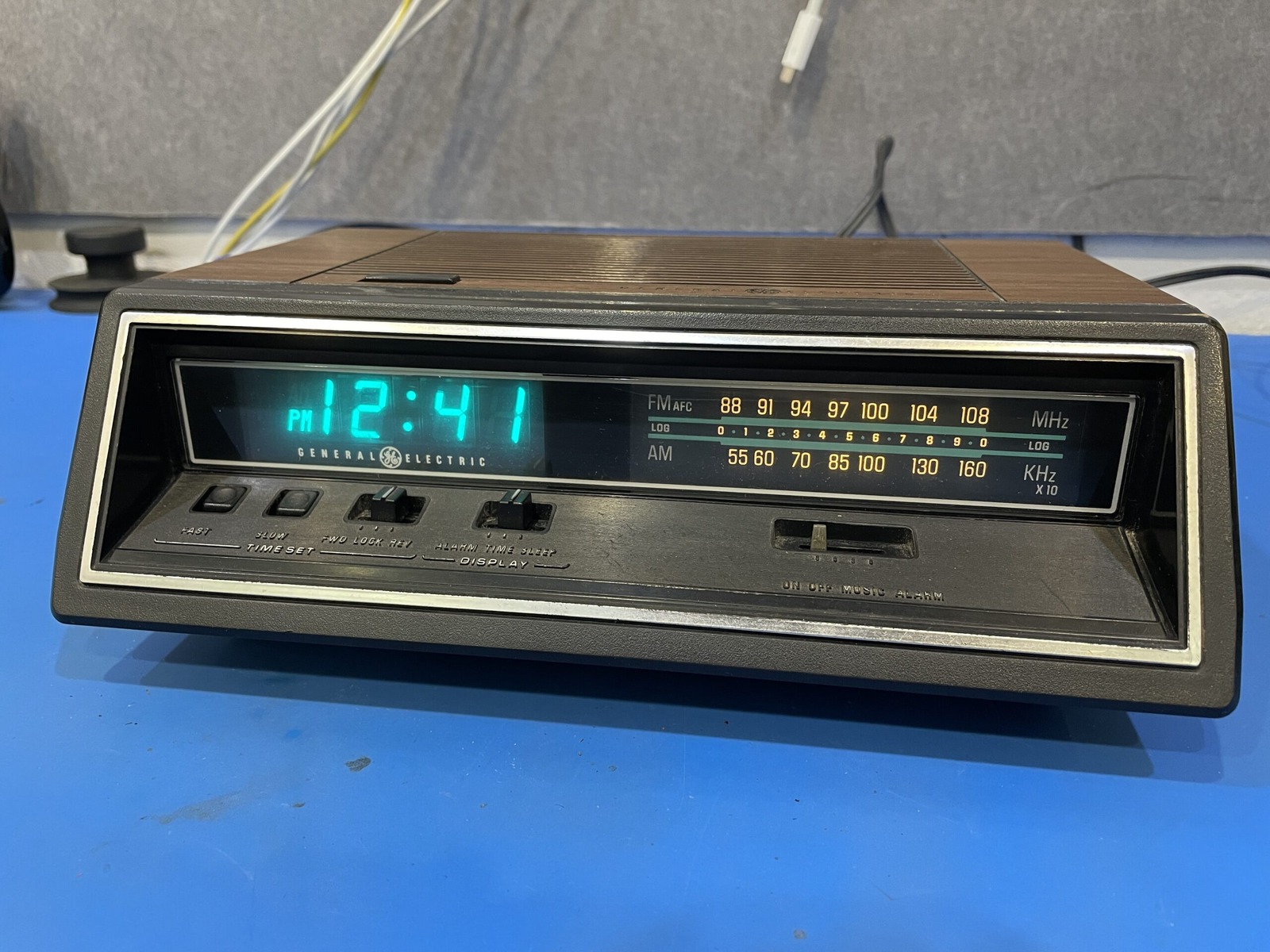
VFD has always been an arch-nemesis of my precious Nixie clock. I don’t think the technology was that much of an improvement and quite frankly love the glow of the Nixie tubes. Well that and probably some influence from Steins;Gate, courtesy of SuperNick (Nick). Yes, that very same SuperNick (Nick).
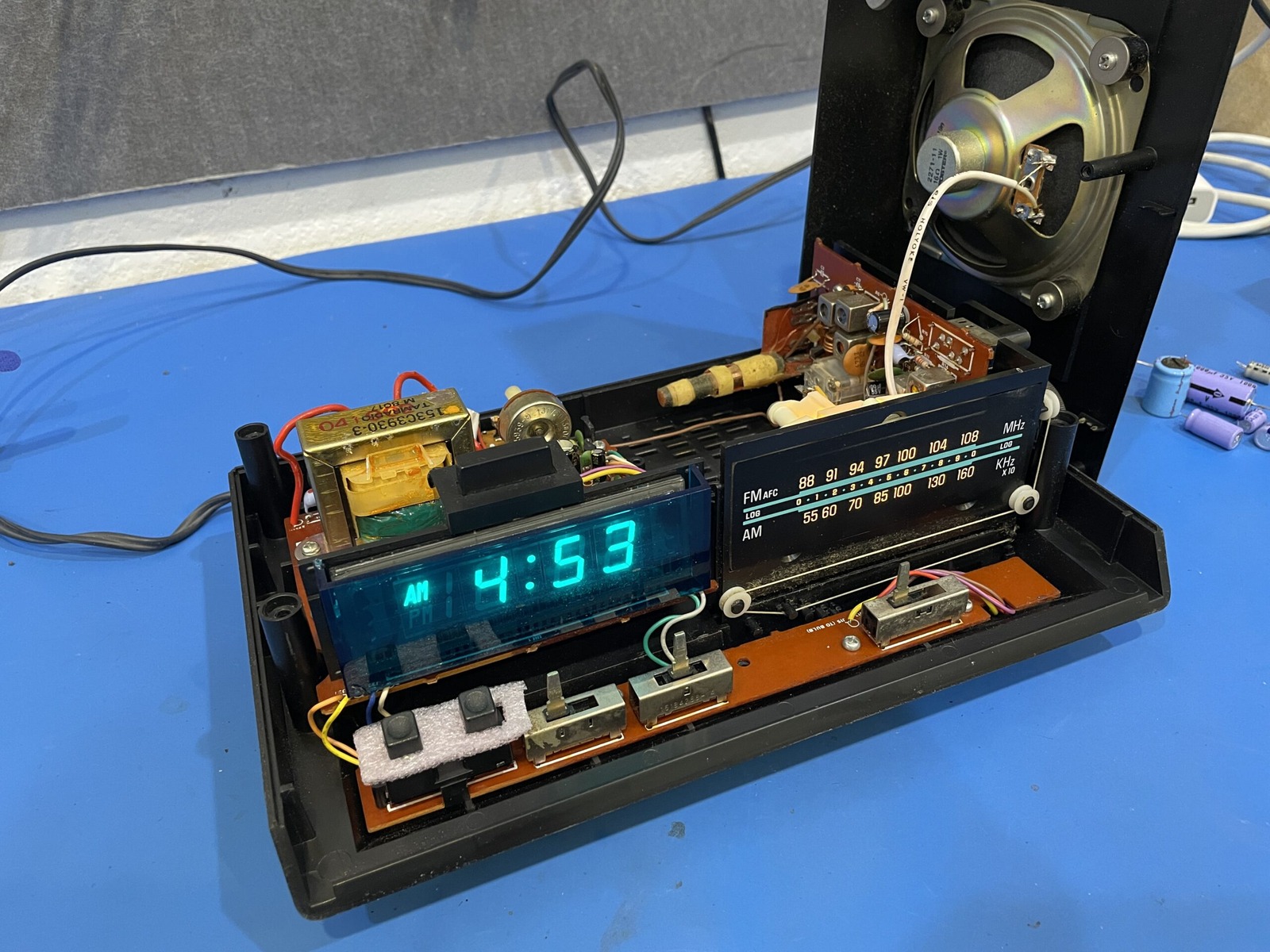
I’ve already been inside this thing and replaced some of its ageing capacitors, so this video is more of a look at how the radio is behaving now. The VFD is quite lovely in its own way, even if I still prefer a nice warm Nixie tube. There’s a brightness control on the back, which is a thoughtful addition for something designed to sit beside your bed.
The clock-setting controls are rather entertaining too. You can advance the time forwards, lock the setting, or even run it backwards. That’s right, backwards! I spent a little too much time playing with that feature, which probably explains why the clock wasn’t showing the correct time by the time I’d finished.
The radio section is another story. The tuning pointer is broken, and the old grease around its mechanism has dried out considerably. The AM/FM selector wasn’t behaving as expected either, with the radio stubbornly staying on AM when I tried changing bands. Looks like there are a few more things to investigate.
One of the internal wires had also come loose, so I’d soldered that back into place. There’s quite a bit of hardware inside, with separate power and radio sections, and it’s interesting to see how everything was arranged. Certainly not quite as compact as the digital radios we have today!
Overall though, this radio has held up quite well. On closer inspection, the internal date code I found was 8004, which I read as week 4 of 1980. That fits the era, but without manufacturer documentation I should treat the date-code decoding as an inference rather than a birth certificate. What a way to break in the 80s! I’m sure this jammed out a fair deal of John Farnham back in the day. Imagine waking up to that every day of the week for 42 years. Pure bliss insanity.
I’m particularly interested in getting the tuning indicator sorted out. It originally used a little fork-shaped piece, and the old lubricant appears to have made things rather difficult for it over the years. Hopefully I can find a way to reproduce the missing part without making a complete mess of the front panel.
There’s a few more parts to come on this one so stay tuned! ;)
Related Posts