 Nix McRetro
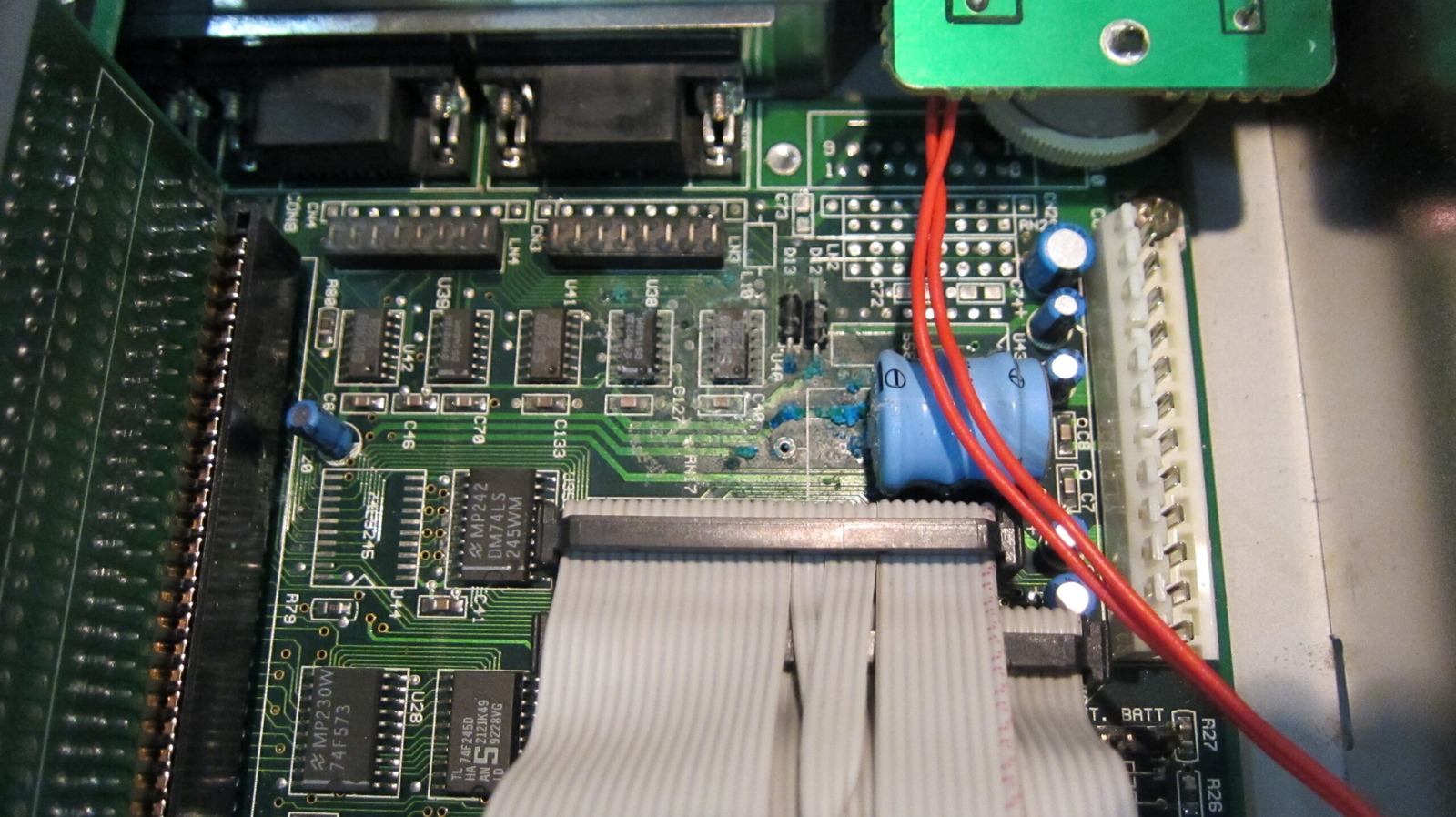
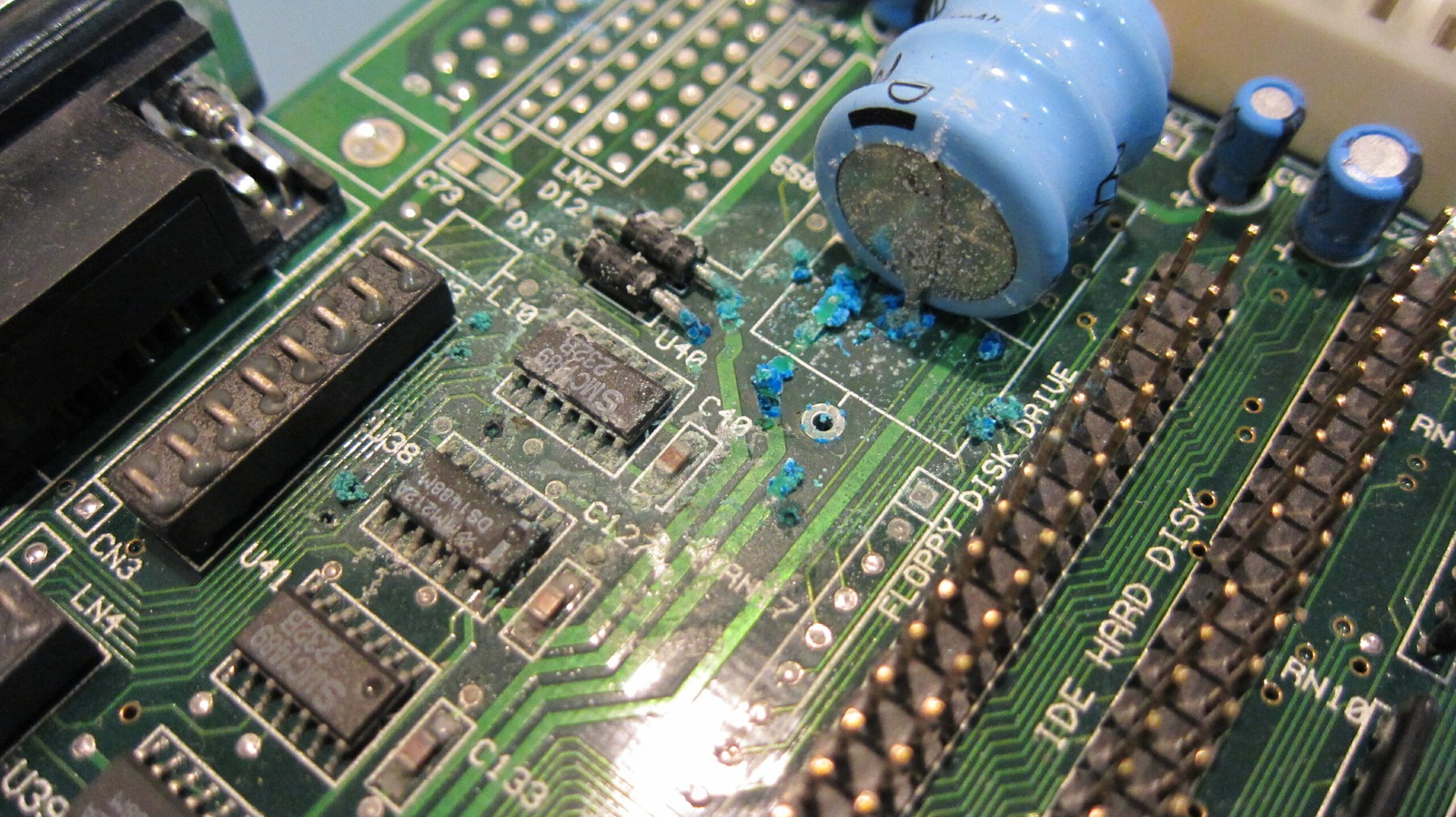
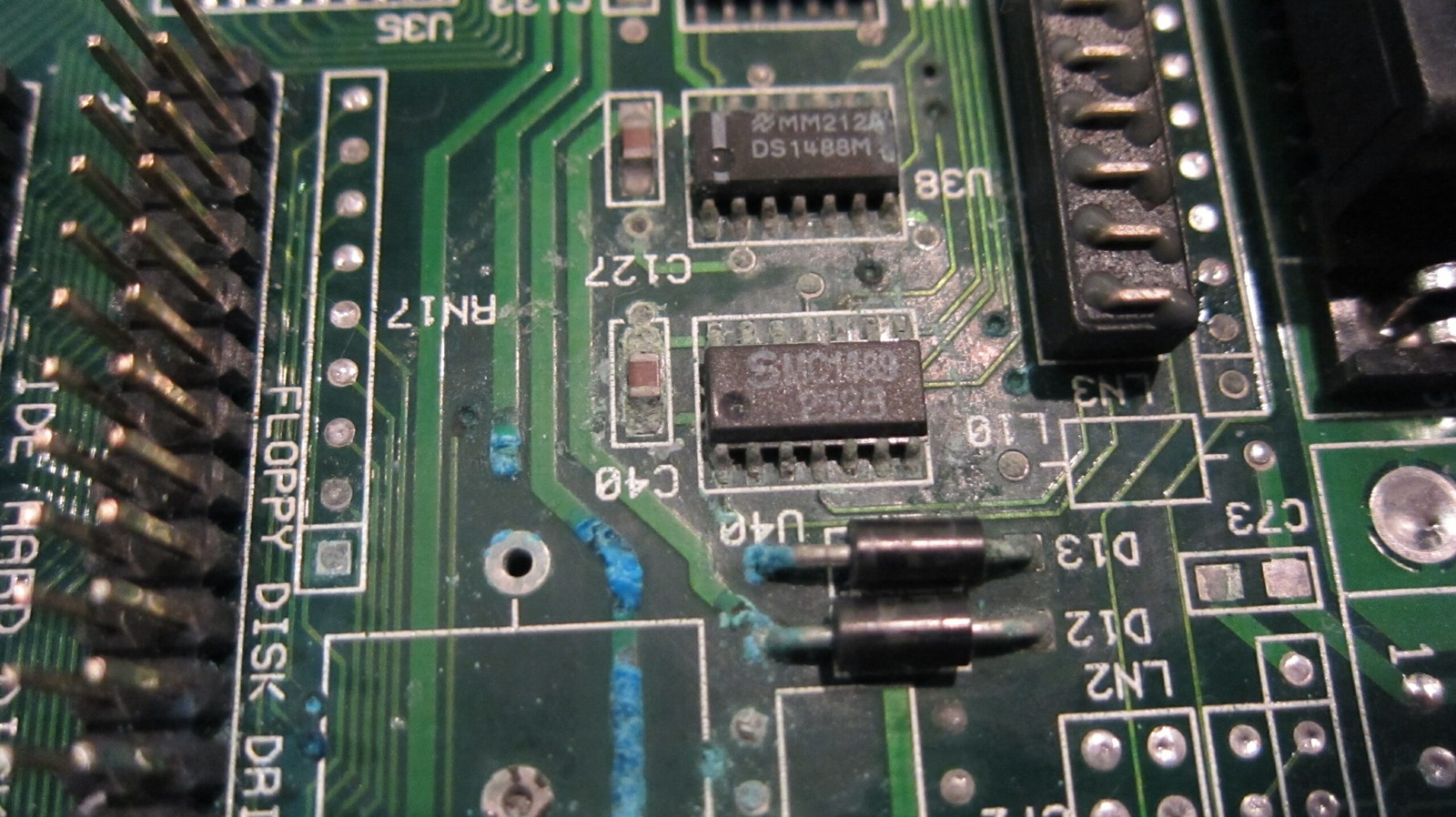
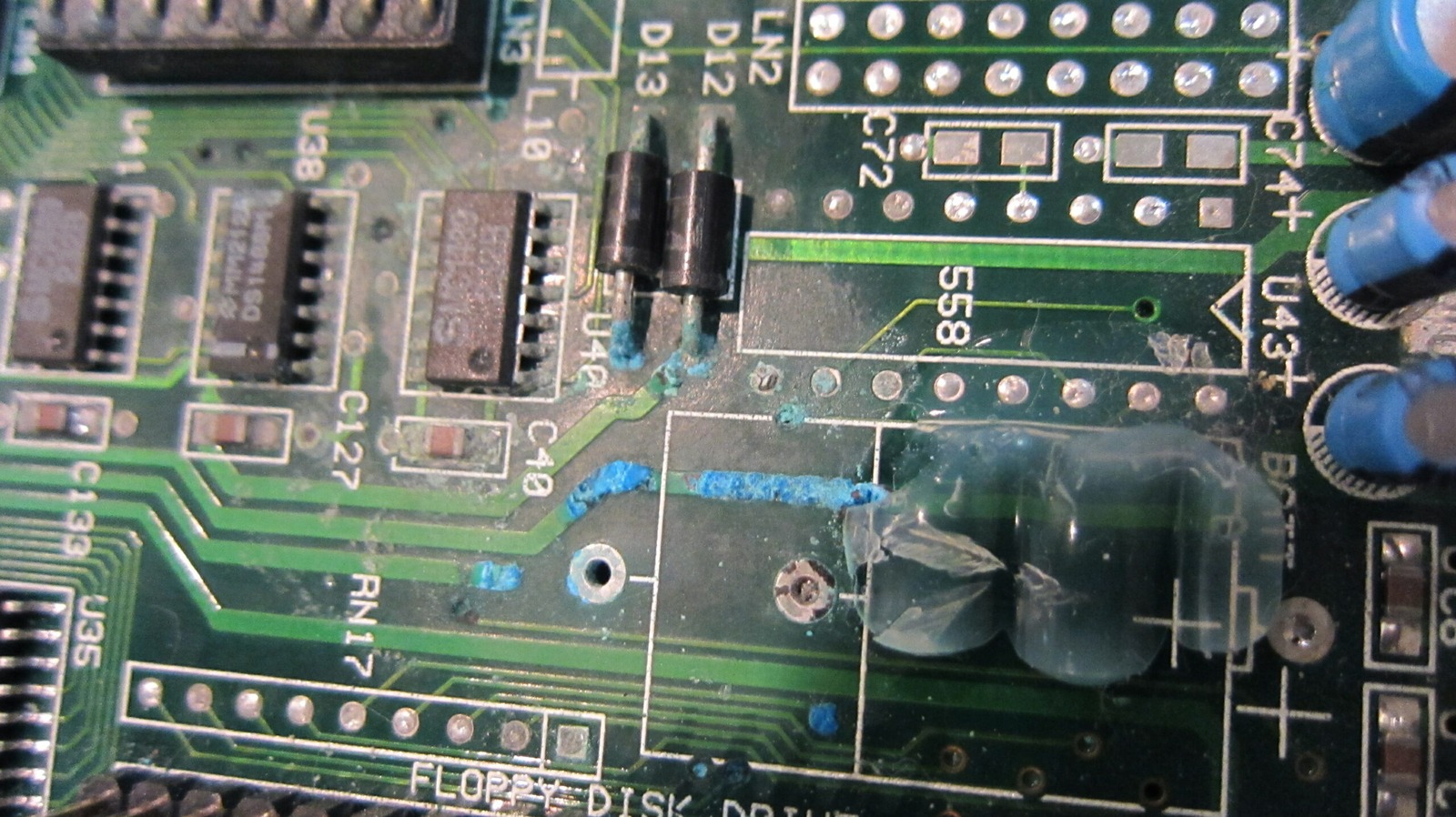
Such a wonderful shade of blue. Unfortunately it has eaten the tracks on the motherboard. That’s the damage a leaking NiCad battery can do. The electrolyte is alkaline potassium hydroxide rather than acid, but it can still make an impressive mess of a motherboard.
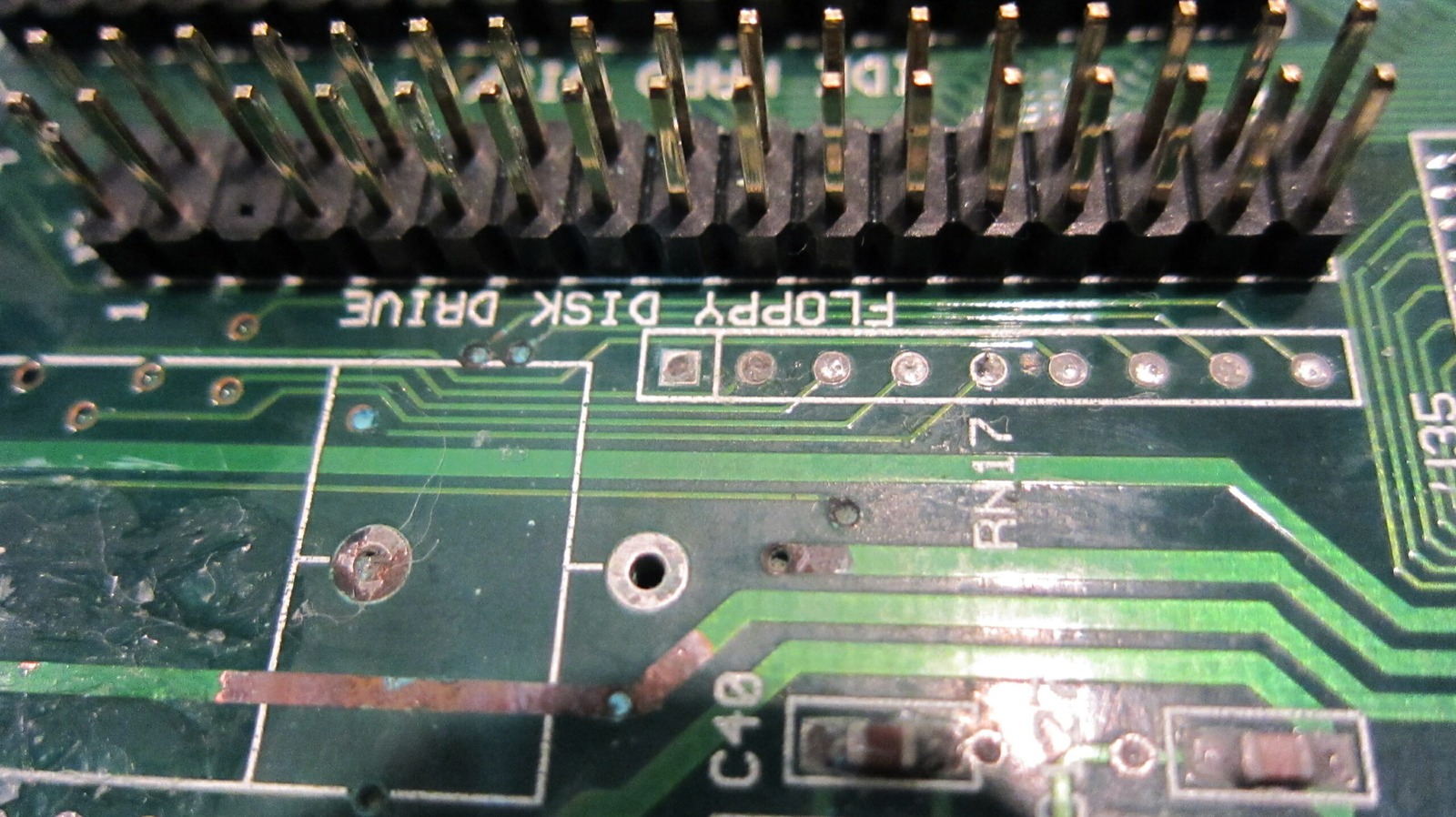
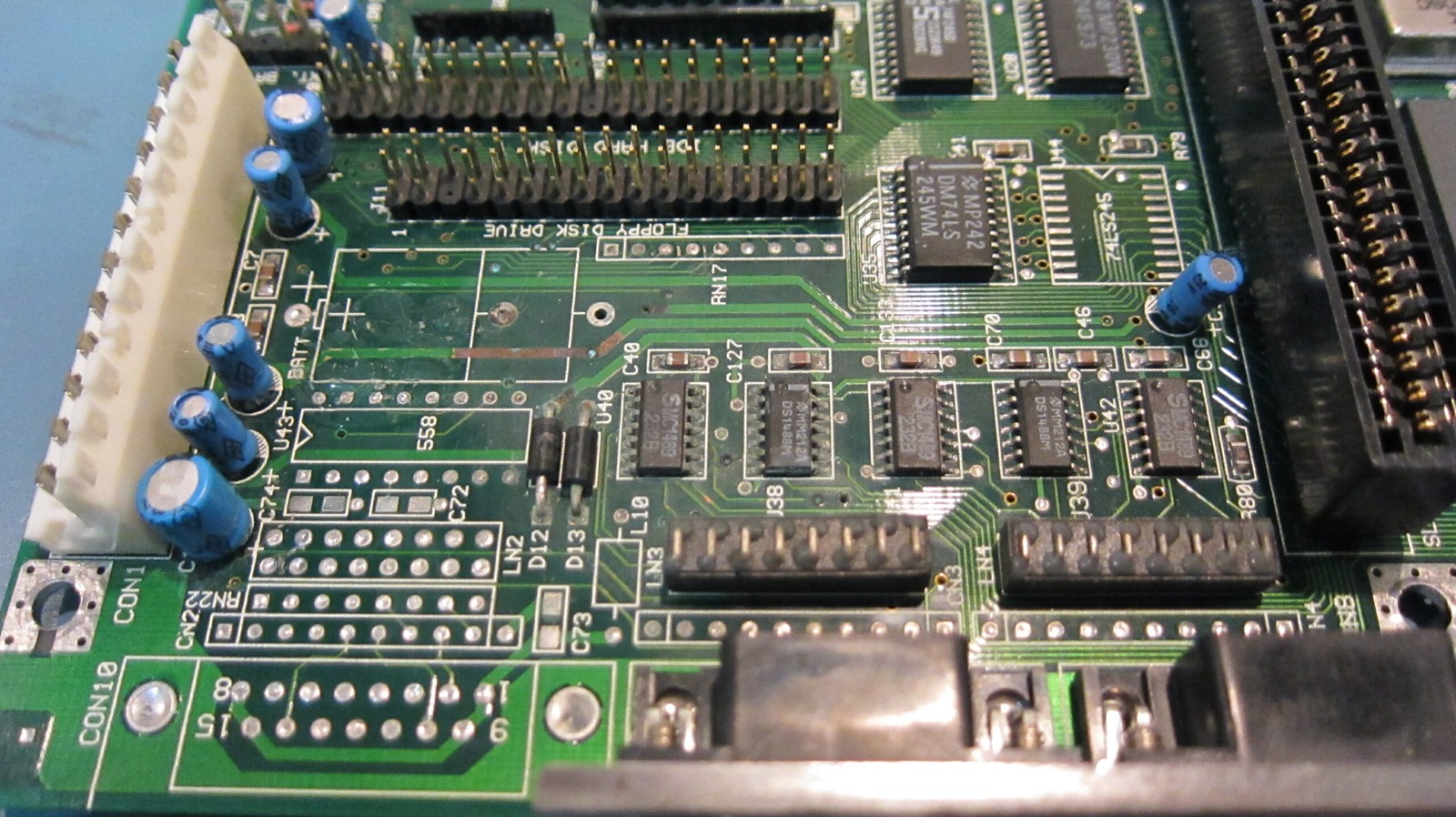
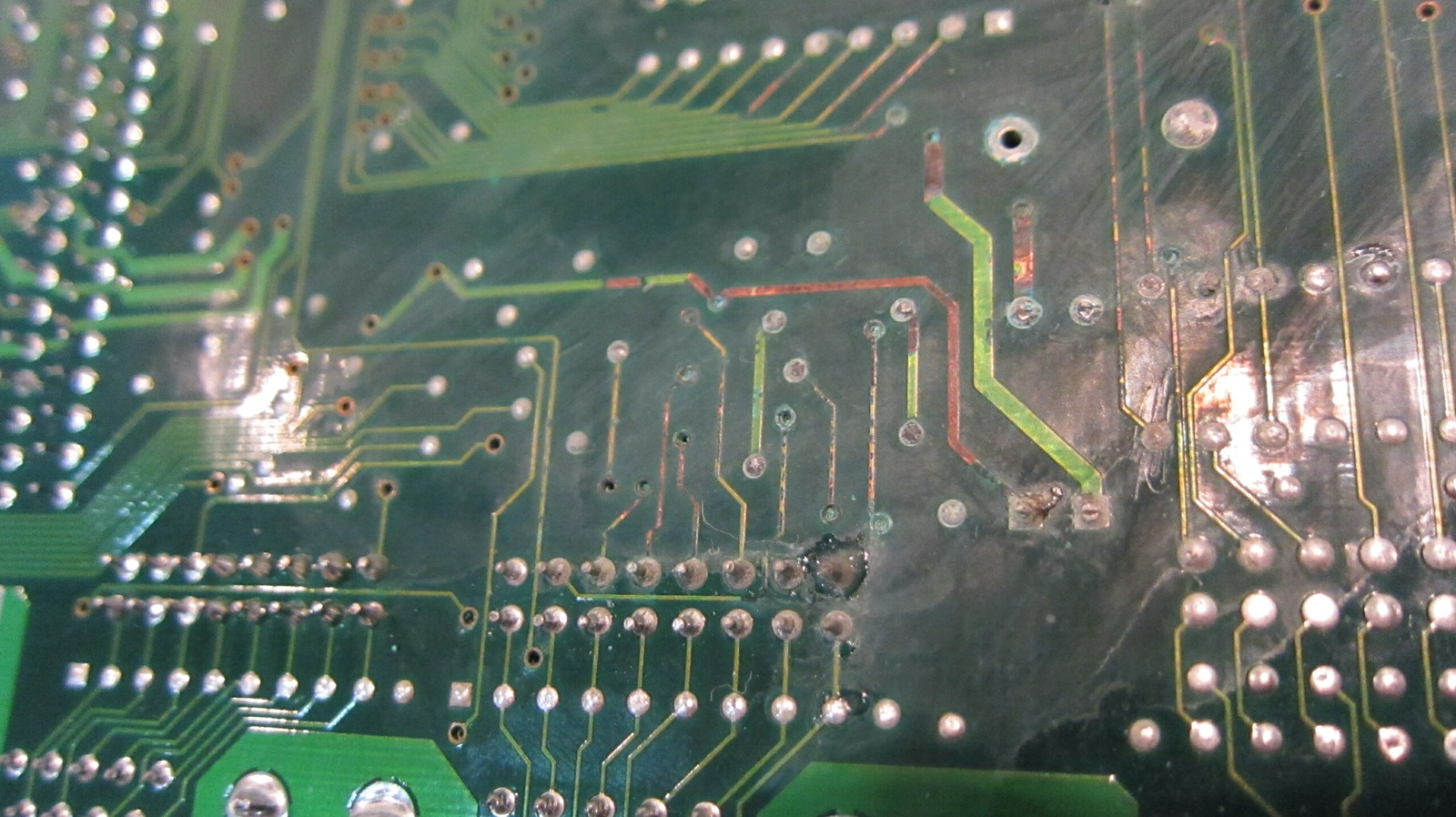
I cleaned everything up as best I could with some isopropyl alcohol, then mapped out the damage. The alcohol cleaned the surface, although it wasn’t chemically neutralising the alkaline electrolyte. Multimeter time.
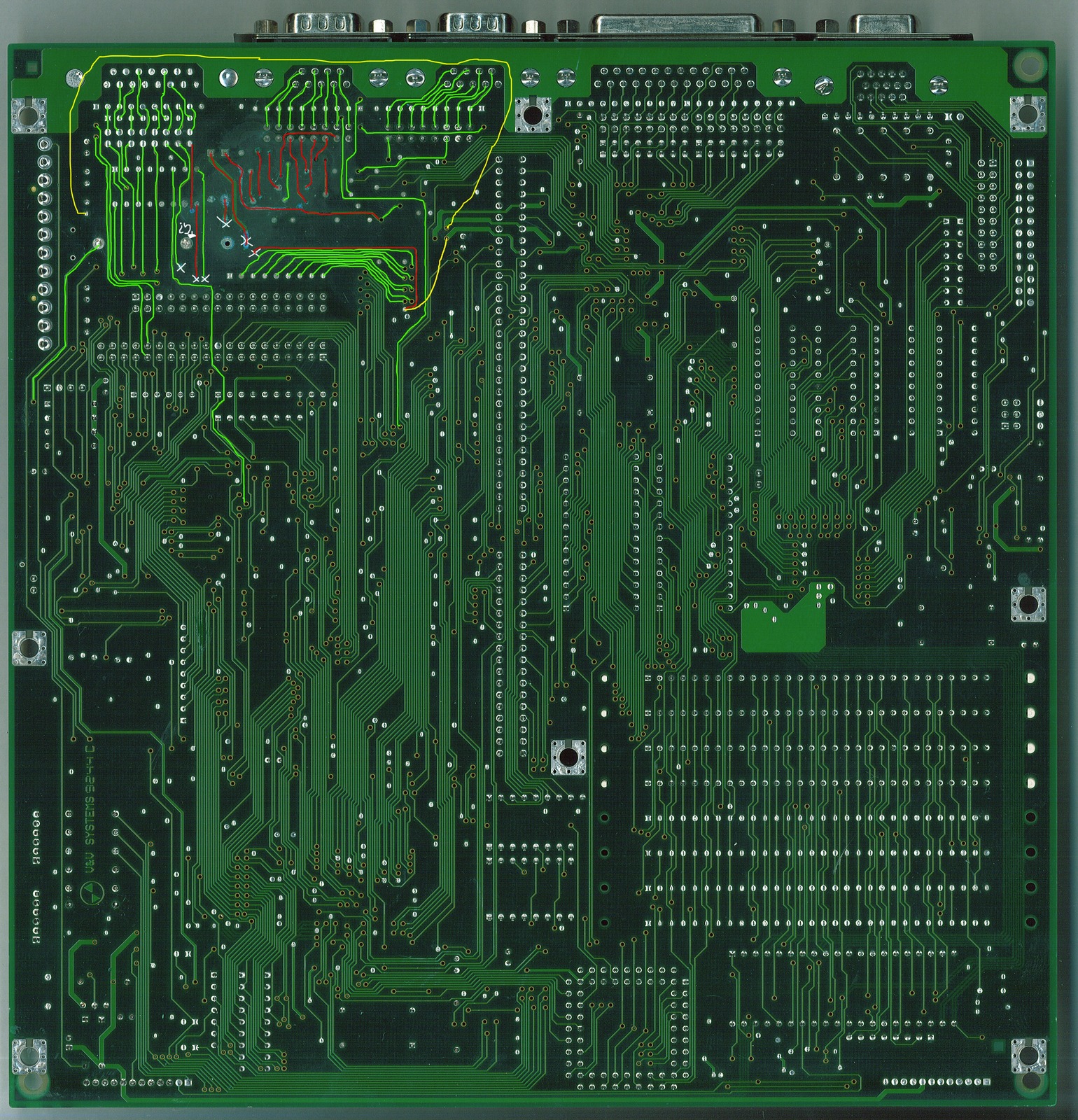
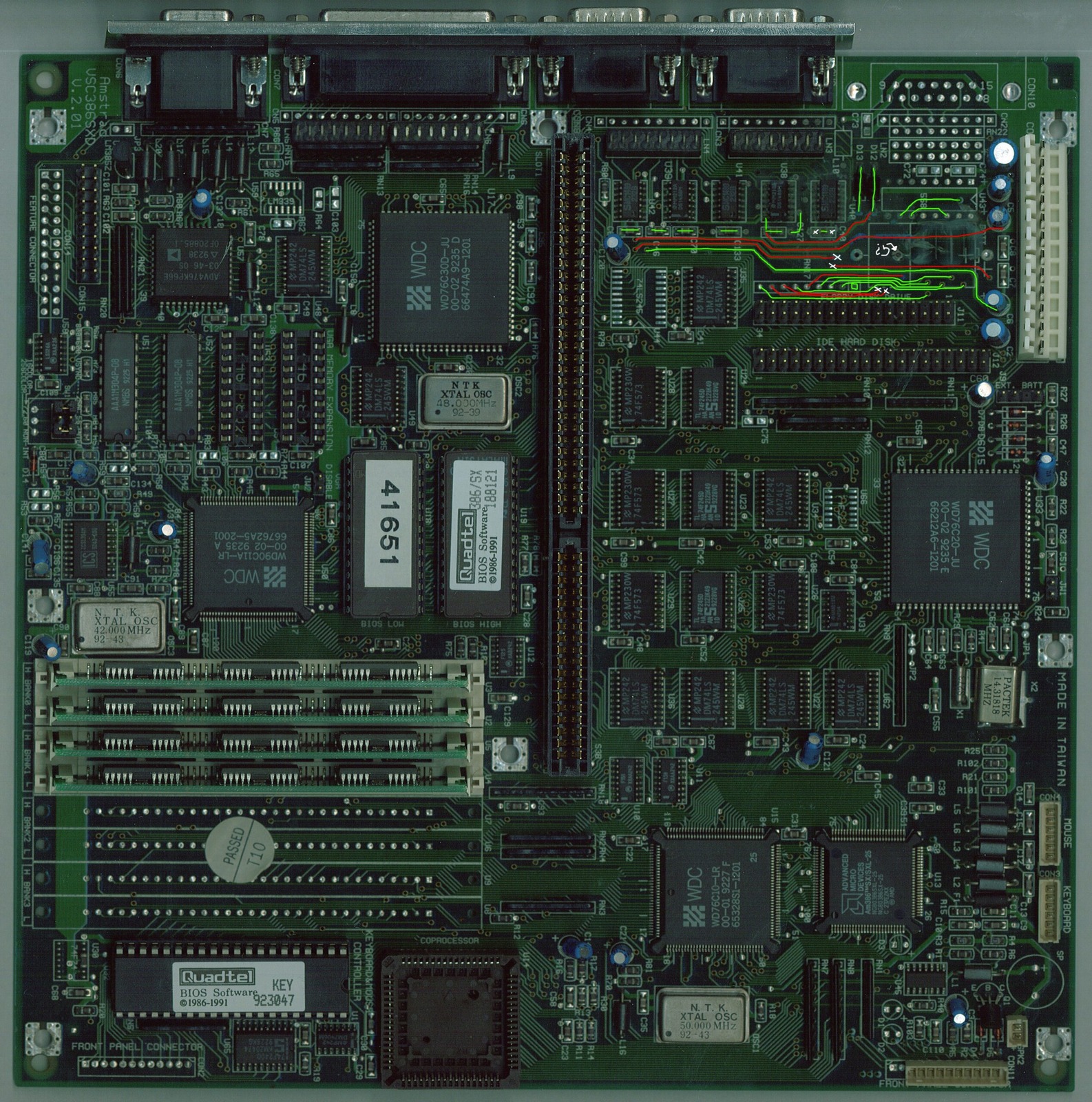
From the maps above it looked as though most of the damage affected at least one of the serial ports. Serial? Pffft, I have PS/2 connectors.
Unfortunately, one of the main power tracks from the power connector was damaged as well. I handed the board over to boss and he did some soldering while I stood around eating candy.
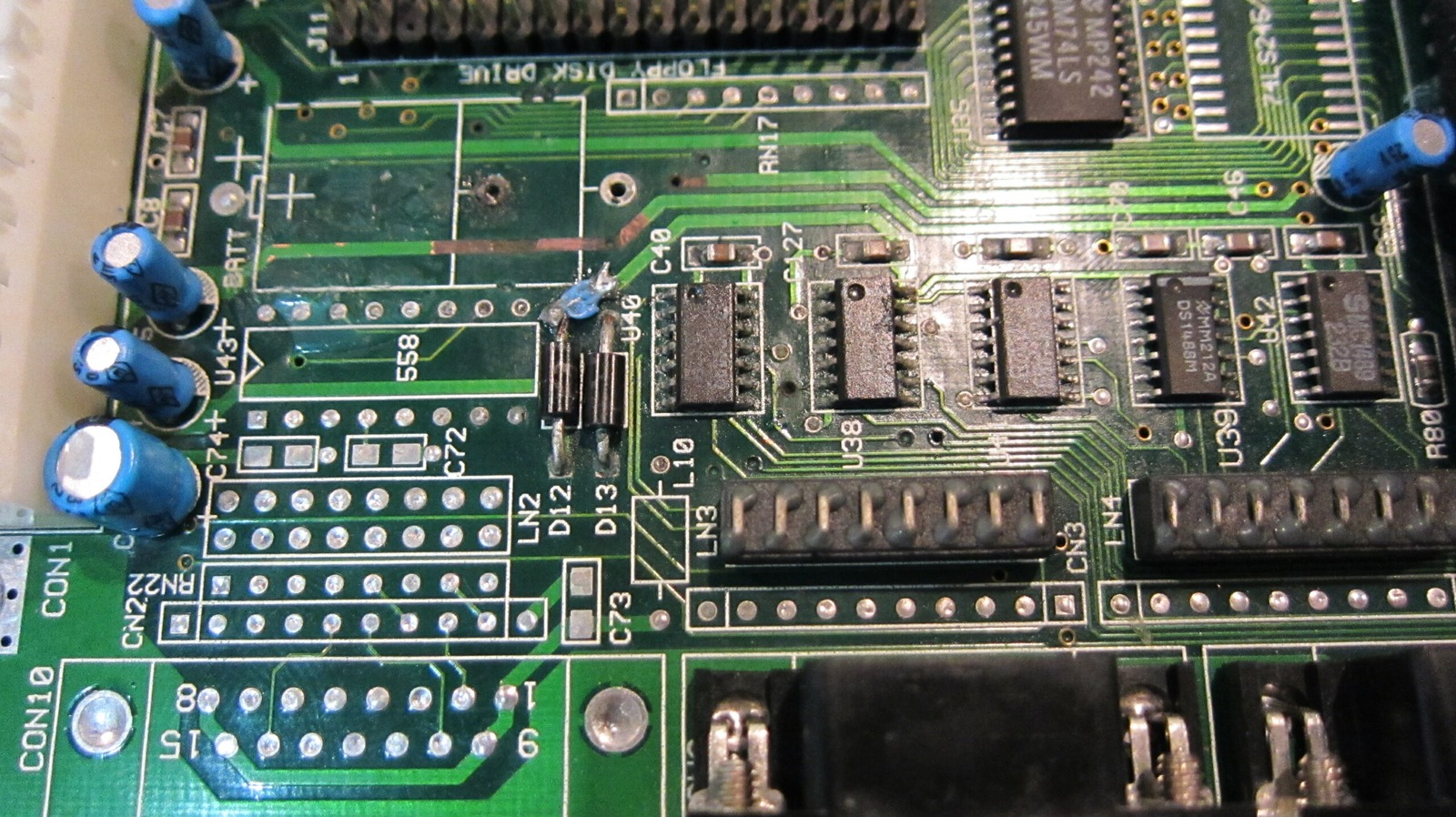
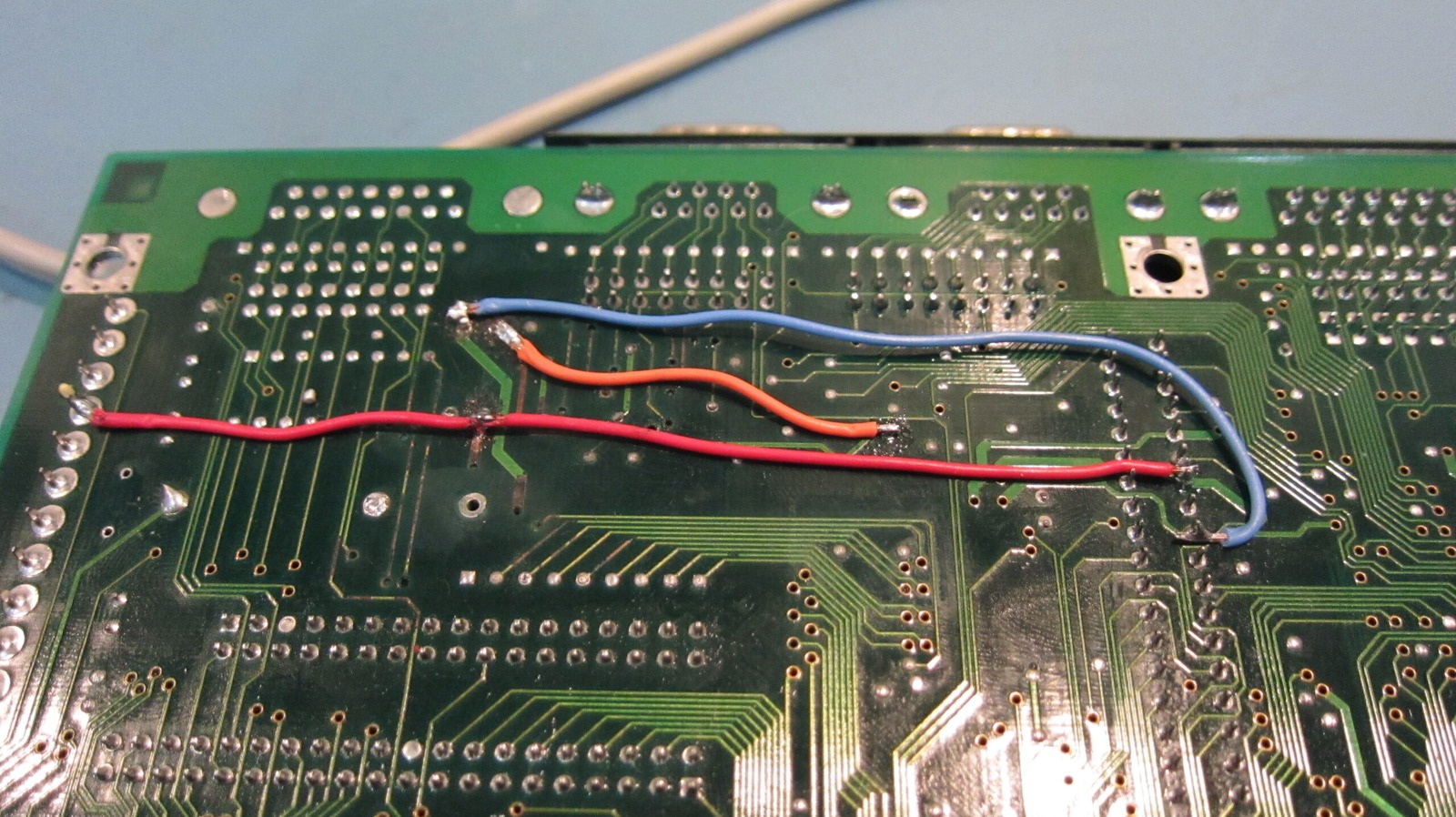
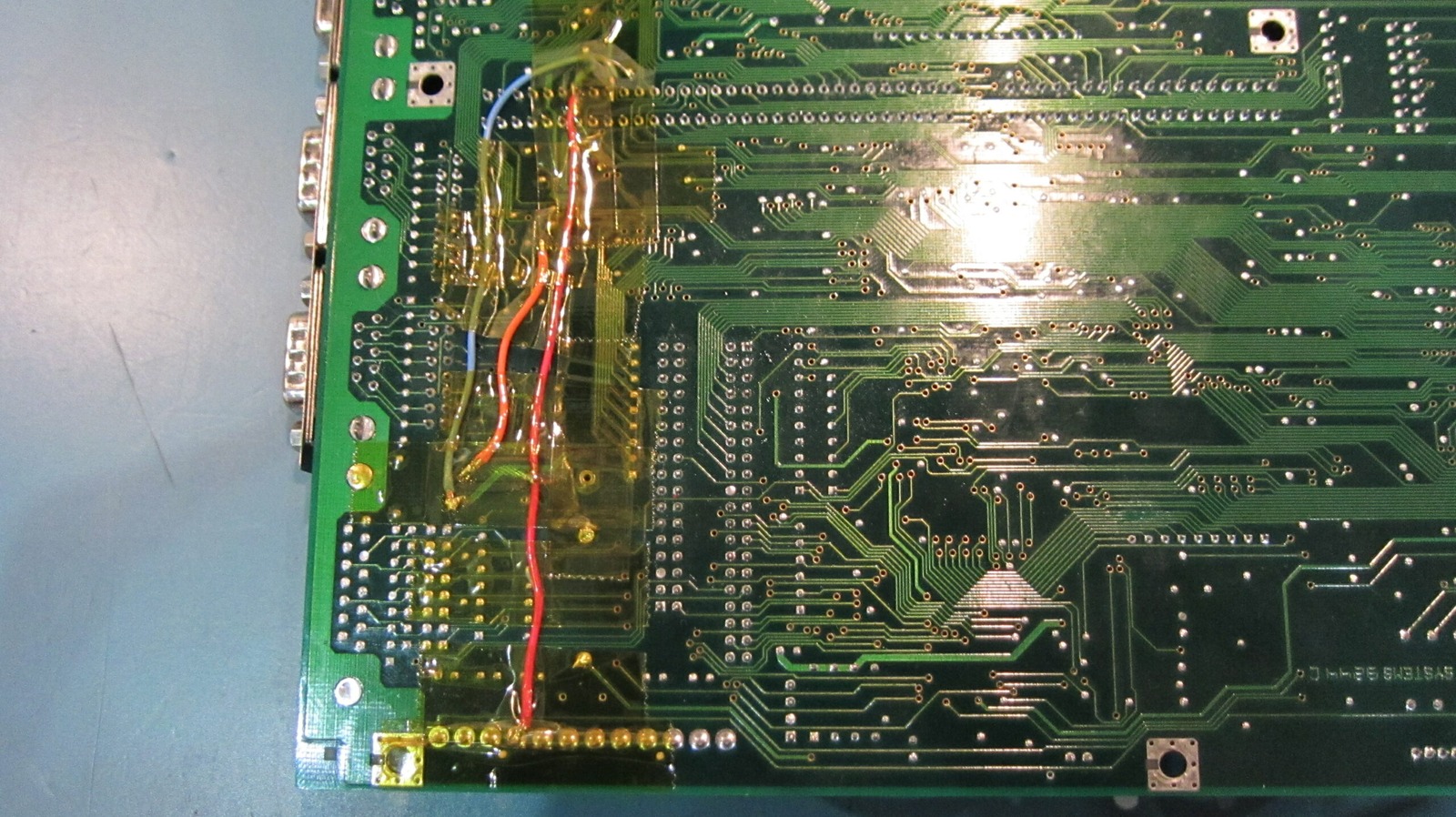
Shiny new wires on the underside of the board. We added a generous amount of Kapton tape to insulate the repairs from the case.
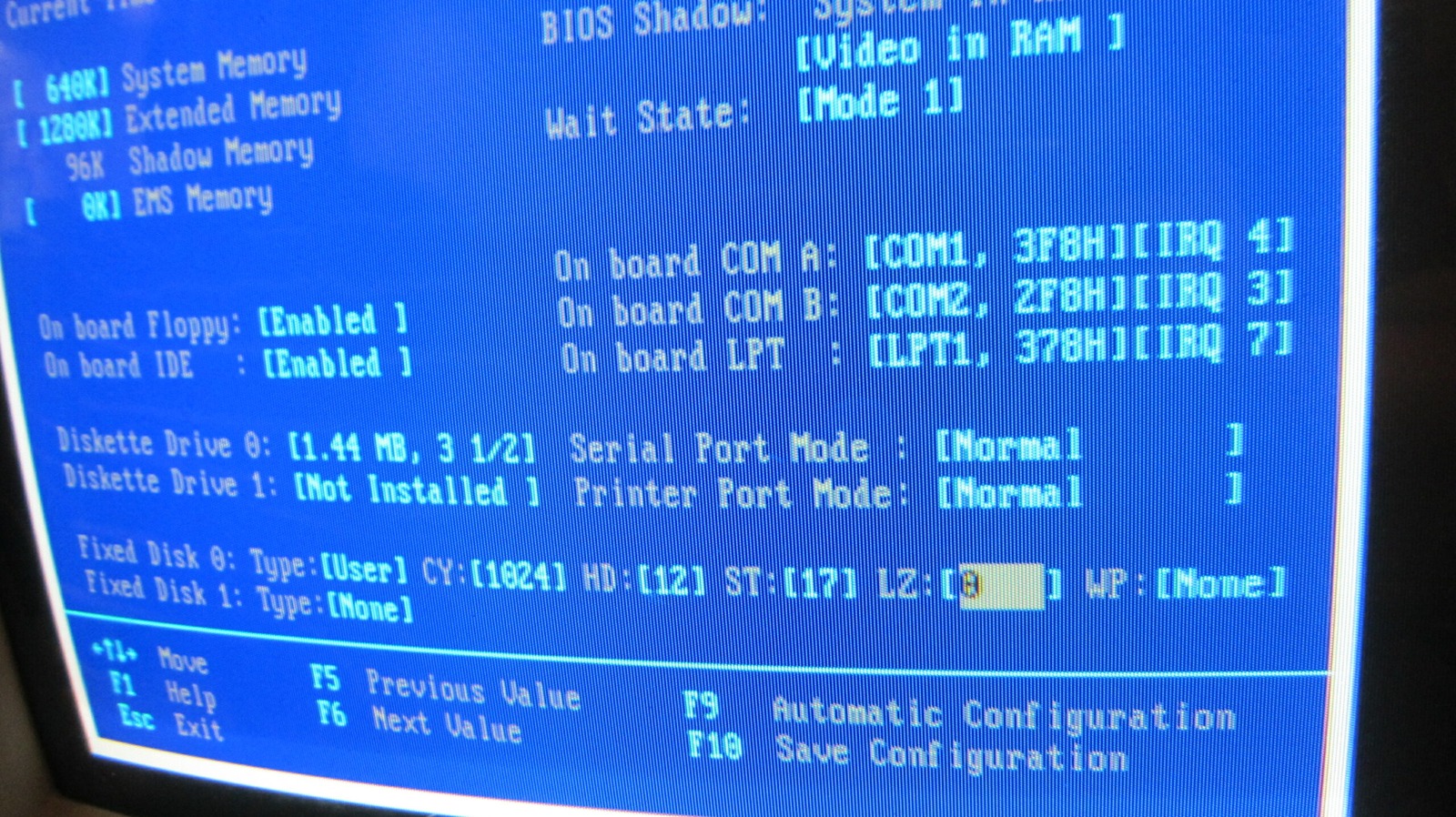
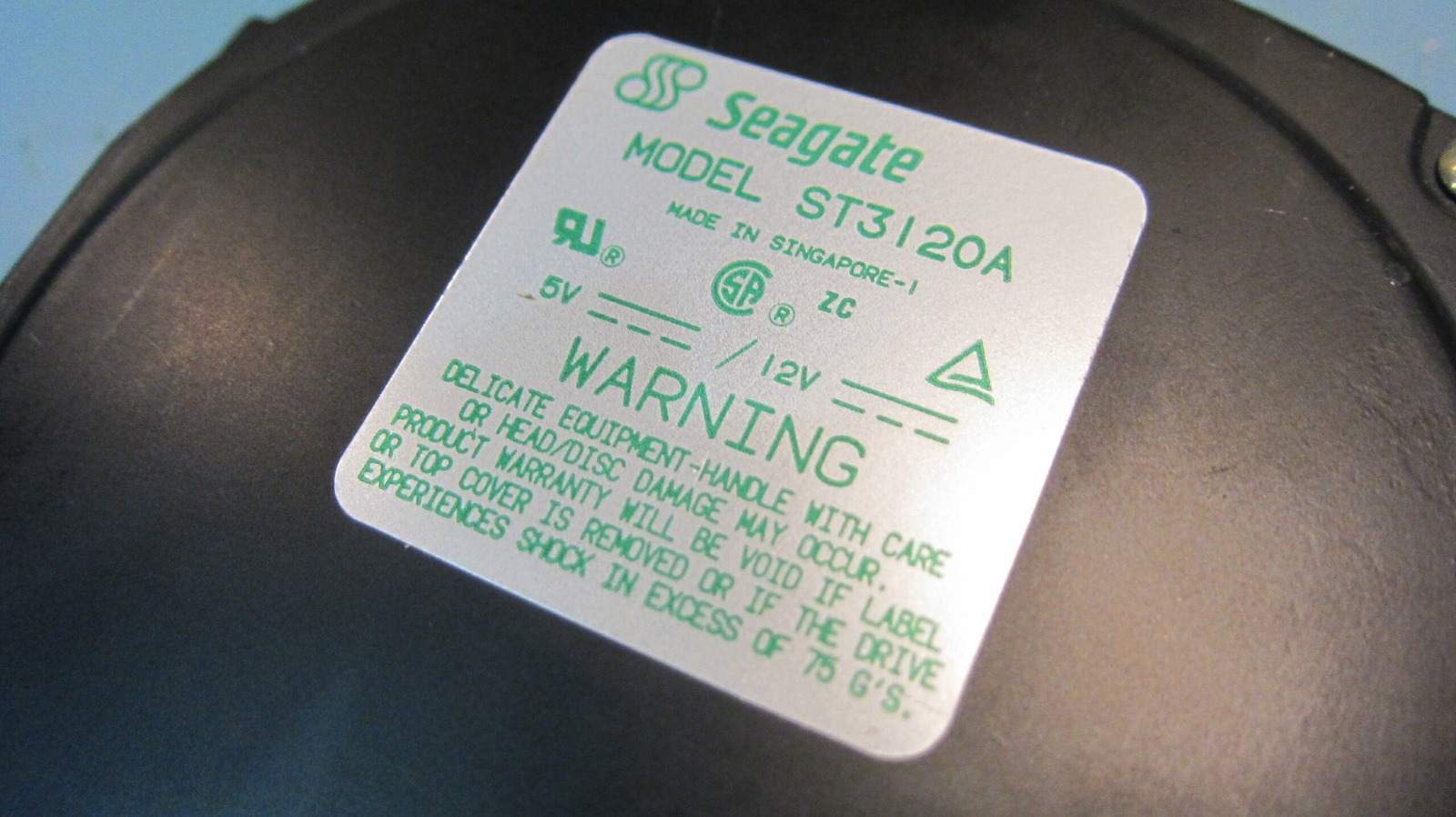
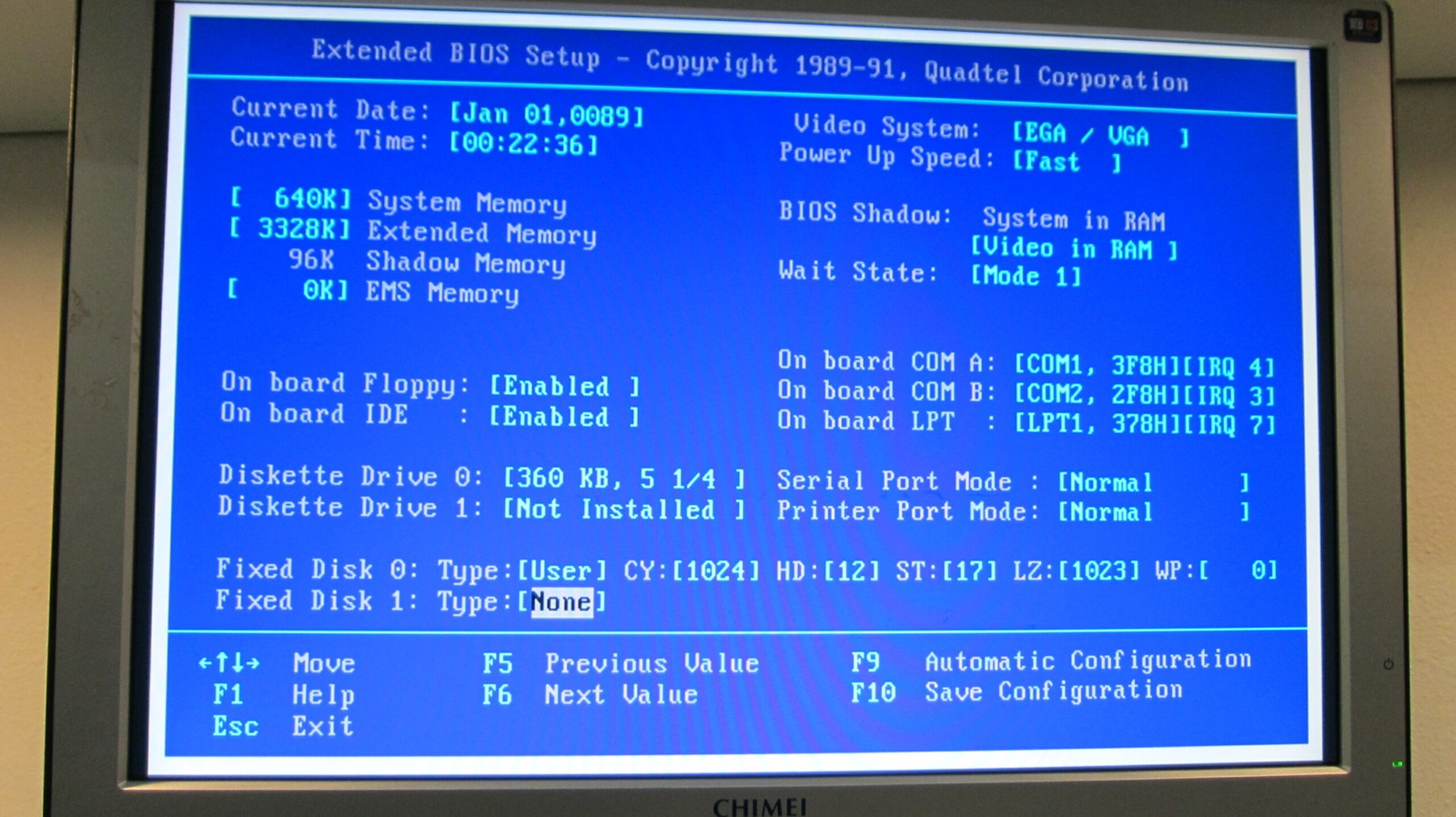
After reassembling everything, I found that the PC side wouldn’t recognise either of the hard drives I tried. I started with a roomy 106MB Seagate, then moved on to a beefy 365MB IBM drive. Both worked fine in another machine.
Either I’m really bad at entering drive geometry or something hard-drive-controller-like on the motherboard is fried.
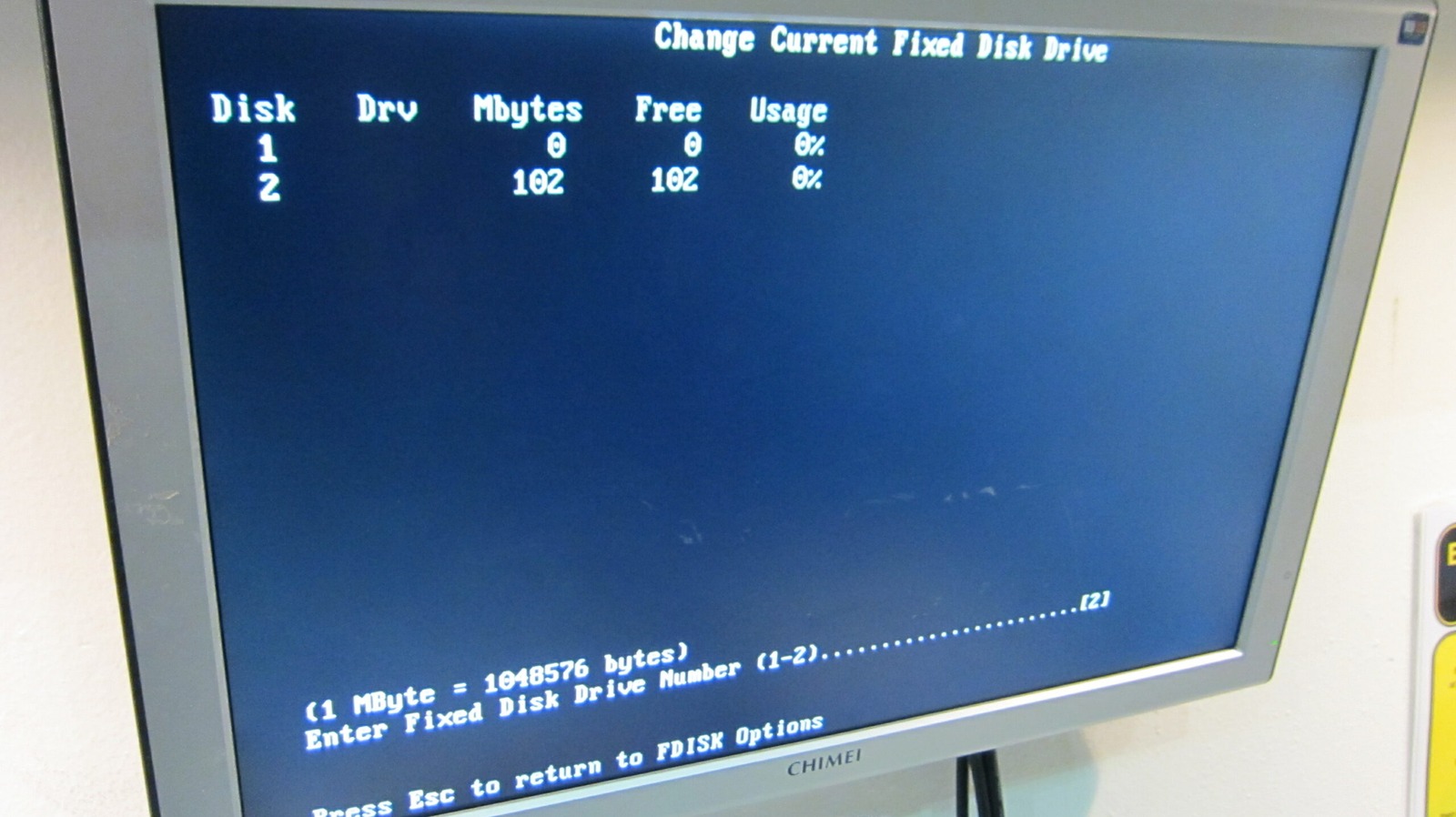
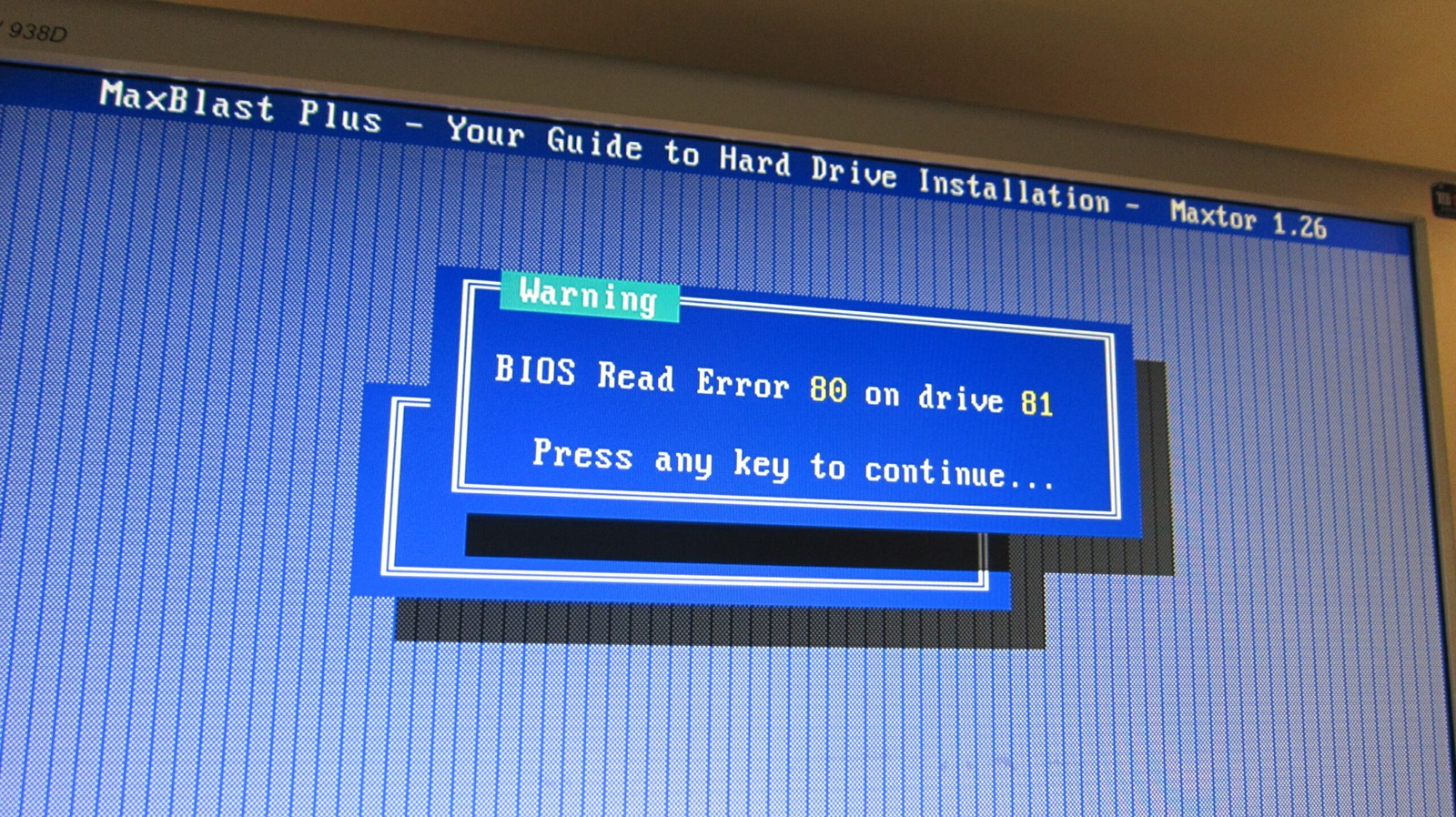
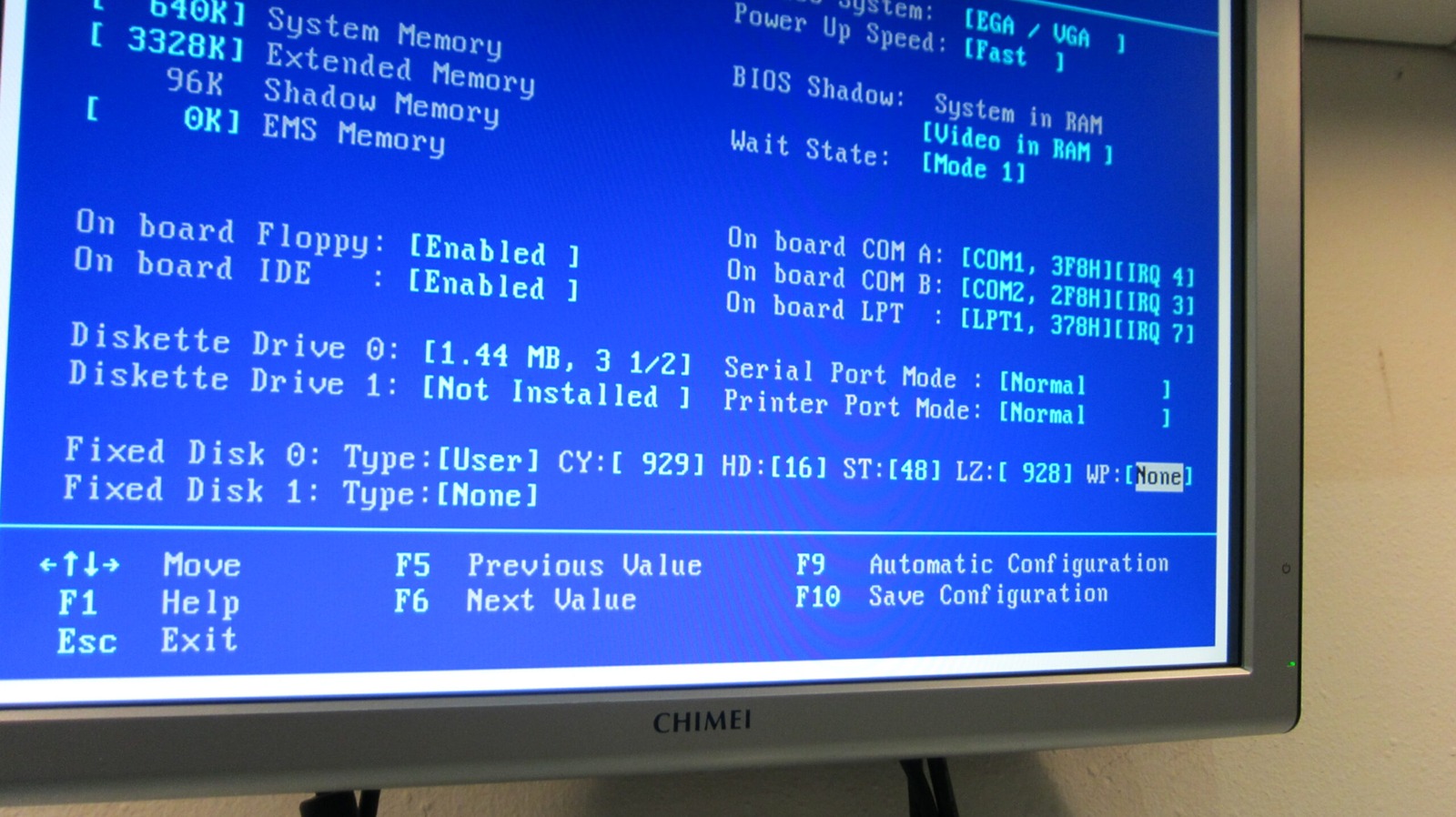
I thought I was close with that FDISK result above, but partitioning still failed and the system kept throwing errors. There is only one hard-drive connector on the motherboard, so I’ll have to wait for the other motherboard I ordered to arrive and start comparing.
Overall, though, a good result. The Sega side works perfectly and the PC side works somewhat. I’m very much looking forward to receiving the other Amstrad motherboard so I can finally work out what is going on with the hard drive.
Related posts
Sources
- Energizer - Nickel Cadmium Application Manual - documents the alkaline potassium hydroxide electrolyte used in nickel-cadmium cells.