 Nix McRetro
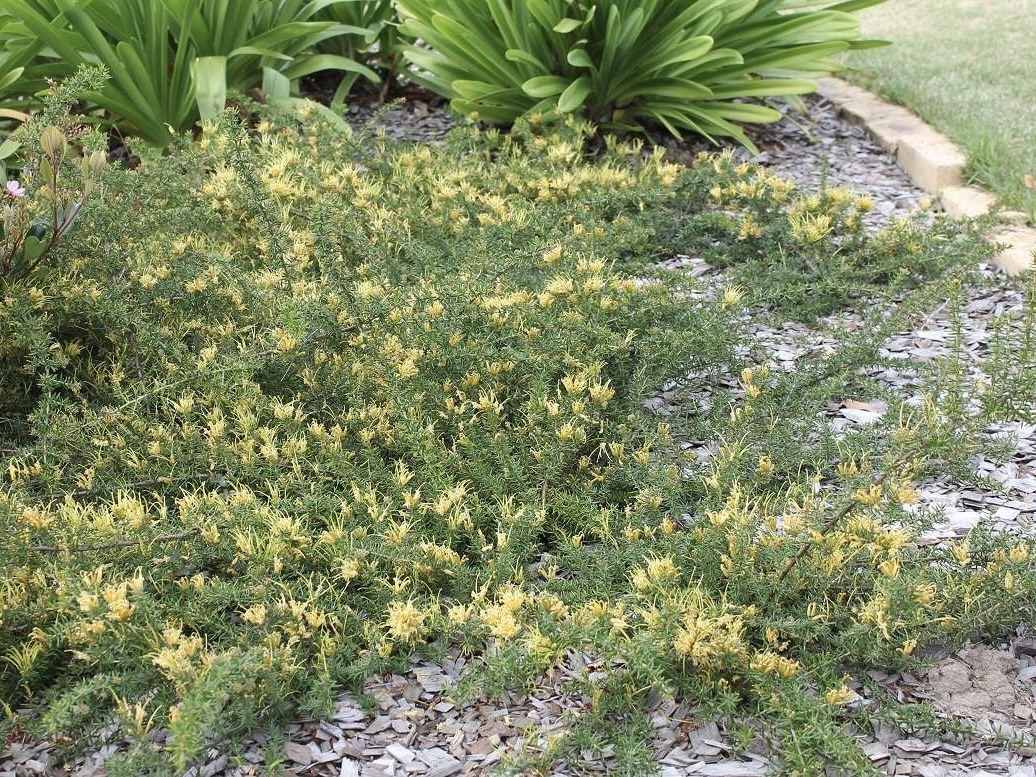
Grevillea juniperina ‘Gold’ spreading across the mulch. Pretty good argument for making room for native plants instead of yet more lawn.
It’s been almost a month since I last posted about the garden. I guess we’re due for a dive into what I’d grow if I had unlimited time, money, and a place of my own. These photos are all inspiration, except for the carrot planter right at the end. That one’s actually mine!
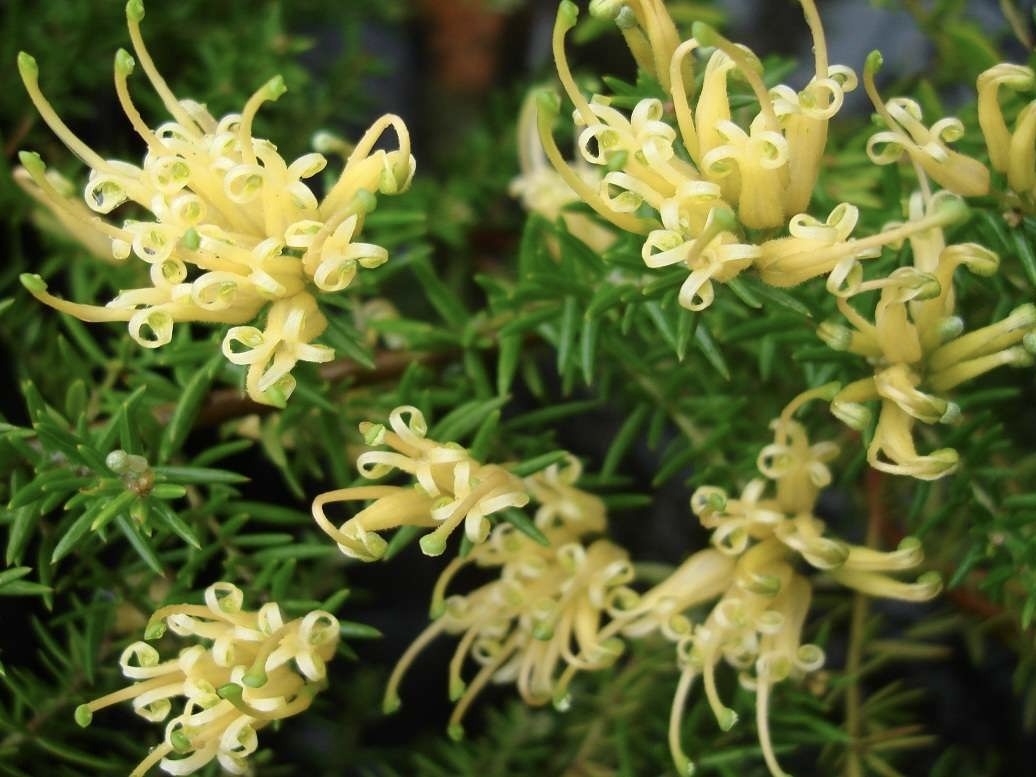
A closer look at those spectacular curly grevillea flowers. I’m starting to think the bees would approve.
Let me be clear, there would be no buffalo grass. Weeds would probably roam free and it would be glorious. At that point are they even weeds?
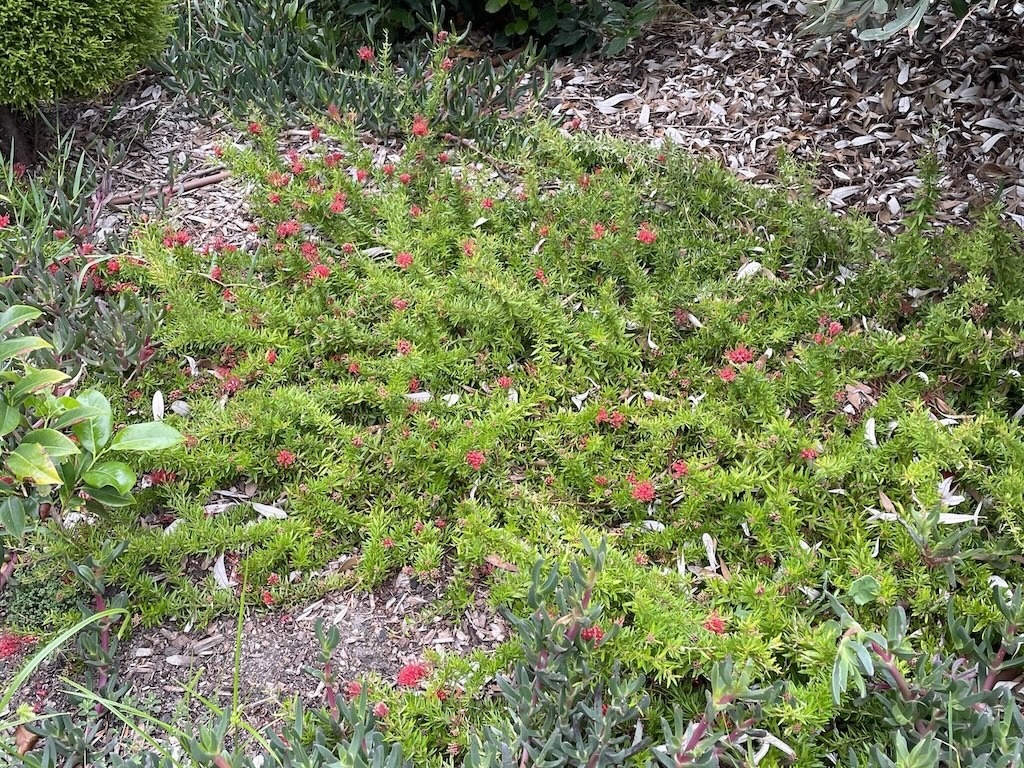
More grevillea ground cover. Imagine a whole stretch of this in place of the buffalo grass. Glorious!
But to help native creatures a little I’d probably install some sort of ground cover like spider flowers, Grevilleas.
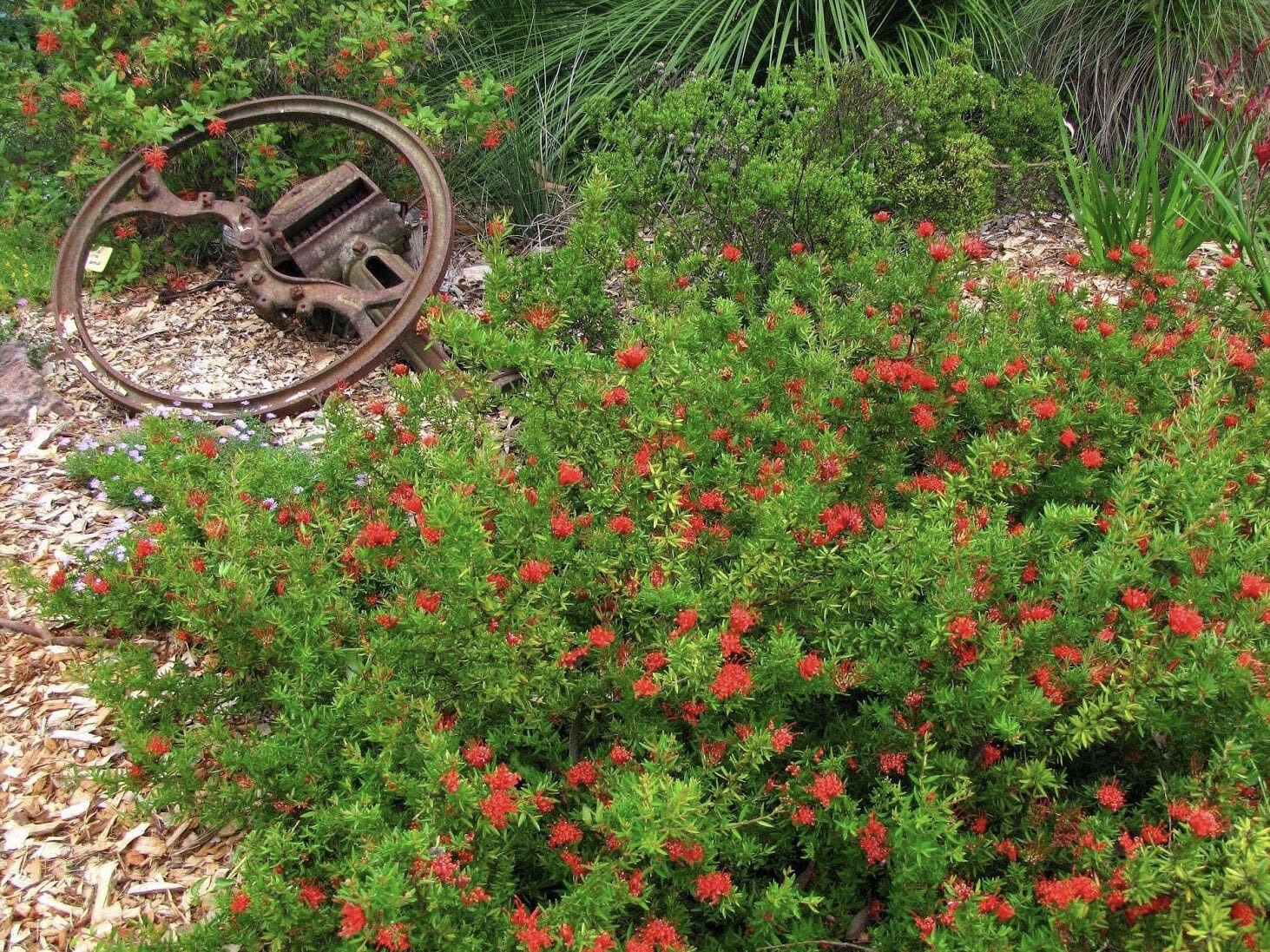
A sea of red grevillea flowers with an old rusty wheel thrown in for atmosphere. Far more interesting than a neatly shaved lawn!
So there’d be a bunch of native ground cover in the form of Grevillea juniperina. Handsome looking devils, aren’t they?
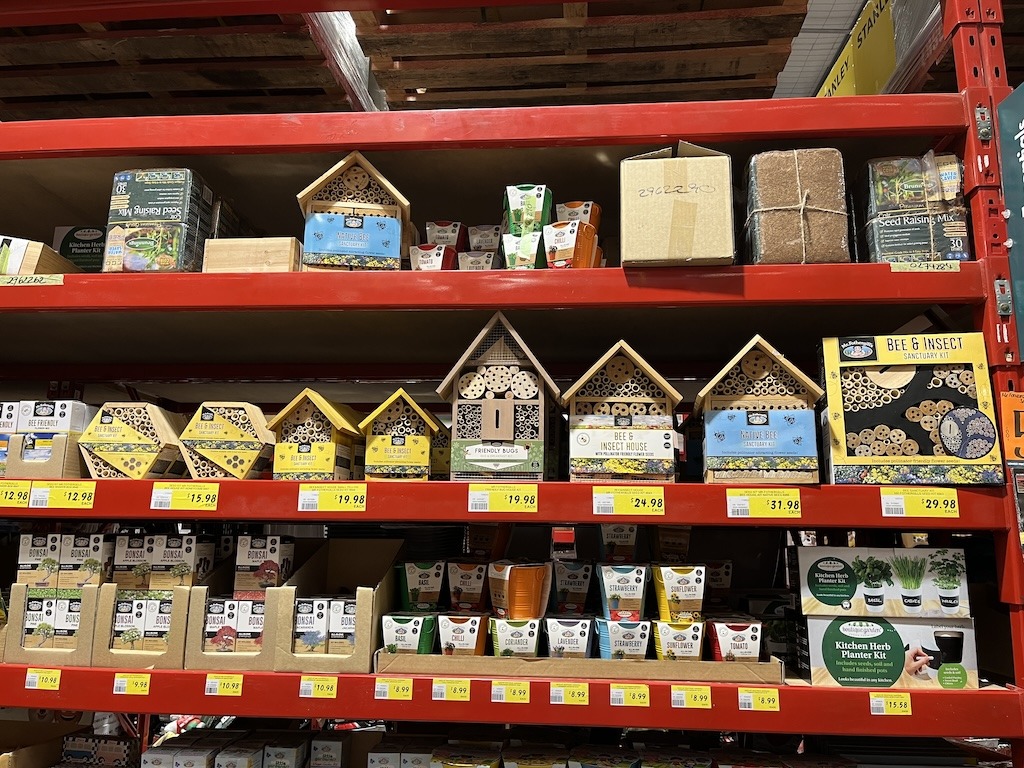
The hardware shop’s little collection of bee hotels was tempting. I’d still want to check the holes and materials before inviting anyone to move in.
I guess I’d probably hit up the local hardware store and buy a bunch of bee hotels, since my property was likely cleared by the previous owners. I’d need to check the nesting holes were smooth and the hotel could be kept dry and maintained, though. A cute little roof doesn’t tell me much about that.
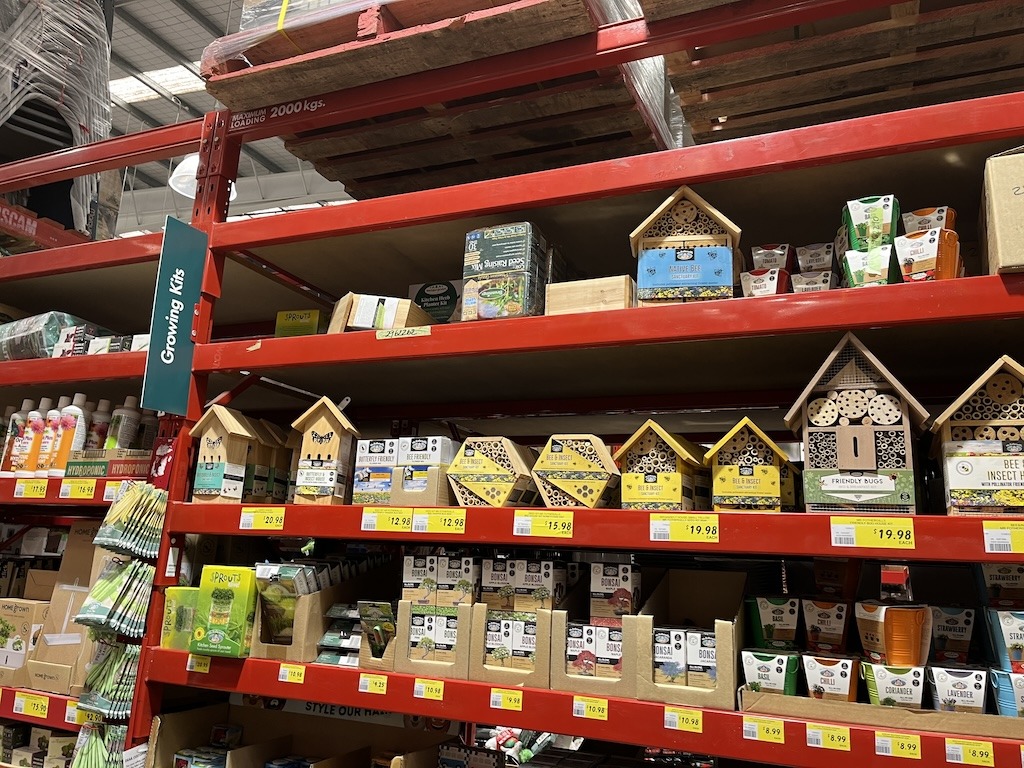
More bee hotels in the growing kits aisle. There were certainly plenty of options, but I’d want something the local native bees could actually use.
I have no idea where to find untreated wood so these would absolutely tide me, and the bees, over for a while.
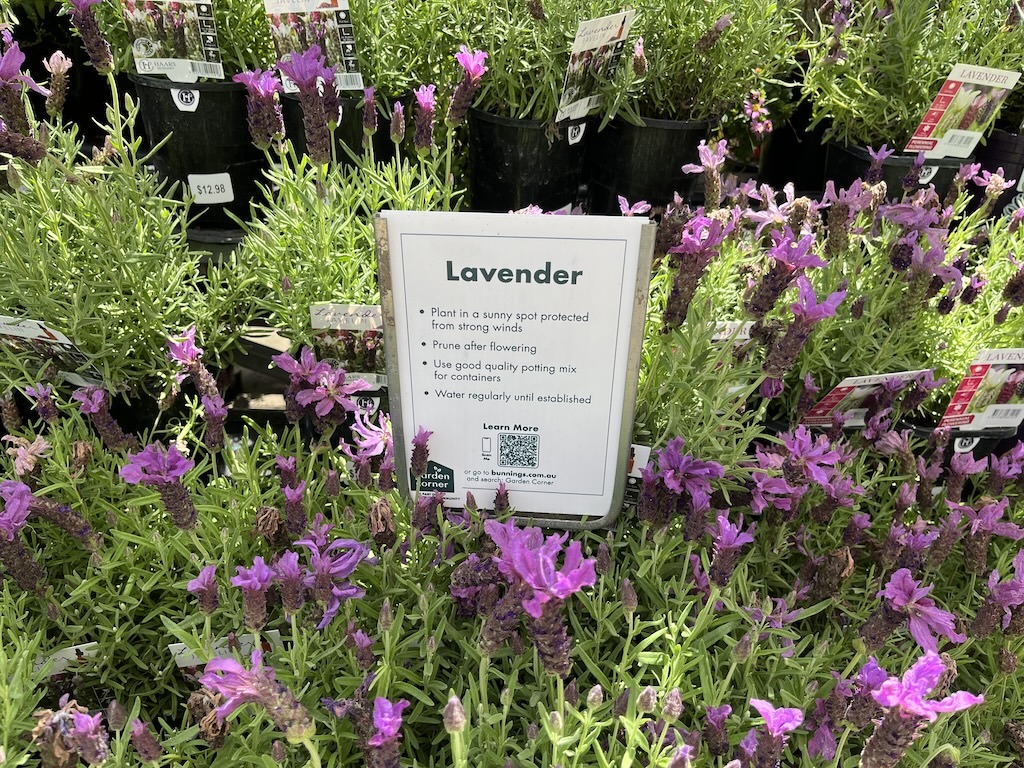
Lavender looked very tempting as a food stop for the blue-banded bees. Purple flowers everywhere, and plenty to choose from.
Blue-banded bees. Purple and blue flowers are a good place to start, though they aren’t the only colours these bees visit. Let’s load up with lavender. It will grow above the ground cover quite well, and some varieties flower for a long stretch… I think.
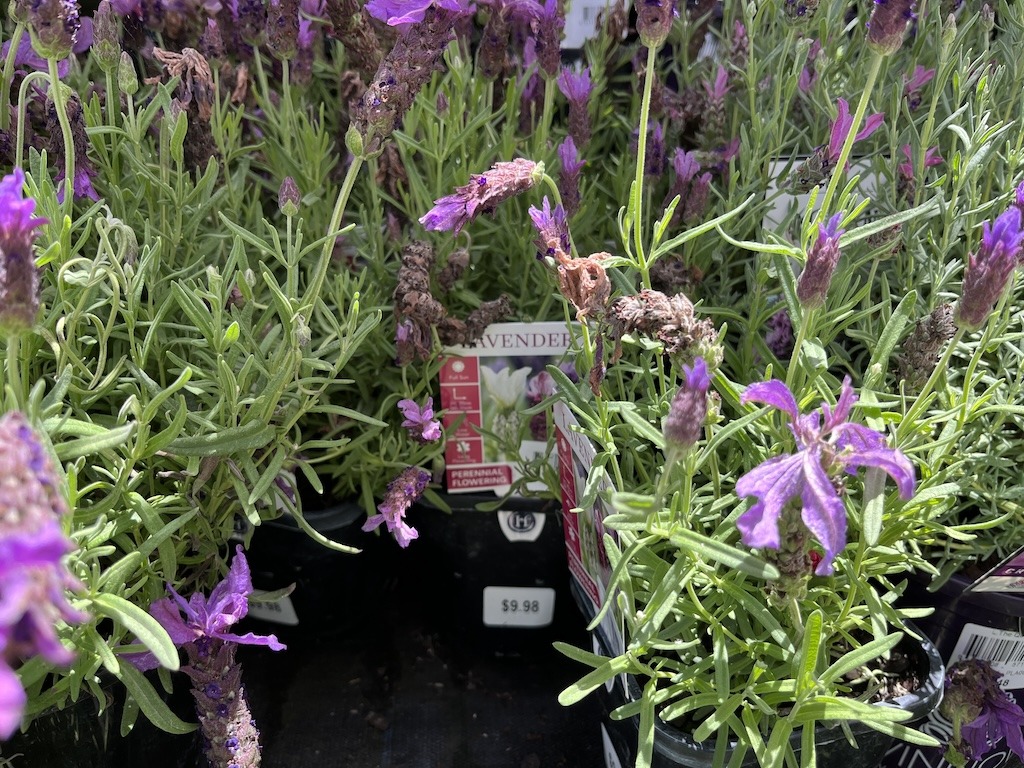
A closer look at the lavender. Some flowers were already looking rather scruffy, but it was easy to see why I kept coming back to the purple ones.
Lavender isn’t an Australian native, though. Maybe I should get some native daisies from Brachyscome spp. instead.
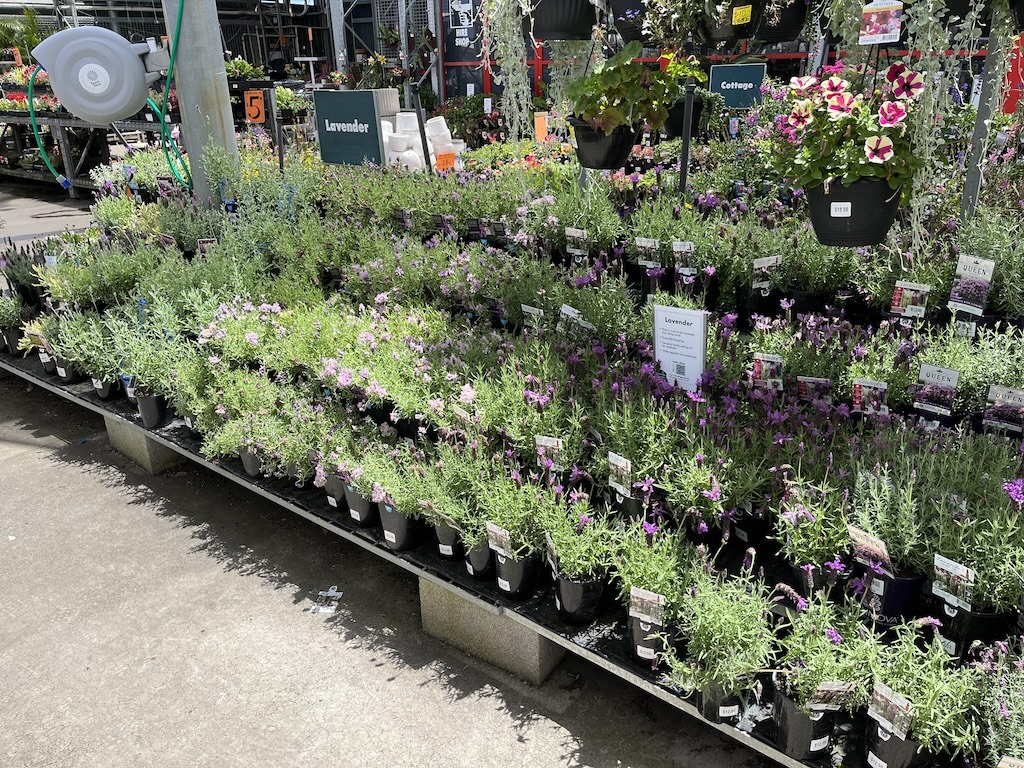
This enormous lavender display wasn’t helping me make any decisions. How am I supposed to choose just a few plants from all that?
I guess there’s a fair bit, really not sure what I’d go for.
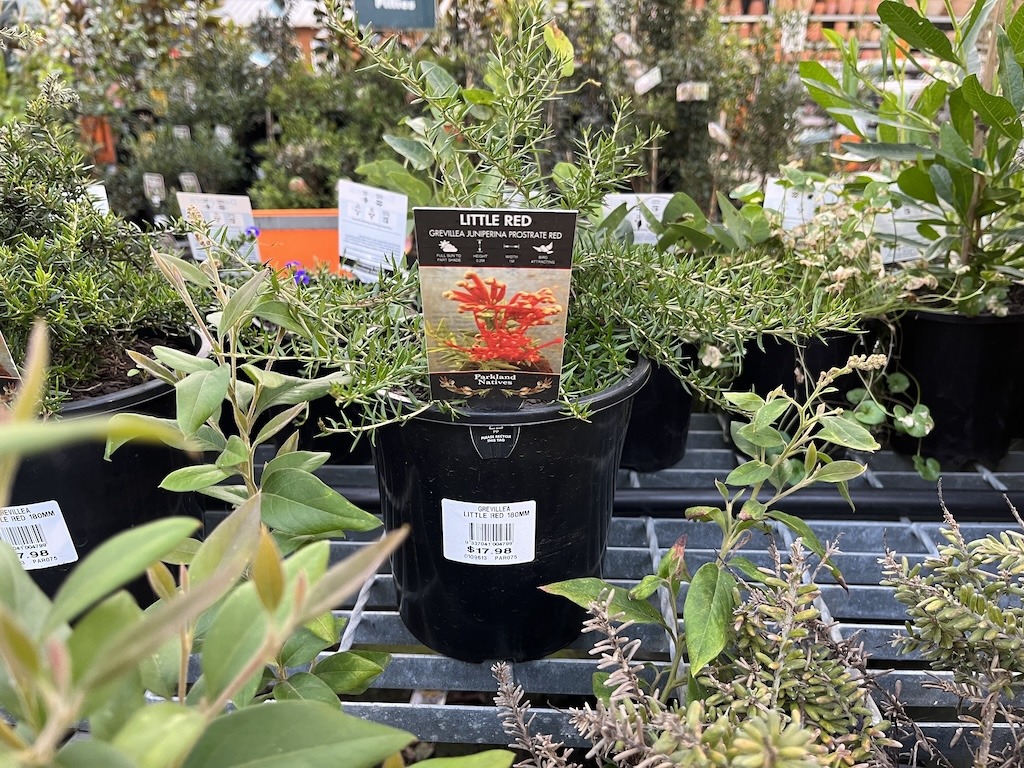
Back to grevilleas! The ‘Little Red’ label promised a lovely low-growing one, which is exactly the sort of ground cover I had in mind.
Which brings us back around to grevilleas.
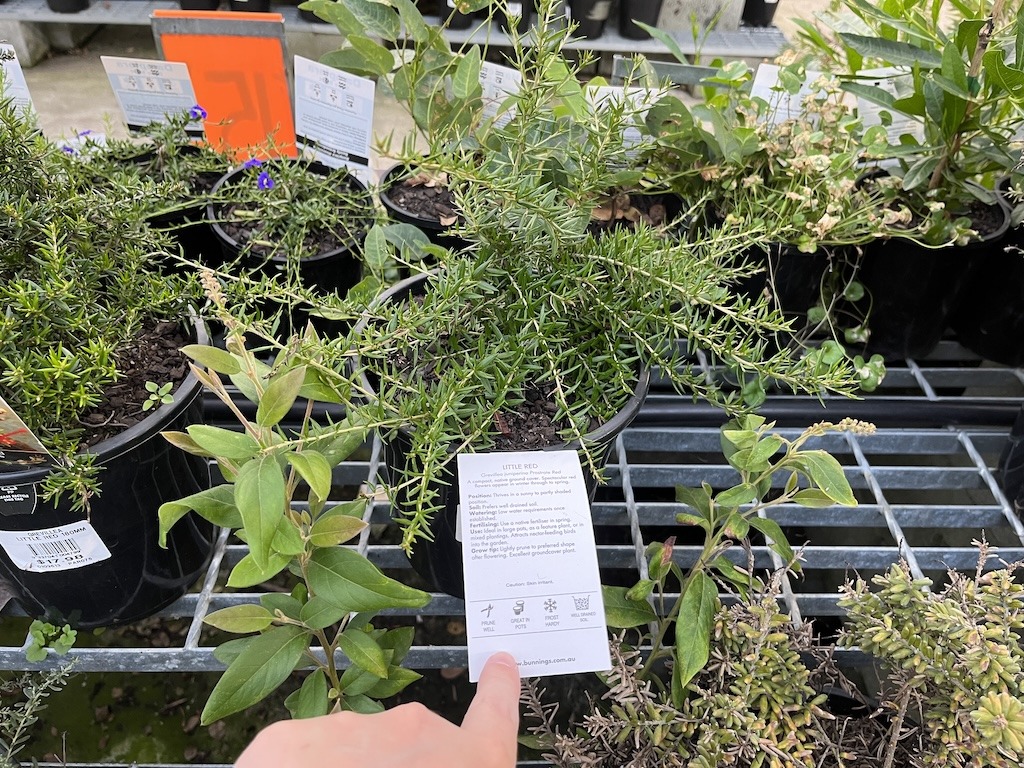
Apparently I needed to examine the back of the ‘Little Red’ label as well. These are serious decisions when you’re planning an imaginary garden!
I mean it doesn’t really but here they are.
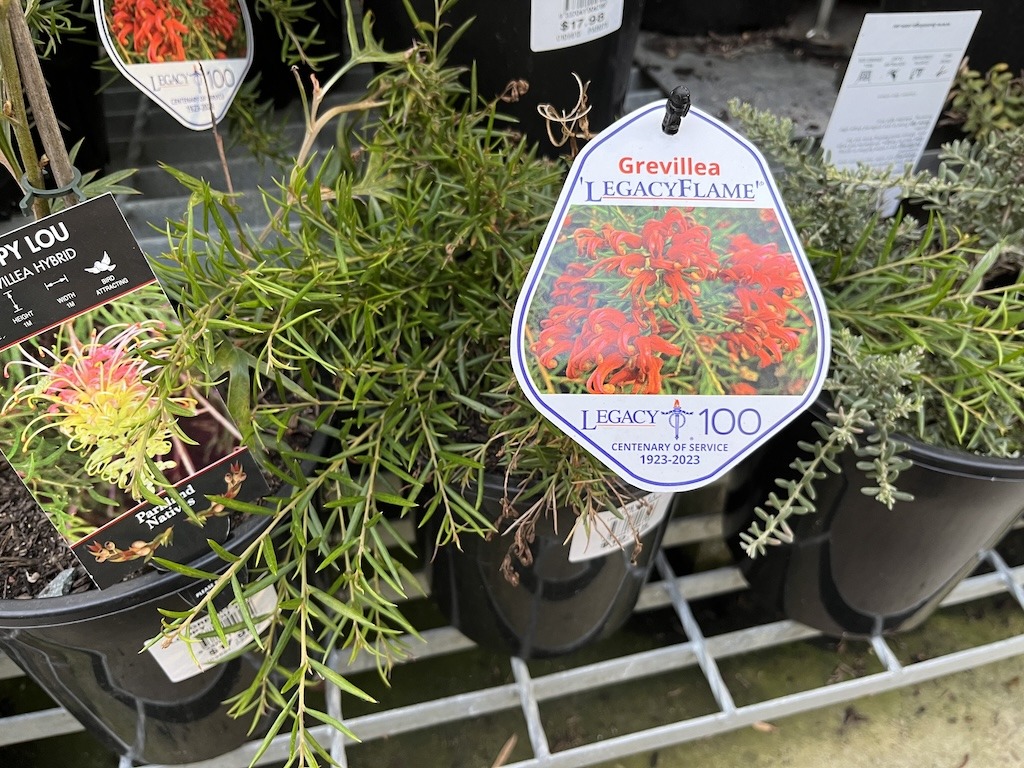
Then I spotted ‘LegacyFlame’, with a rather impressive picture of red flowers. If only choosing a garden were as easy as collecting plant labels.
So many types, I’d definitely want a prostrate type - meaning ground cover.
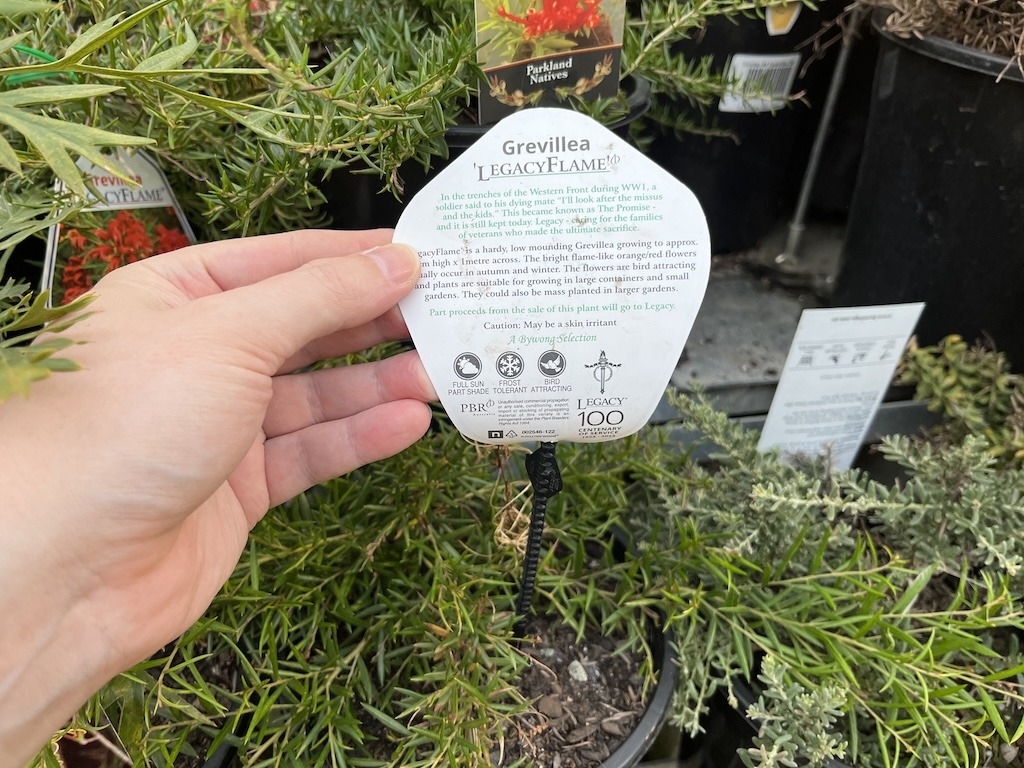
Aha, the back of the ‘LegacyFlame’ label even warns that it may be a skin irritant. Maybe not the ideal plant to tumble into, then.
But most of them are spiky…
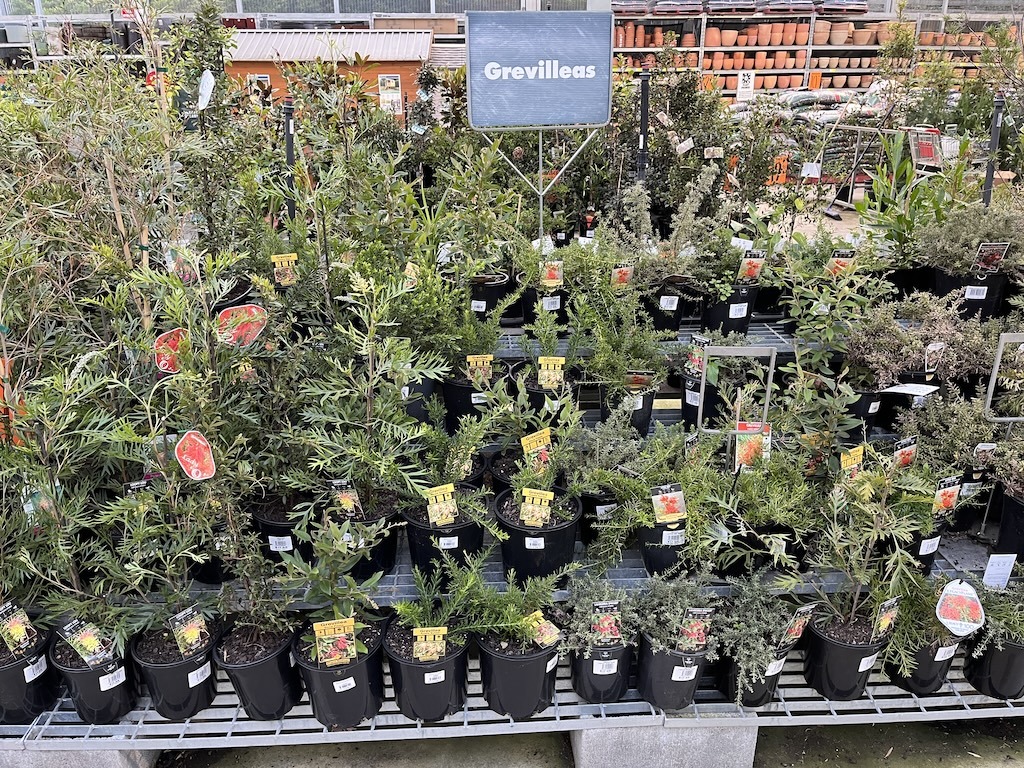
So many grevilleas in one place! I’d want a mixture of heights and shapes, rather than just a garden full of prickly surprises.
I would not want to fall into a grevillea bush.
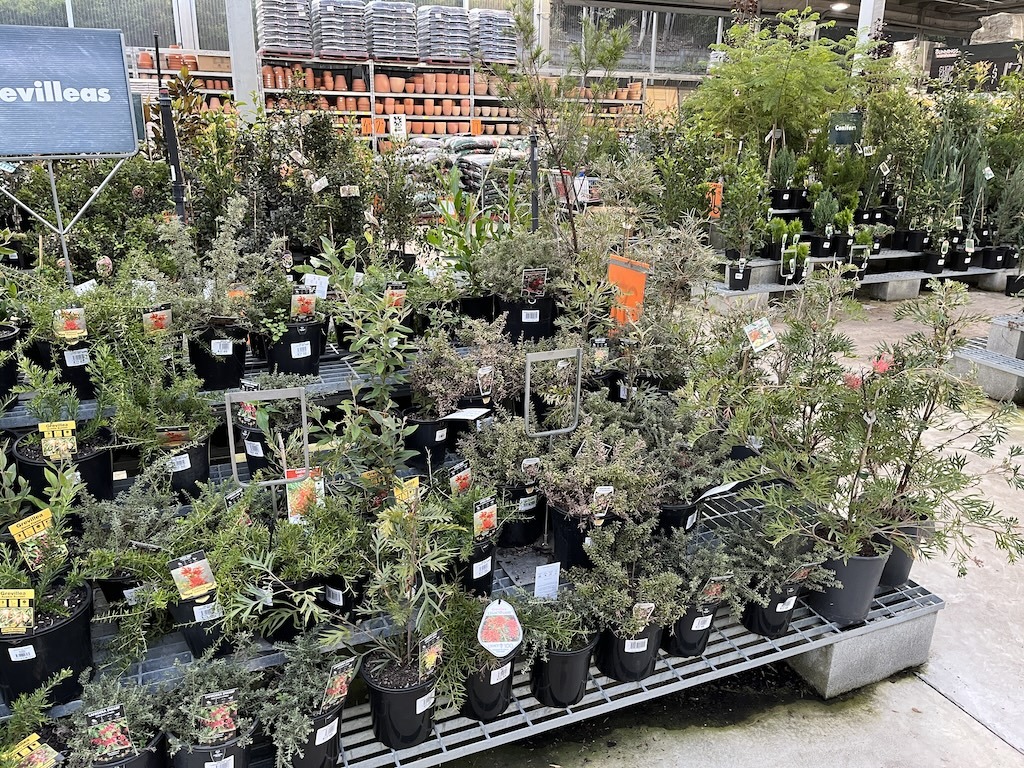
And the grevillea section just kept going. If I had unlimited time, money, and a place of my own, I’d be wheeling half the nursery home!
Or even a stand of grevillea! I guess I’d also like bottlebrush-type trees. Maybe some Viola hederacea or similar in the shaded areas.
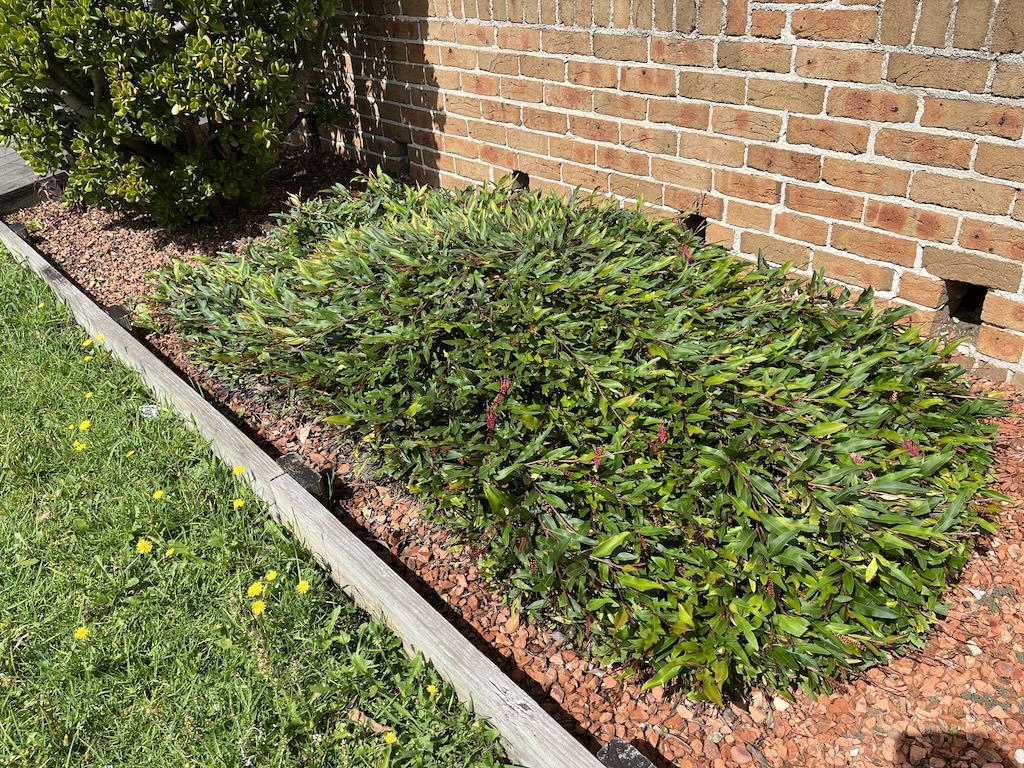
A low shrub spreading through a gravel bed. Not my garden, but certainly the kind of greenery I’d nick ideas from!
Weeping grass, Microlaena stipoides, would be high up on my list for a lawn replacement. The above is definitely not weeping grass.
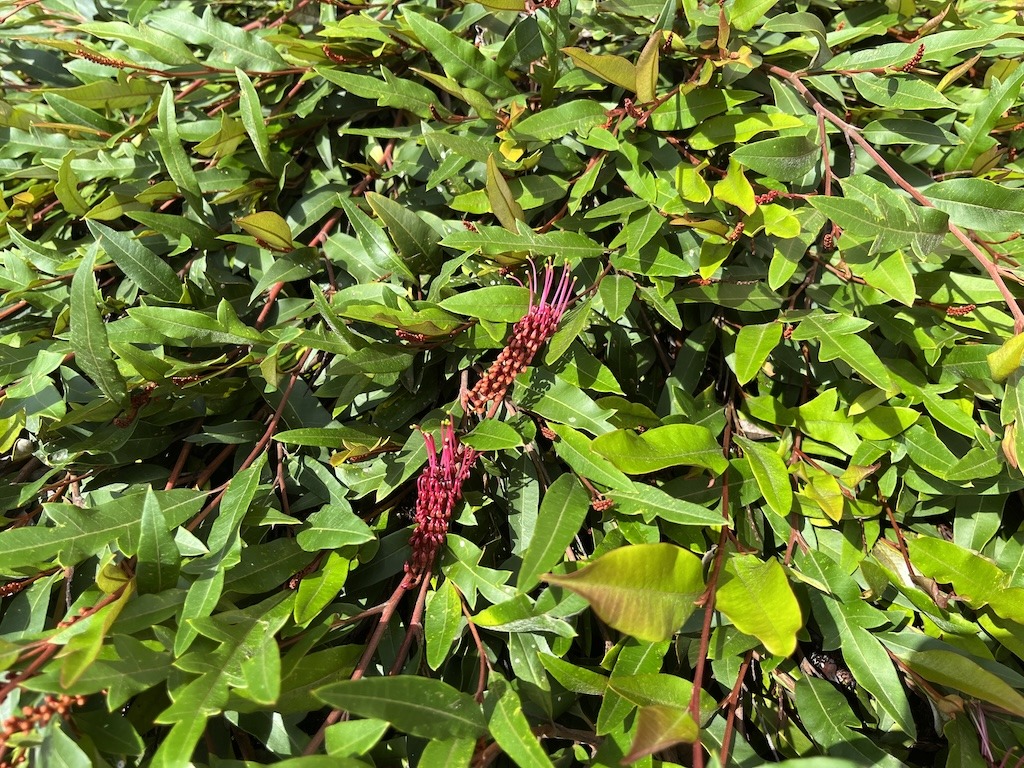
A closer look at the ground cover and its little flower spikes. Another candidate for the completely imaginary garden shopping list.
Creeping Boobialla, Myoporum parvifolium is hardy so might make the list if the grevillea doesn’t outcompete it.
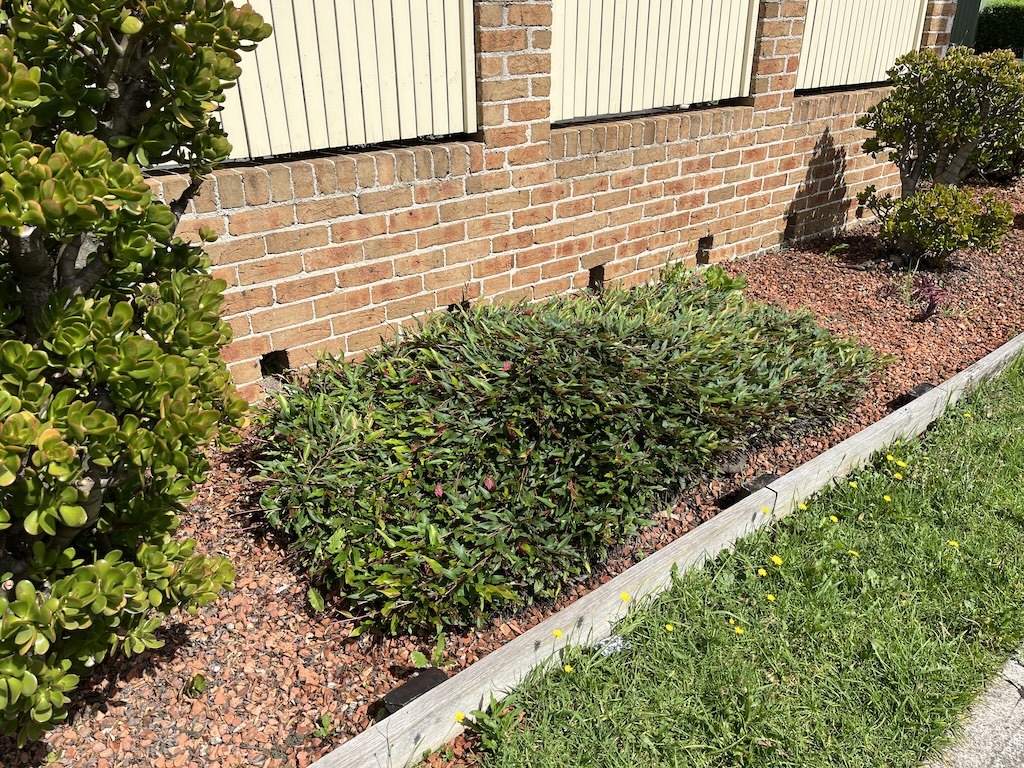
A well-established bed of shrubs beside a brick wall. I’m taking notes for the dream garden, not showing off something I’ve already planted!
I guess it’s all just a pipe dream though. Who knows if we’ll get another year on the lease. The uncertainty of housing is one of the most depressing things I get to think about.
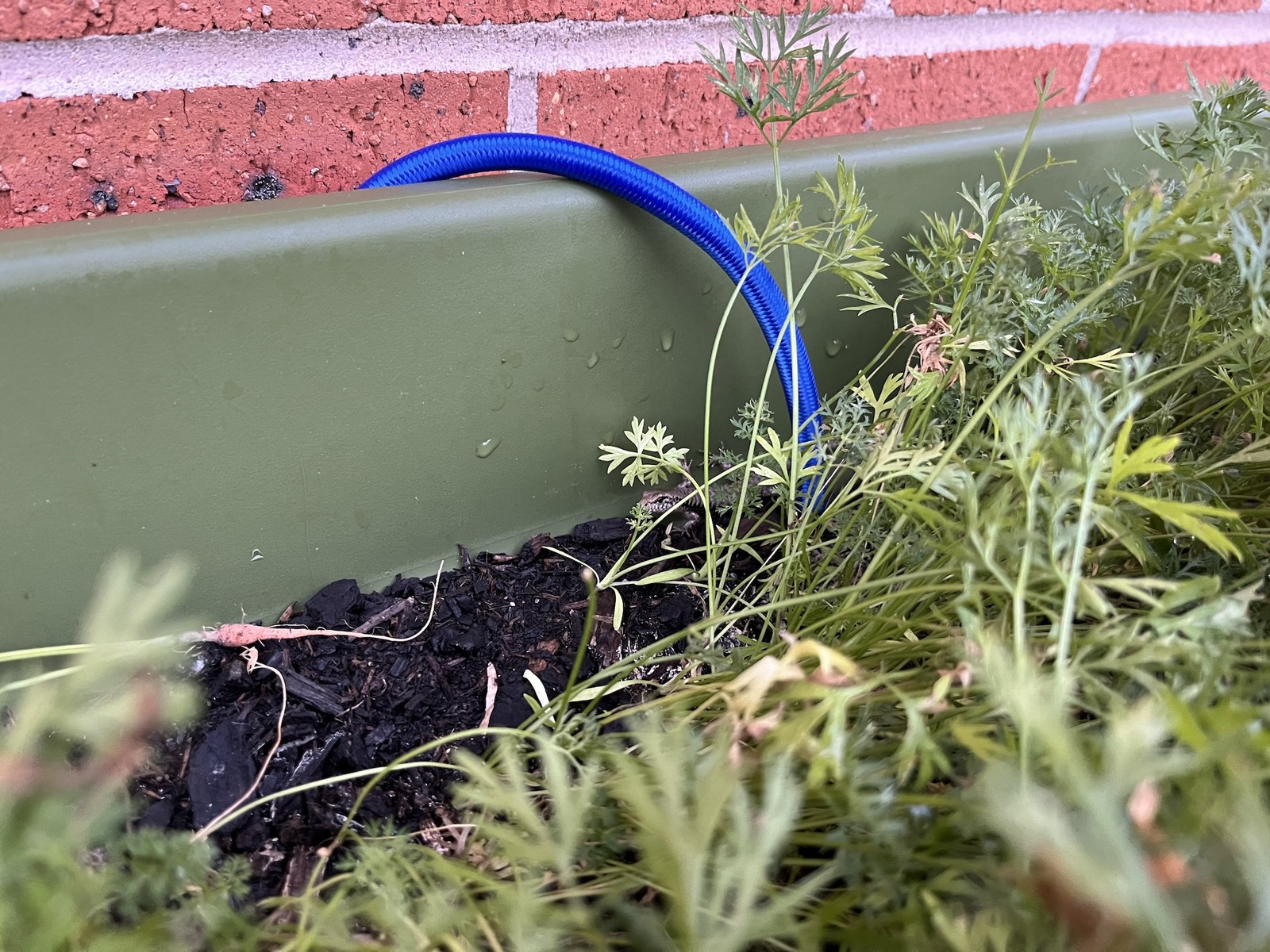
My idea of a lizard lounge: a planter full of greenery, with a handy blue hose for decor. The resident bar-sided skink was playing hide-and-seek in this shot!
Maybe I’ll just live in some broken ceramic pots - a potential lizard lounge maybe? This little lizard, a bar-sided skink (Concinnia tenuis), has no trouble hunting bugs in the carrot planter! 🥰
Sources
- The Entomologist Lounge - Insect Hotels: A Refuge or a Fad?
- Aussie Bee - Flowers Loved by Native Bees
- Royal Botanic Gardens, Kew - Lavandula