 Nix McRetro
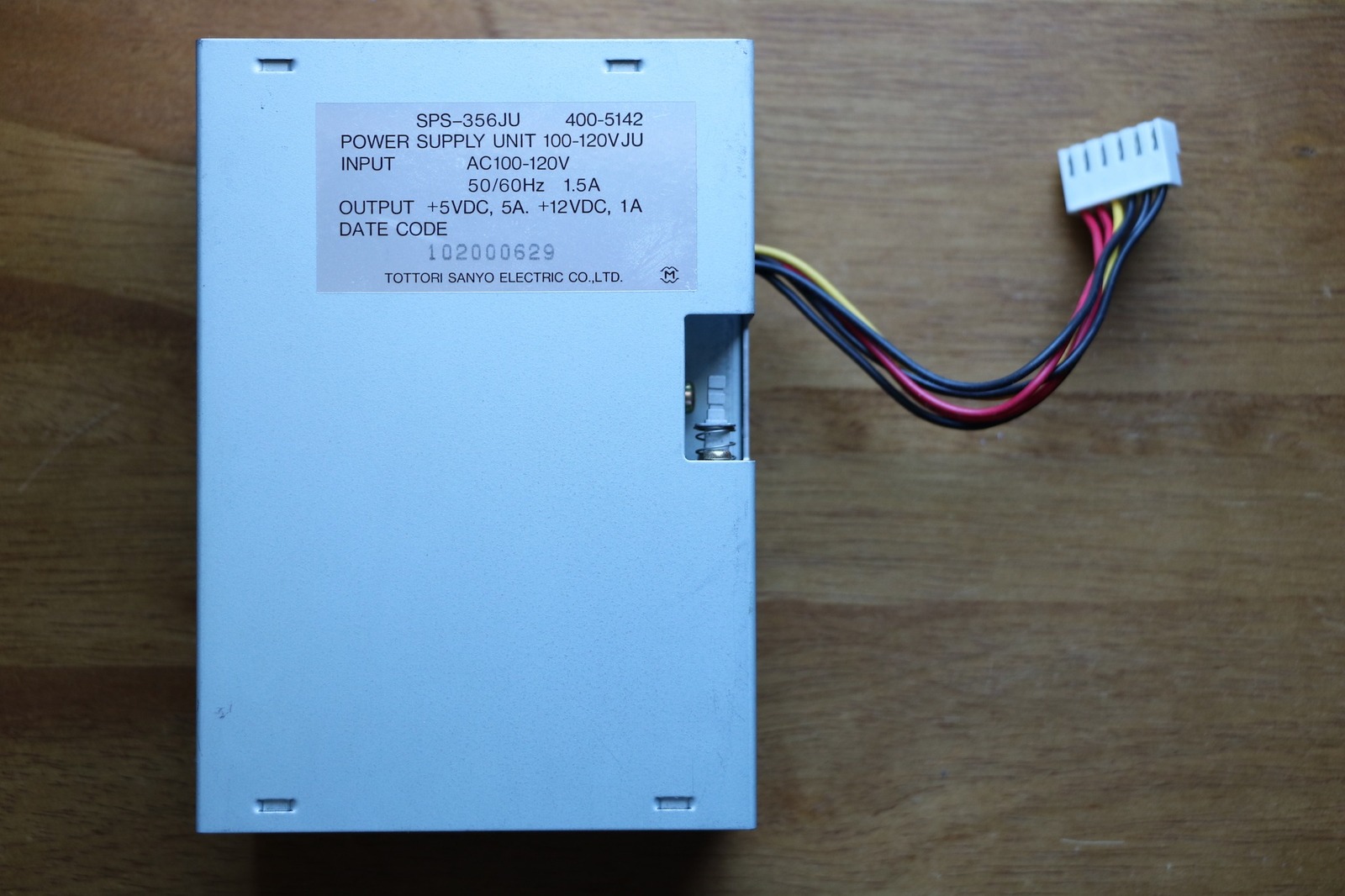
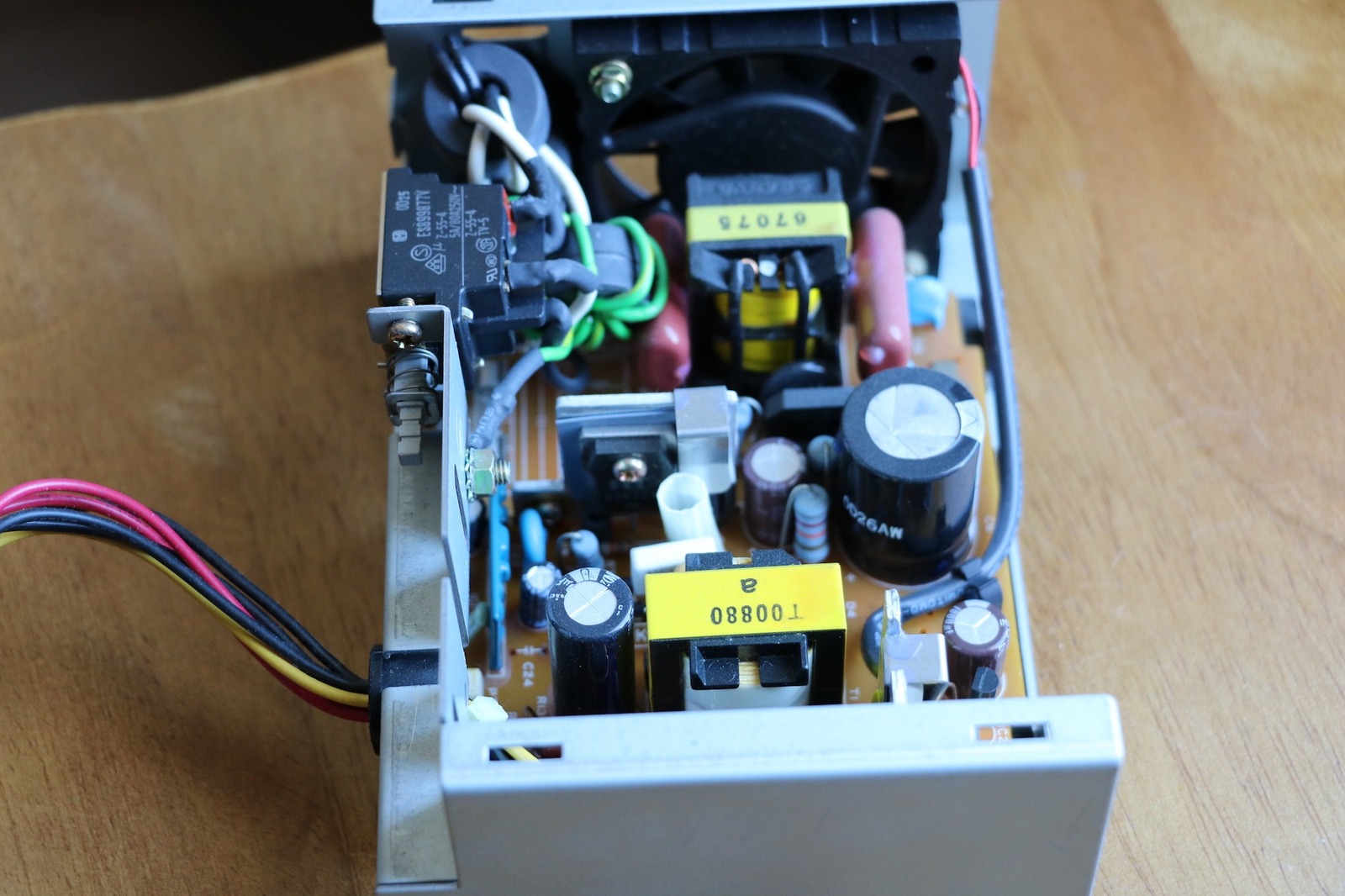
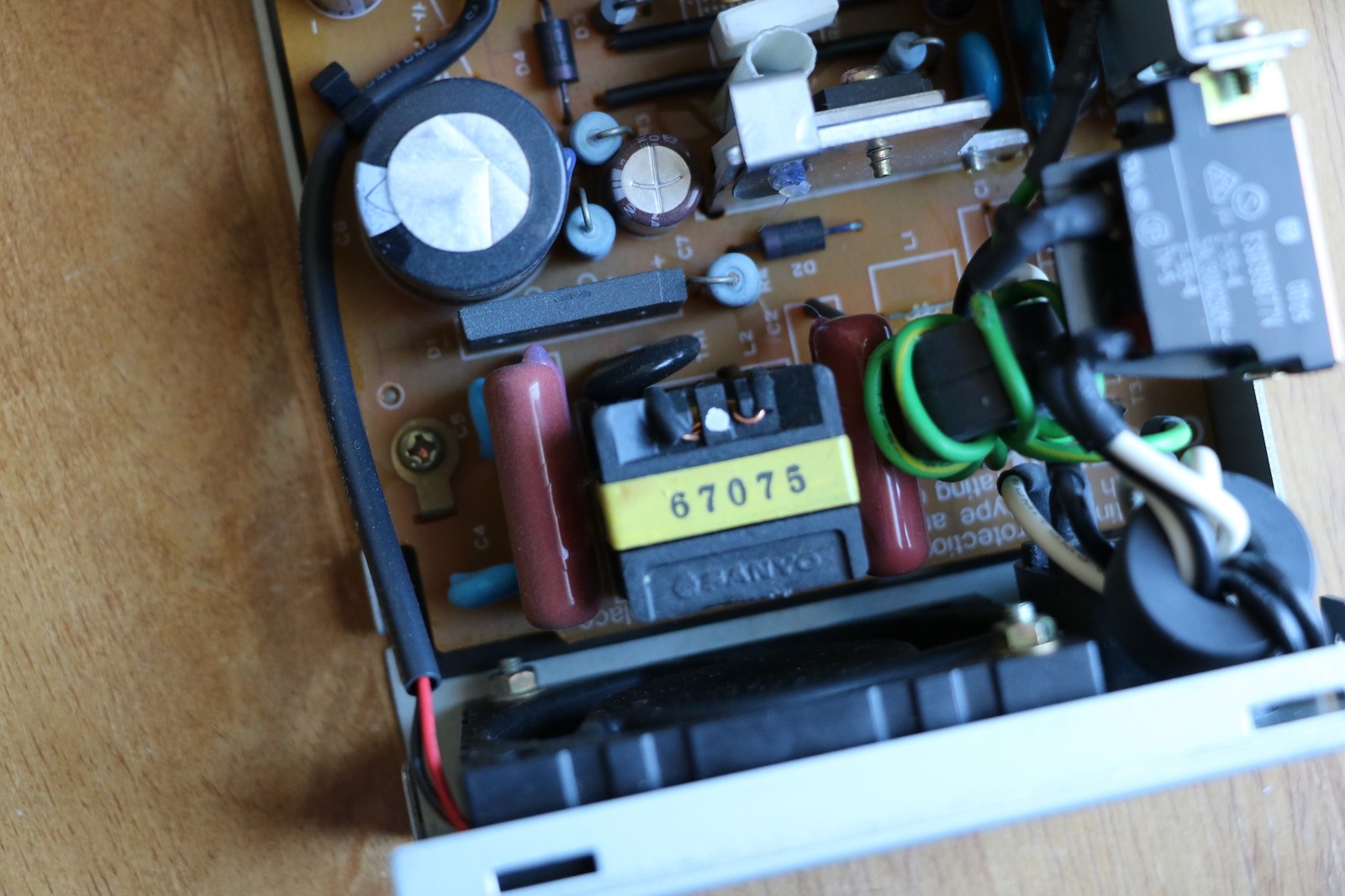
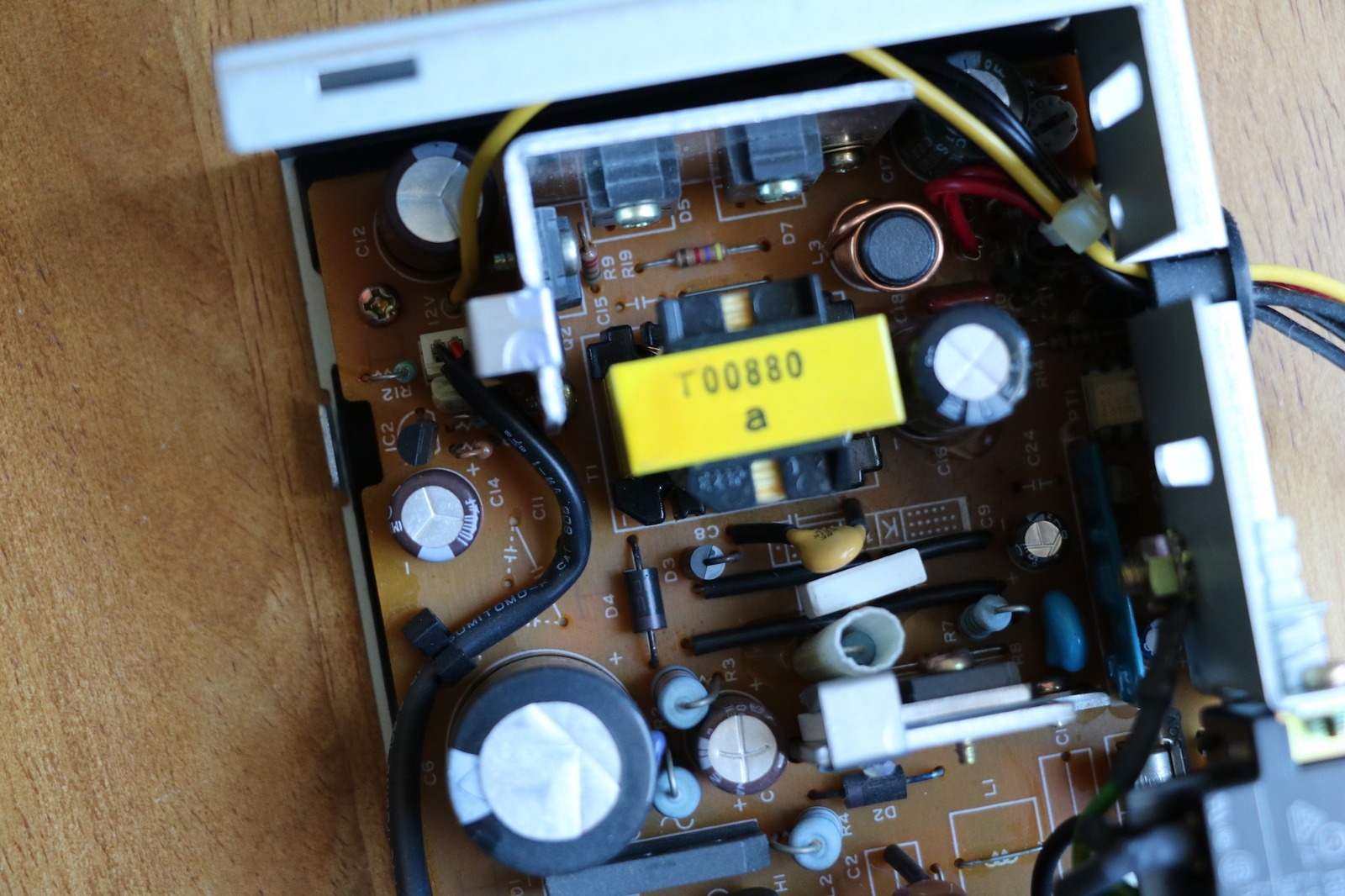
The faulty supply pictured above is an SPS-356JU, part 400-5142. Its label lists +5 VDC at 5 A and +12 VDC at 1 A. The TeraDrive’s serial number is 102000629.
One of the reasons I originally ended up with two TeraDrives was for exactly this kind of troubleshooting. Unfortunately, swapping parts only narrows things down to a module, not the failed component inside it. I have a Model 2 with dual floppy drives and a Model 3 with its original 30 MB WDL-330P hard drive, hilarious edge connector and one floppy drive. Both also have XTIDE cards installed with at least 2 GB of storage.
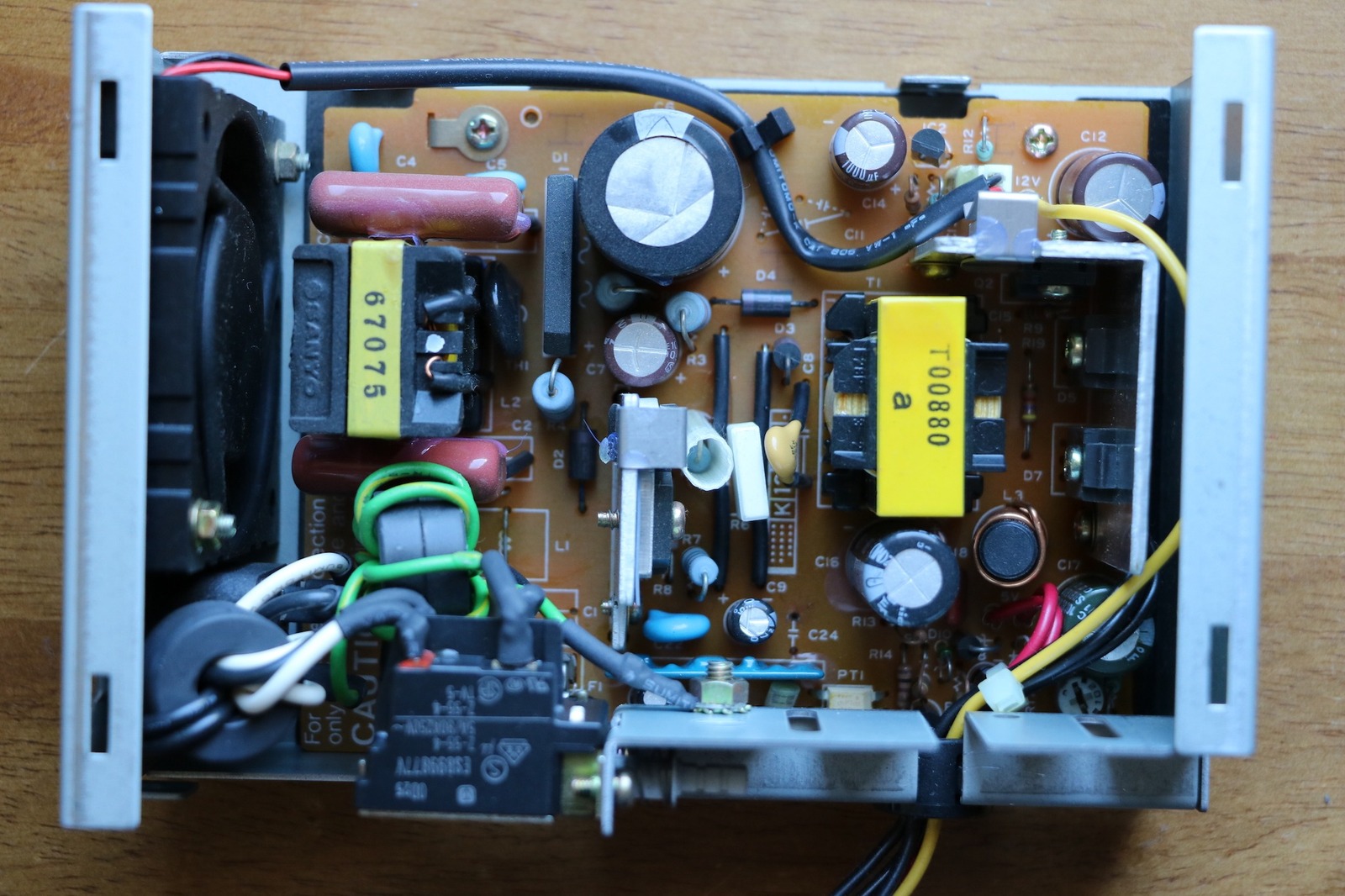
One machine produced a buzzing / clicking hum through the internal speaker and would not complete POST. After stripping it back to a minimal configuration without any change, I swapped the power supply. Sure enough, it roared back to life. The fault followed the original supply.
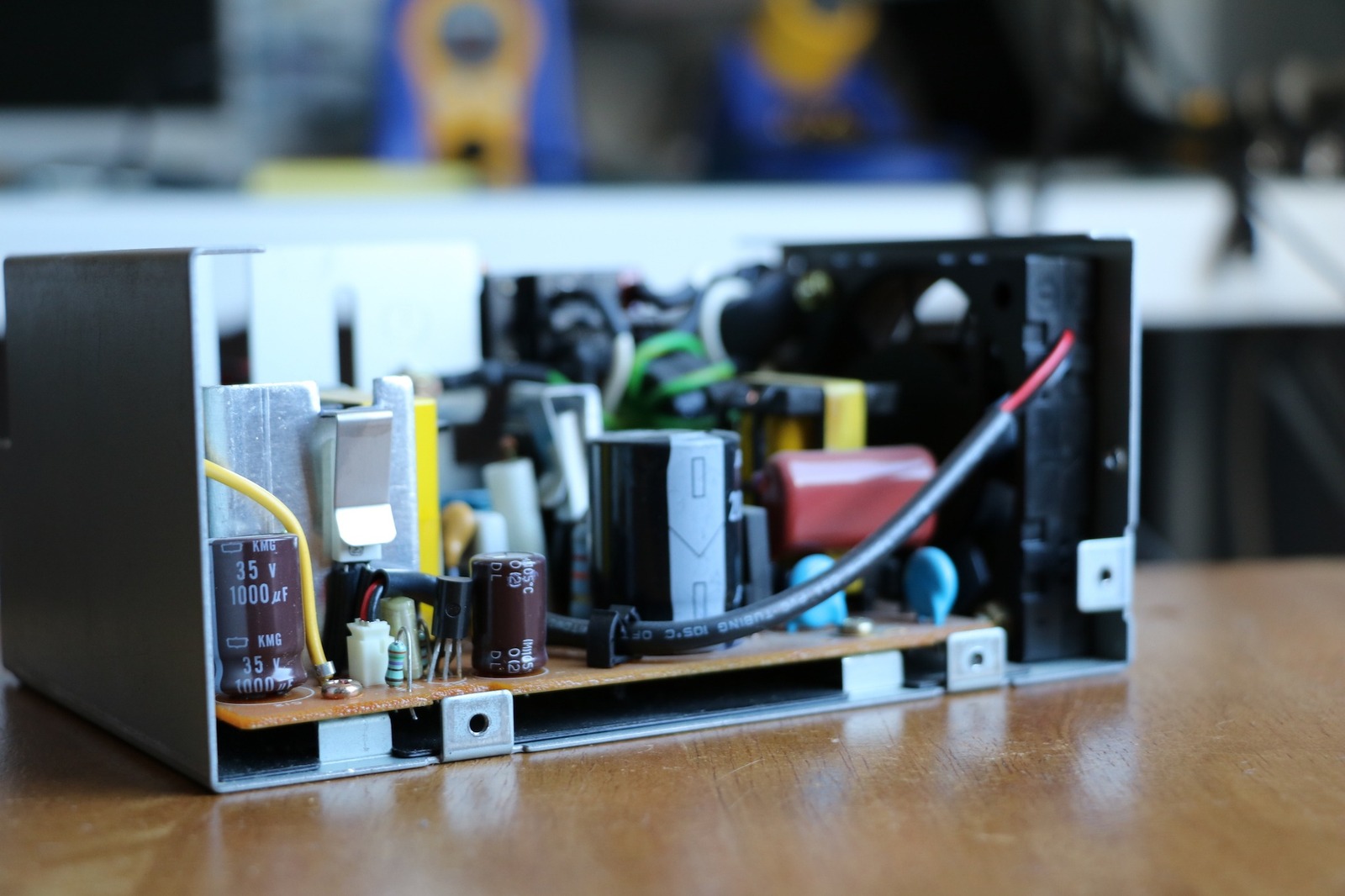
That gives me a faulty supply identified here as 0629 and a working reference supply as 1135. I can’t see any obvious physical anomalies, such as blown caps, with the naked eye. Have a look at the photos below and see if you can spot anything peculiar.
1135 - working reference PSU
- 12 V rail, no load: 11.46 V
- 5 V rail, no load: 5.00 V
- 12 V rail, powered on: 12.16 V
- 5 V rail, powered on: 5.17 V
0629 - faulty PSU
- 12 V rail, no load: 11.14 V
- 5 V rail, no load: 4.93 V
- 12 V rail, powered on: 10.73 V
- 5 V rail, powered on: 3.10 V
The important result is that the faulty supply collapses badly under load, especially on the 5 V rail. Bad capacitor? Transformer? Transistor? Search me! At this point that establishes the symptom, not the culprit. I’ve called on the folk at ASSEMblerGames to see if they can help out. Fingers crossed someone will have an idea.
Plan B was paying somebody who actually enjoys mains power supplies to repair it. Frankly, that still seems sensible. I’m not terribly fond of working on mains power devices.
Mains-voltage warning: this is not a low-voltage console repair. Power supplies can contain lethal voltages and can retain charge after being unplugged.
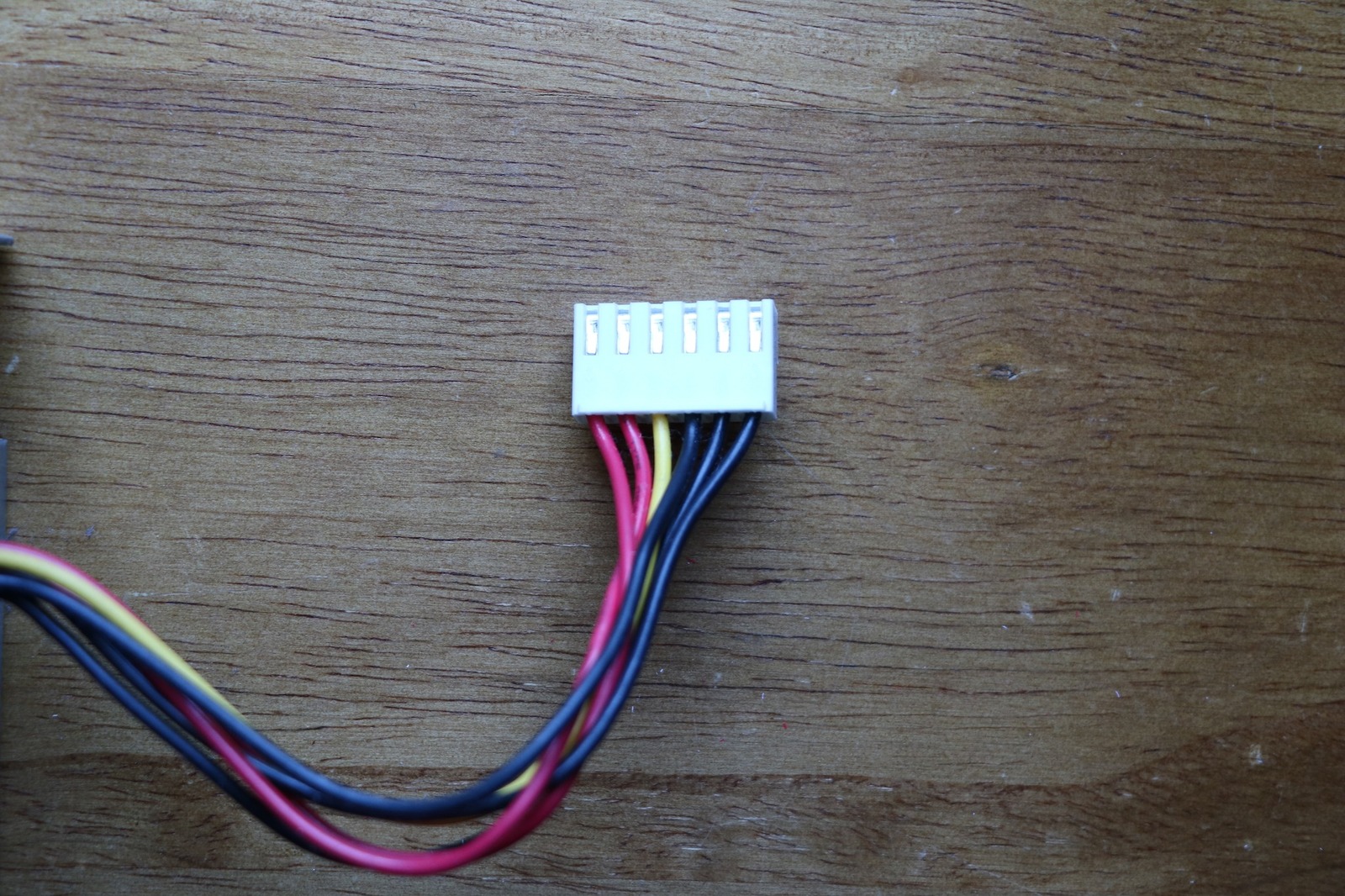
Actually there was a Plan C as well: somehow adapting a PicoPSU. At the time I was worried about getting the -5 V and -12 V rails I thought I needed from an ATX-derived supply. That concern alone did not establish whether a particular PicoPSU would work; any replacement needs to be checked against the actual TeraDrive wiring and expansion requirements. Hopefully my knight in shining armour answers the call.
If you want to follow the original discussion, see the archived Sega TeraDrive PSU Repair - Trinity! Help! thread on ASSEMblerGames.