 Nix McRetro
My third and final Sega Saturn Sophia development kit is in need of repair. This one is another European SG4101, serial H417010020, and just like the previous machine, it powers on without producing any video.
Unfortunately, this Sophia has also suffered some cosmetic damage. There’s a mark on the casing that I’d rather not try to remove in case it damages the lovely Sega logo underneath. It’s also missing one of the little front-panel buttons, so I’ll need to find a suitable replacement for that eventually.
I’d already checked the region switch settings after the discovery with the previous Sophia. Unfortunately, that didn’t bring this one back to life, so the next suspect was the collection of surface-mount electrolytic capacitors.
Before
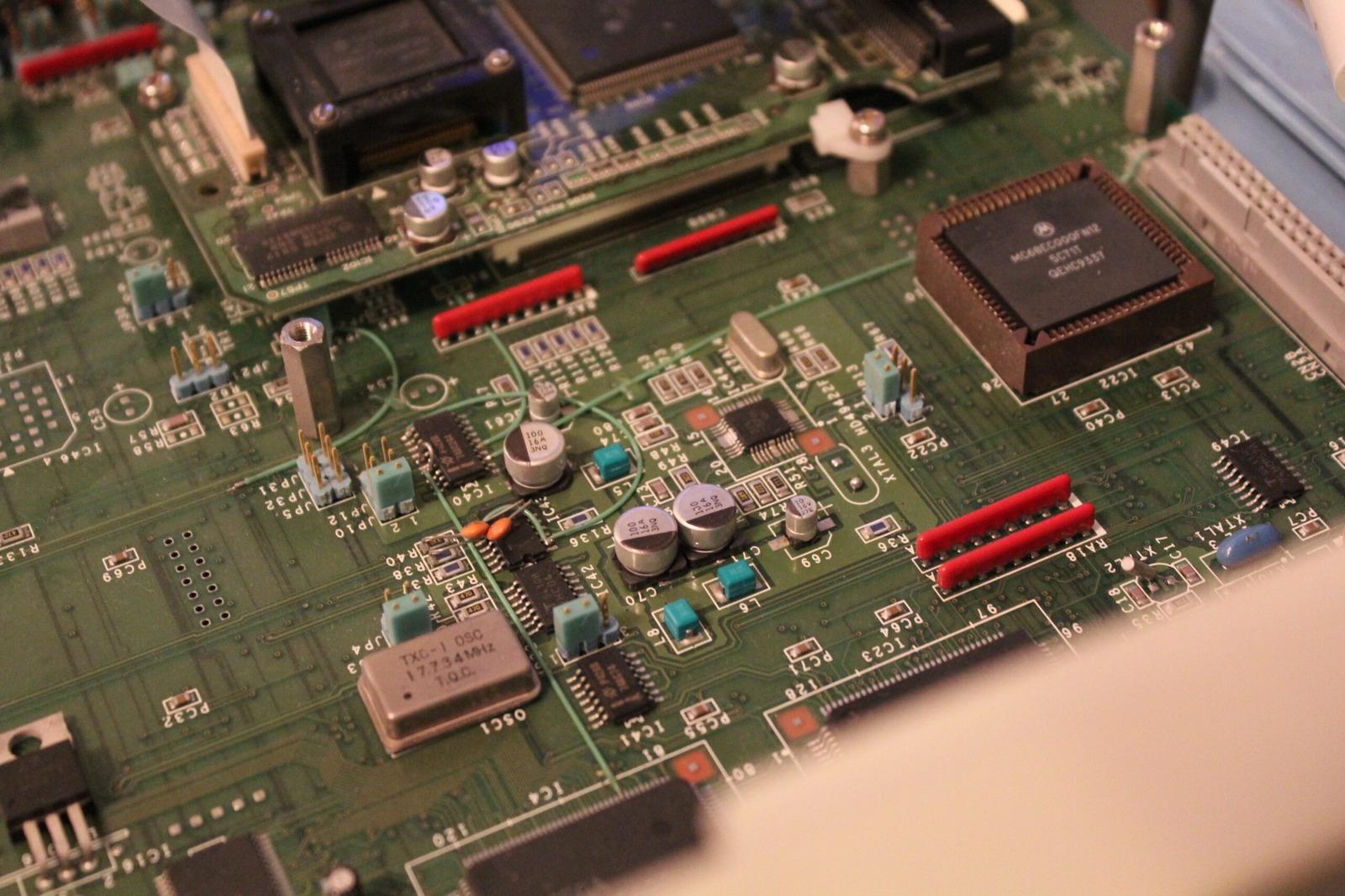
The third Sophia’s board before another round of capacitor replacement. By now I knew this neighbourhood rather well.
Fortunately, the repair process was becoming rather familiar by this stage. I removed the old capacitors, cleaned the solder pads and installed the replacements. The new capacitors sit a little taller than the originals, but there’s enough space for them to fit without causing trouble.
After putting everything back together, it was time for the moment of truth. Power on, television connected, and would you believe it, Sophia actually displayed the clock-setting screen!
After
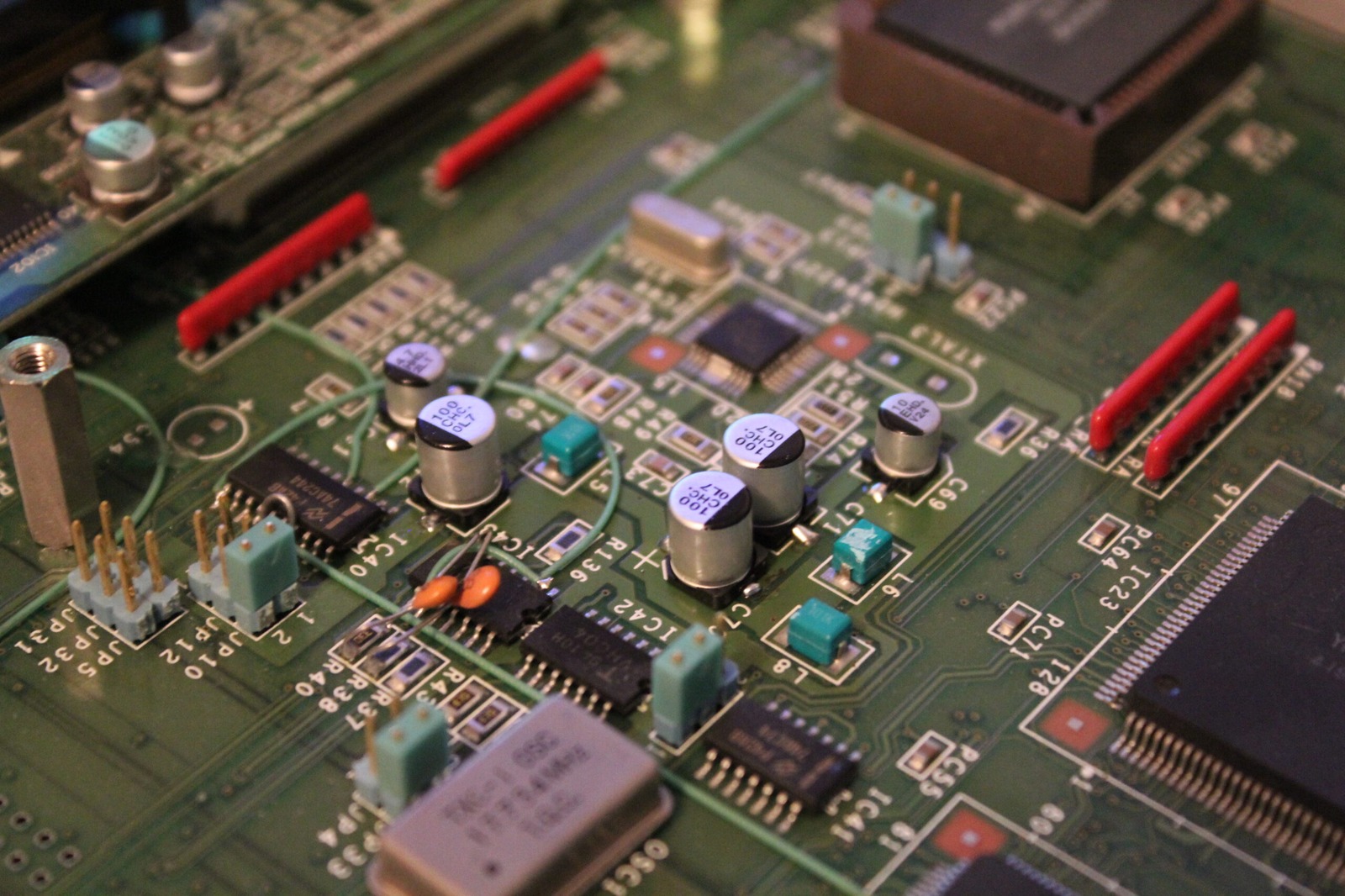
Fresh capacitors fitted in the third Sophia. This time the clock-setting screen came back after reassembly. Three for three!
Excellent! In this particular case, replacing the surface-mount capacitors made the difference, since changing the switch configuration hadn’t restored the display.
Of course, that doesn’t necessarily mean every no-video fault on a Sophia will be caused by capacitors, and there are still other ageing components to consider. But it’s a rather satisfying result after all the time I’ve spent taking these machines apart.
Now, what shall we repair next? TeraDrives? Aiwa Mega-CDs? Pioneer LaserActives? There’s certainly no shortage of things waiting for attention!