 Nix McRetro
A Macintosh Classic! What a great platform to test GeoCities. No, just no. Stop right there. No way. Let’s dig a little deeper. Perhaps some background would help. First came the Macintosh Plus (Jan 1986 - Oct 1990). The Macintosh Classic (Oct 1990 - Sept 1992) followed on from there. Both were powered by Motorola 68000s at 8MHz with up to 4MB of RAM.
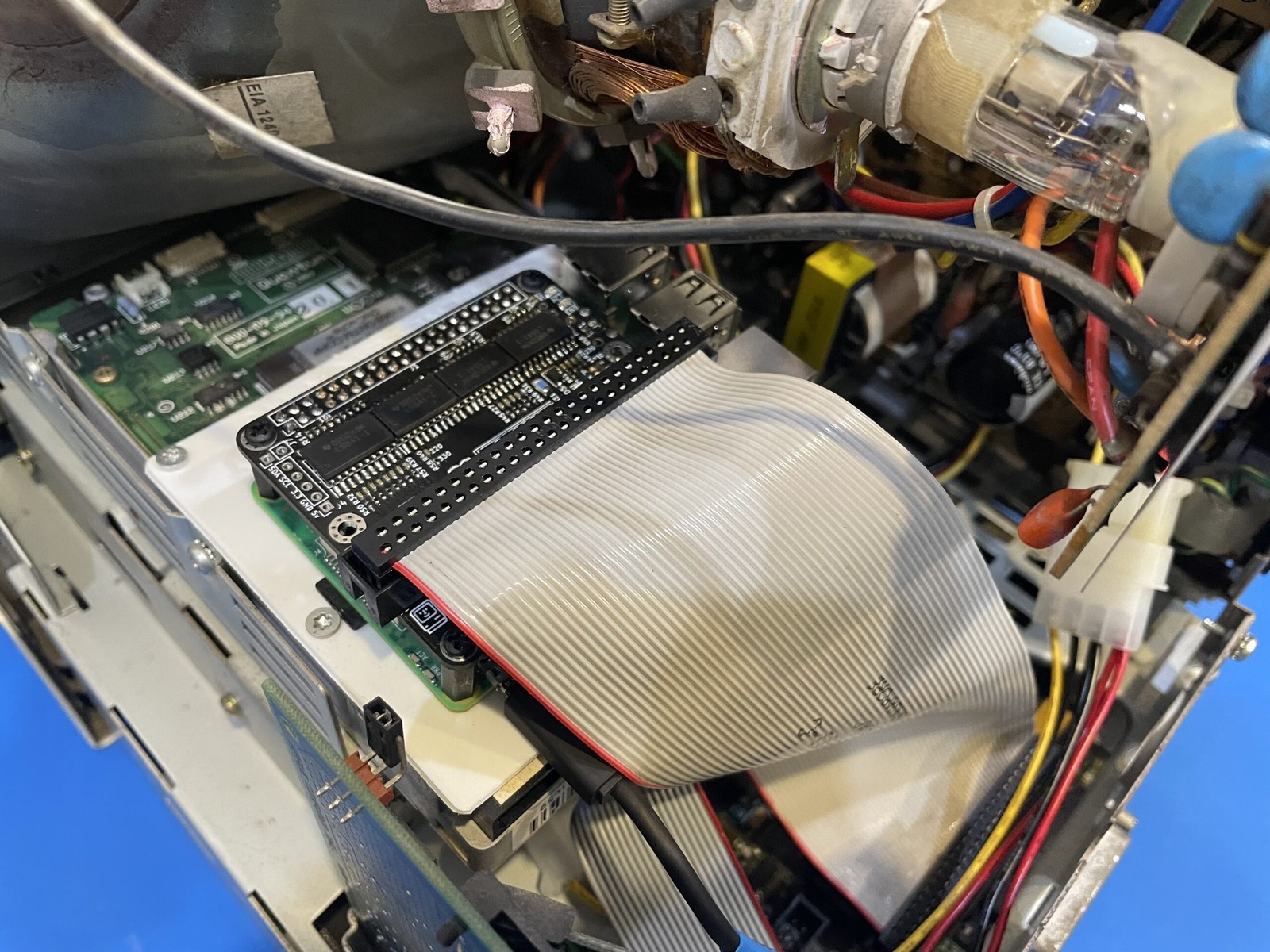
This machine has had the internal hard drive upgraded to a RaSCSI (now PiSCSI) using PCB v2.3. There’s a little bit of an unaddressed voltage drop happening that probably won’t be an issue, so we’ll just ignore the video above with the lack of red LED. Optimism, naturally. The Pi continuing to run didn’t prove that its power supply or peripherals were happy.
If the Red Power LED is not illuminated this means the supply voltage is inadequate. (The newer Pi have a well engineered power circuit, and may continue to function even if the input voltage is below spec; the same may not be true of peripherals).
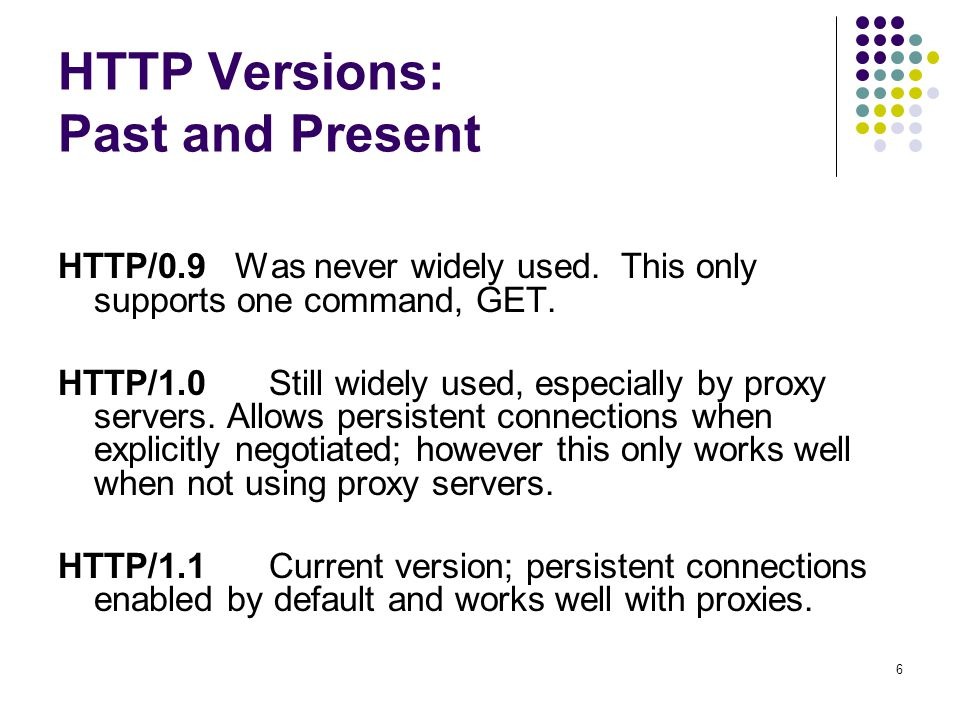
This tech is not ready for mid-late 1990s internet. I just didn’t realise just how incompatible early 1990s internet was! When setting up my web server I tried to make GeoCities, RetroJunkie.net and even my files archive as simple as possible to avoid issues. It all seemed to boil down to the old browsers missing something. My theory at the time was HTTP/0.9, but that turned out to be the wrong diagnosis. These browsers were capable of more than HTTP/0.9, and I later confirmed requests arriving at Apache as HTTP/1.0. The real problem was in how my modern hosting setup, name-based virtual hosts and proxying interacted with clients this old.
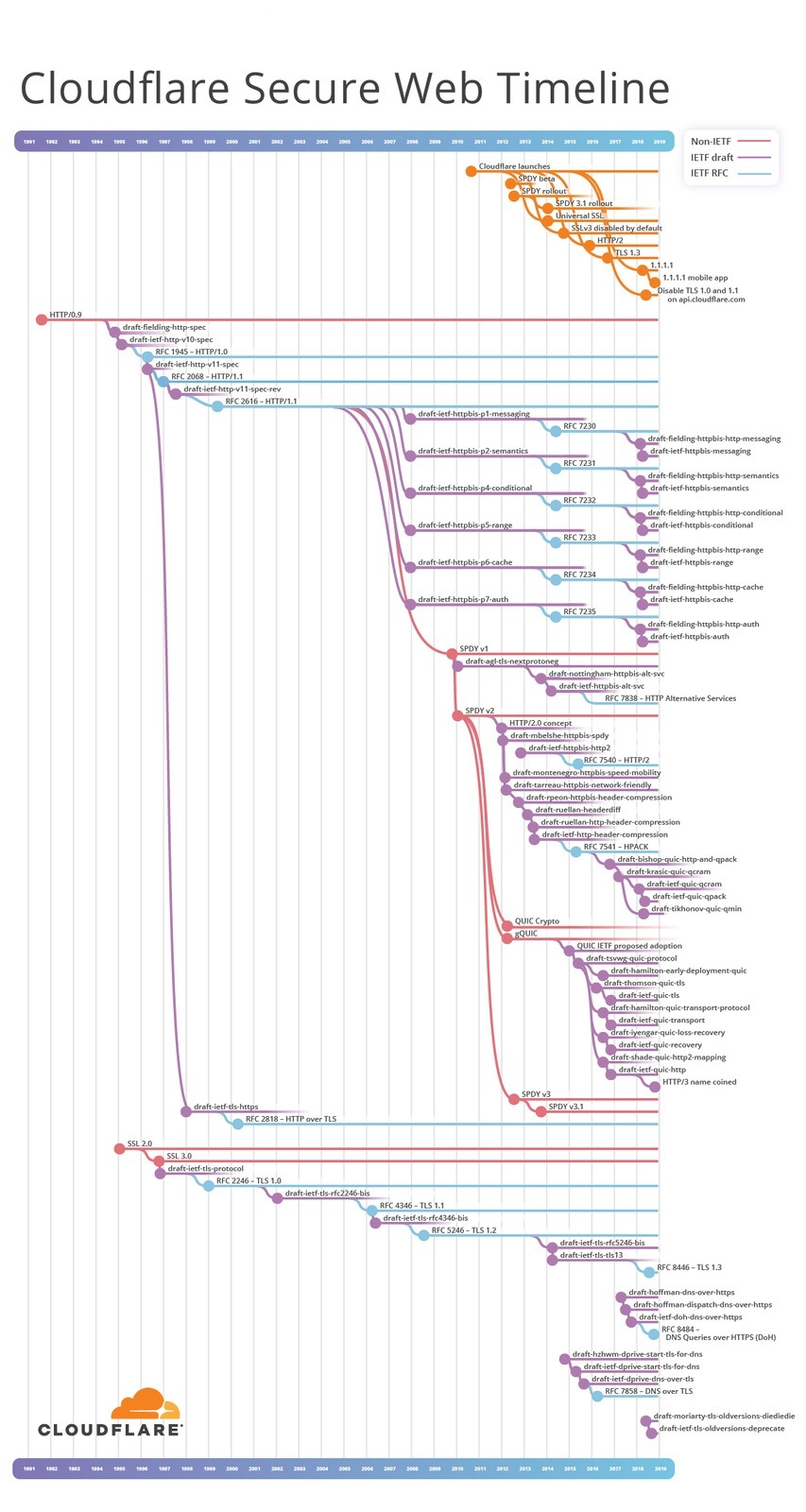
HTTP/1.0 and HTTP/1.1 are way past cool in my book. Look at this crazy mapping of the internet standards history by Cloudflare.
At least that was the theory. HTTP/0.9 really is tiny: essentially a one-line GET request, with no protocol version in the request and no request headers. That also means no Host header, so it cannot select between modern name-based virtual hosts. That simplicity mattered to this experiment, but it was not the explanation for every failure I was seeing here.
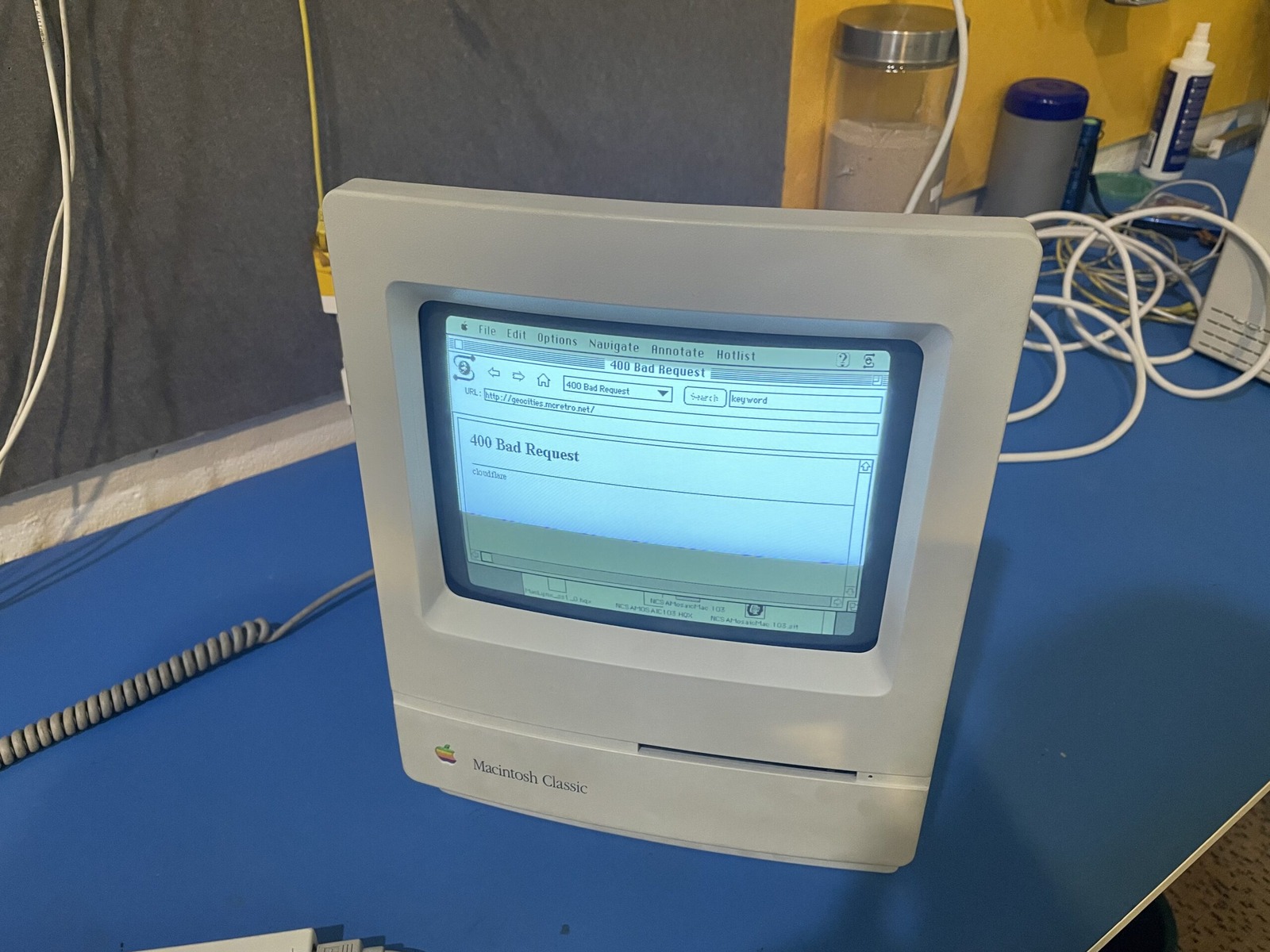
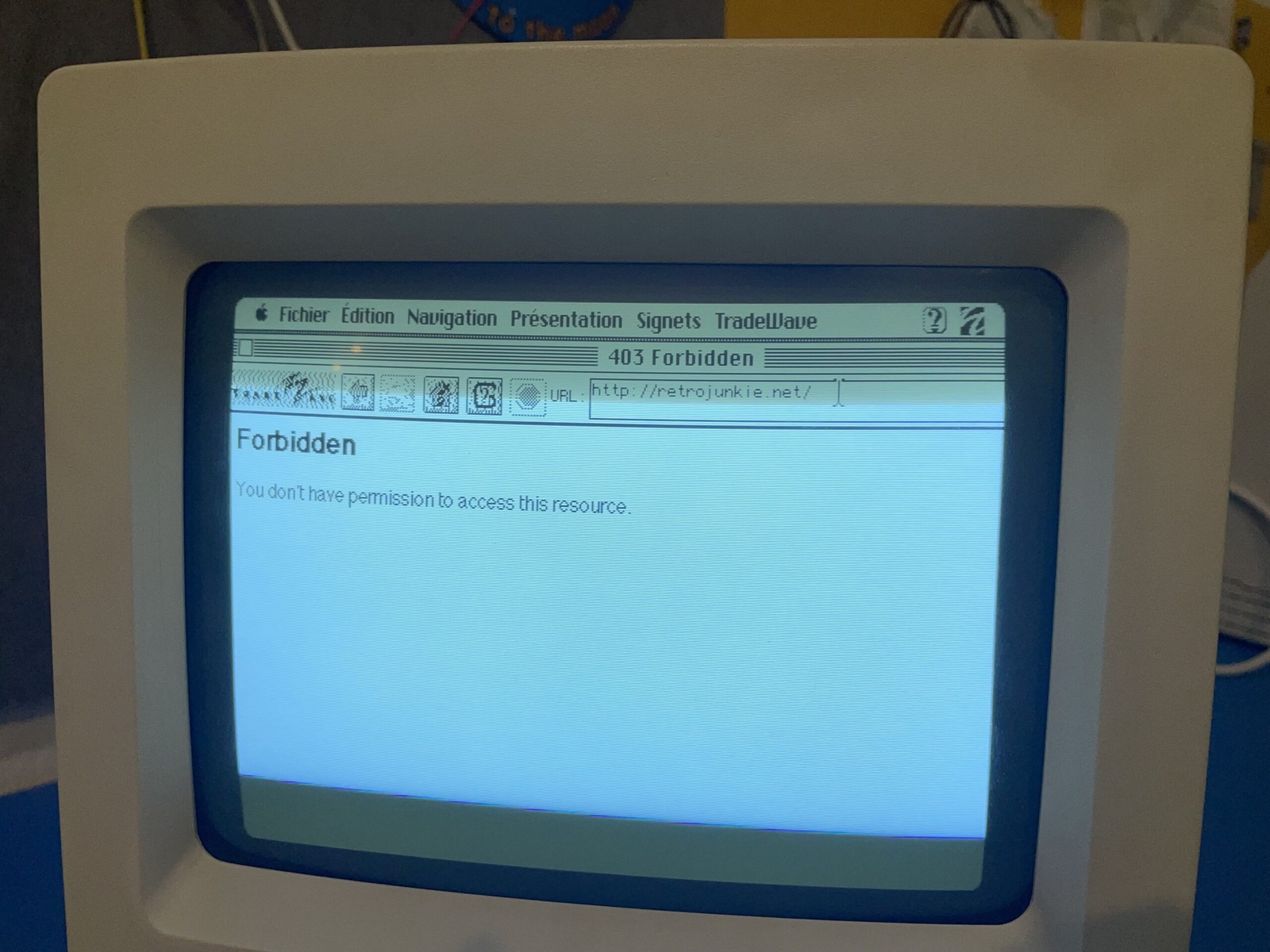
But nothing. To try and rule out a browser issue I tried a couple of different browsers: TradeWave MacWeb F2.0 (turns out the F is for French…) and NCSA Mosaic 1.0.3. No dice. I am a little limited on what can run in System 7.5.x with only 4MB of RAM. With the roughly 3.9MB requirement I’d noted for iCab 2.9.9, there wasn’t much room left for the system. That used to work great on my old LC 475.
I hit up a relatively simple site (google.com) which I believed was supposed to pass through MacProxy, a part of the RaSCSI software bundle. Looking back now, maybe the MacProxy wasn’t working properly as the results were the same on my Windows 98 installation.
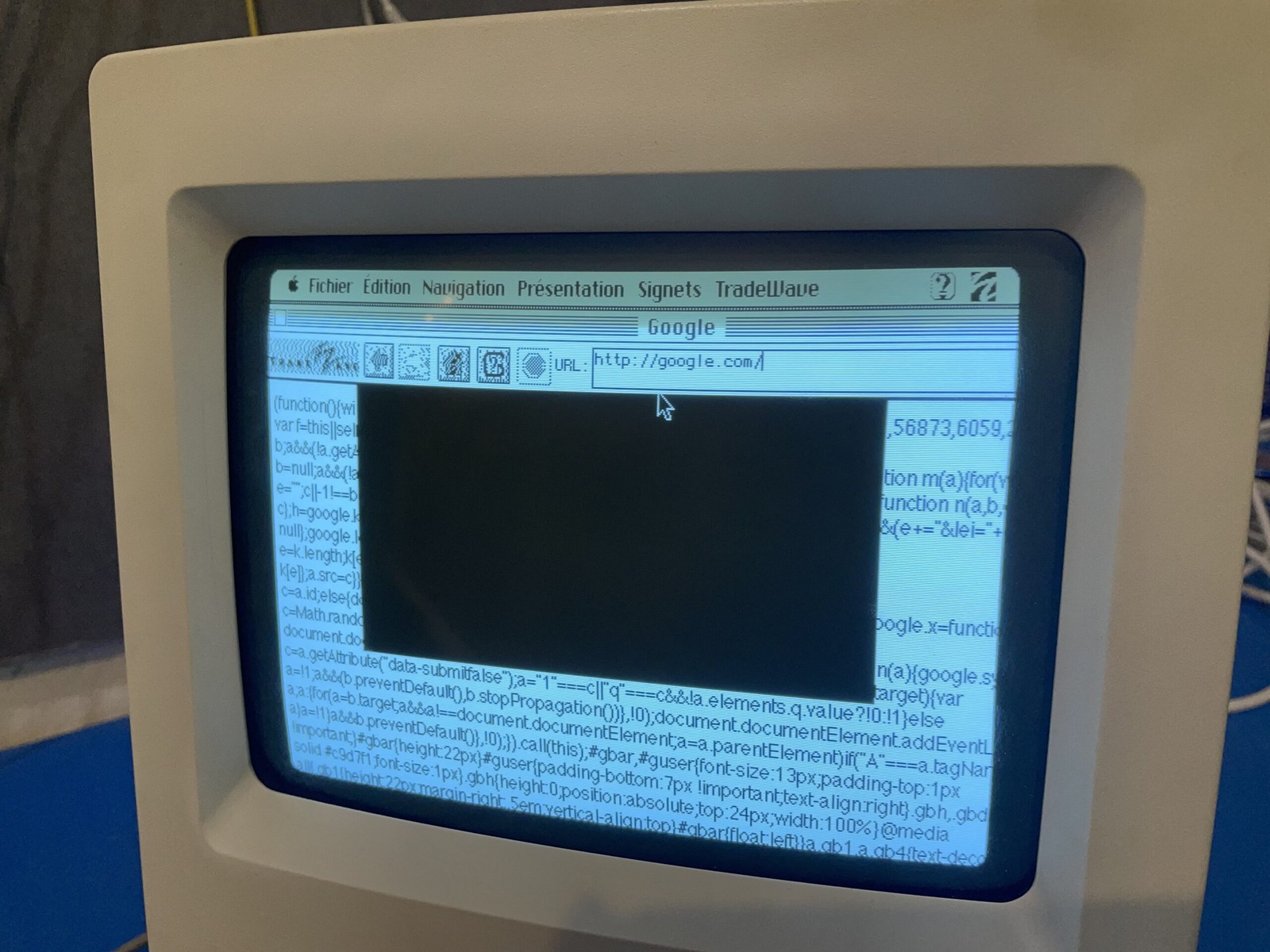
MacWeb 2.0 (French) doesn’t really like it.
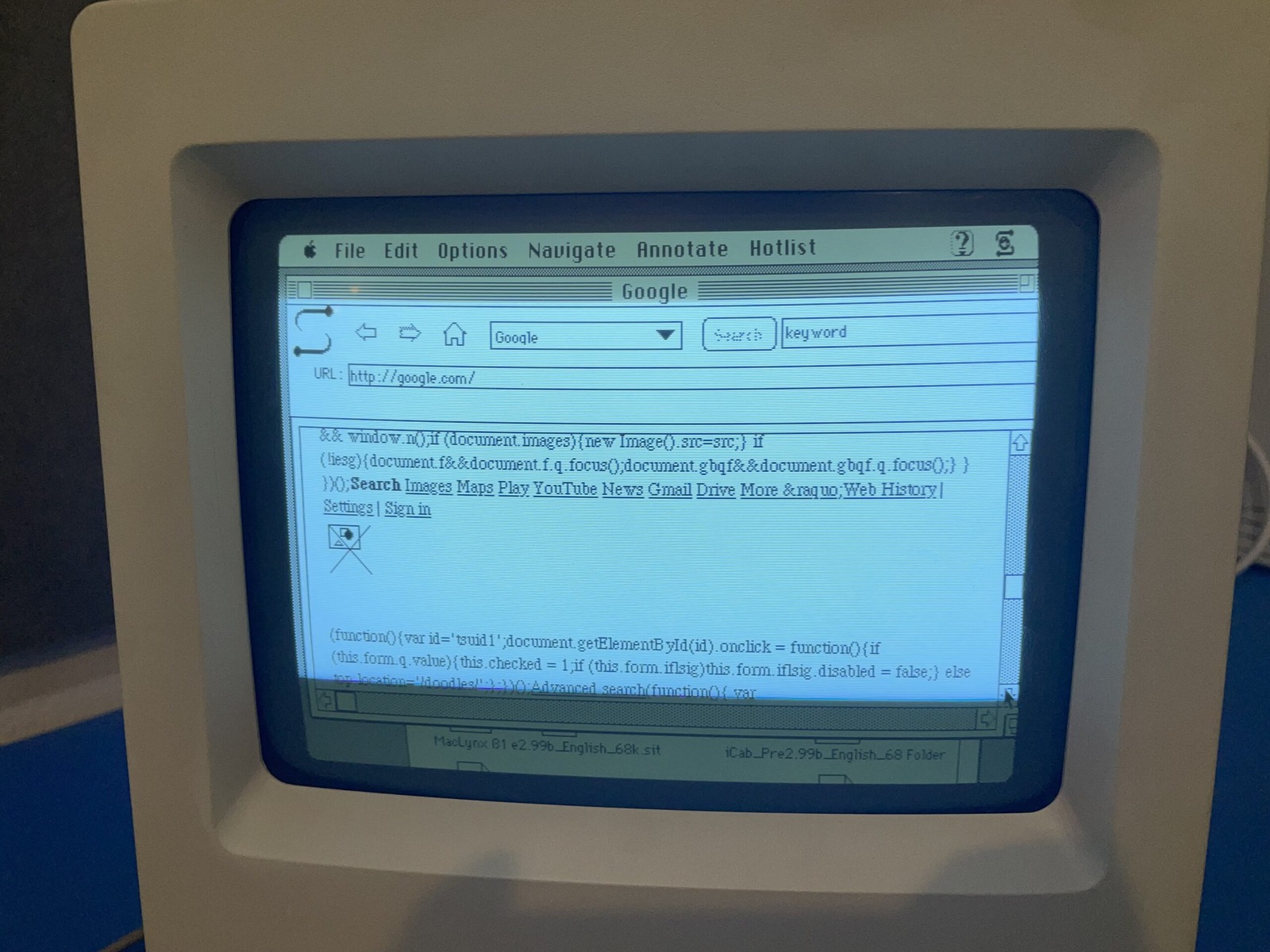
Neither does Mosaic 1.0.3. At least they are giving similar results but I had to test elsewhere to confirm whether my HTTP/0.9 theory held up. When I got home I jumped onto the information superhighway.
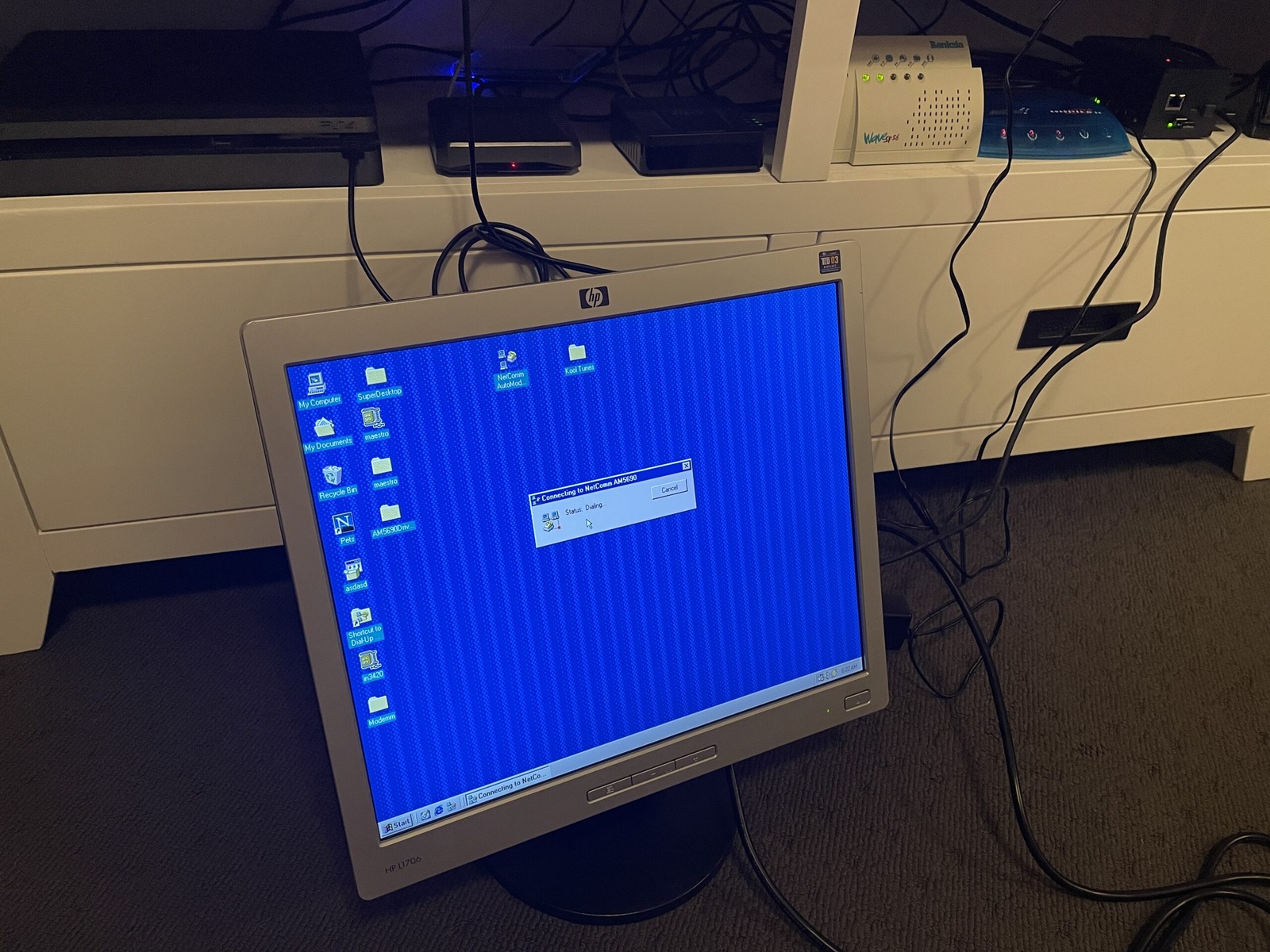
And using Internet Explorer 5.0 grabbed Mosaic 1.0 from my file server.
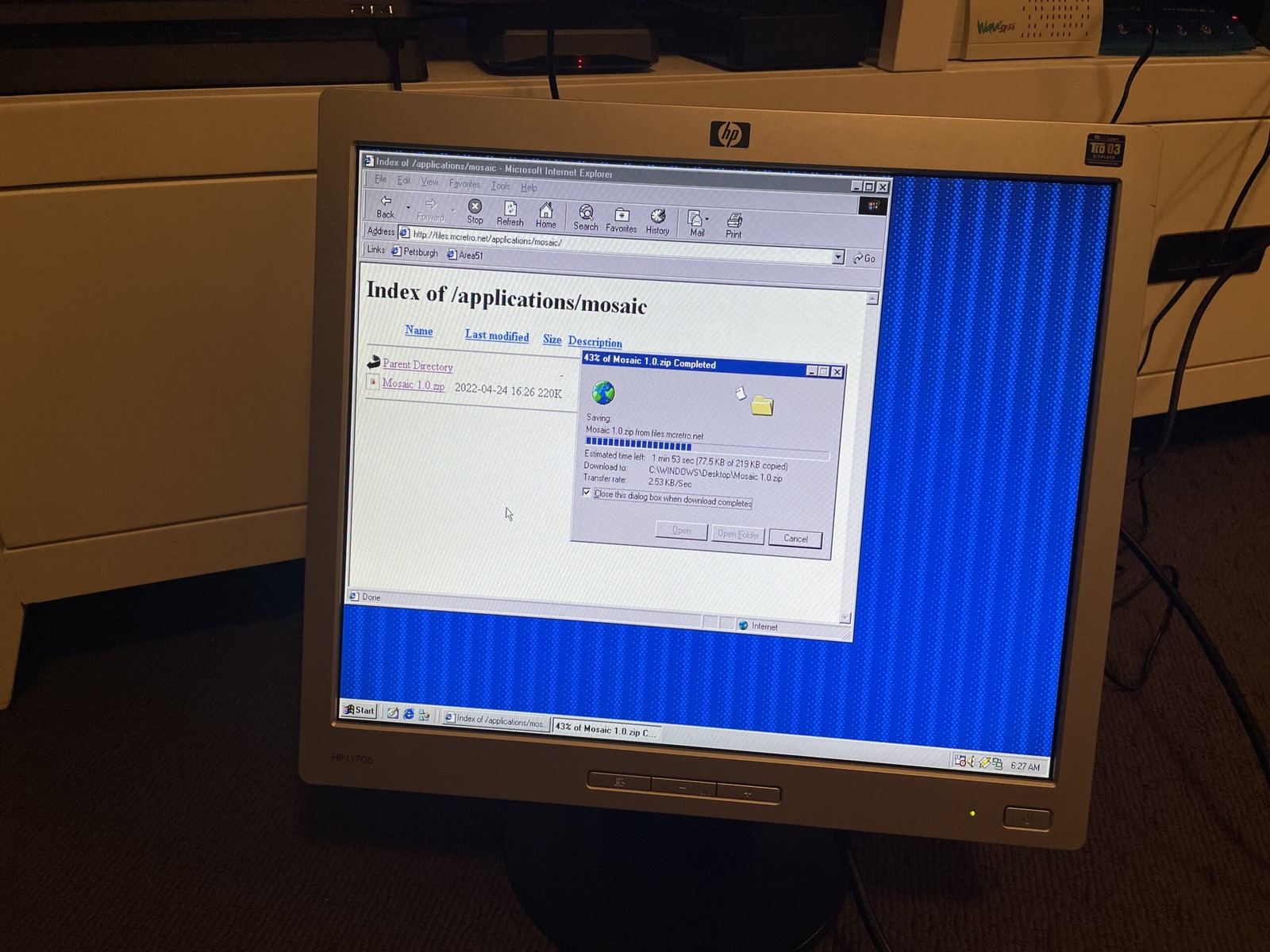
Not the slowest download I’ve had. A couple of minutes later I was able to load up the same websites at home in Windows 98.
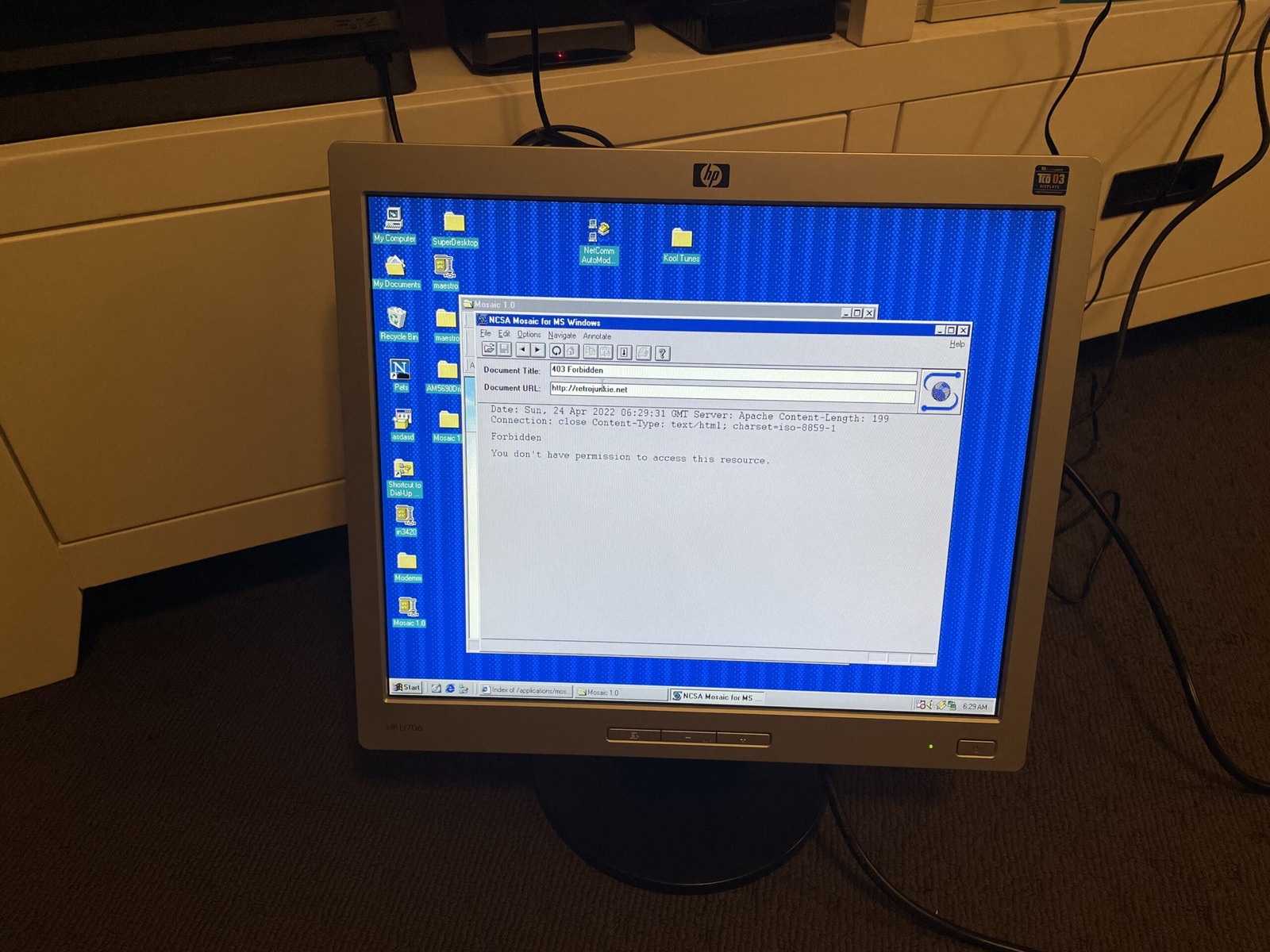
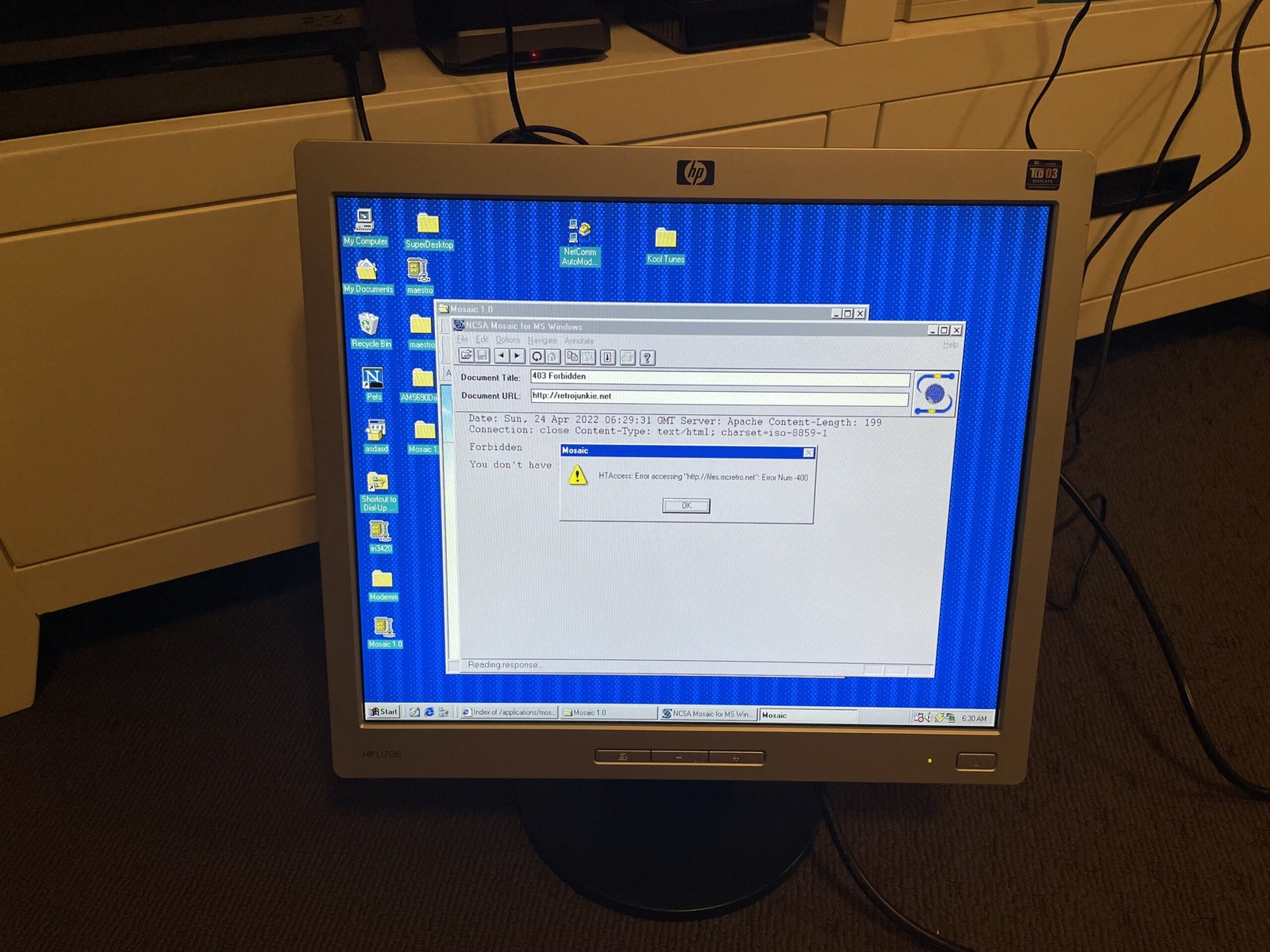
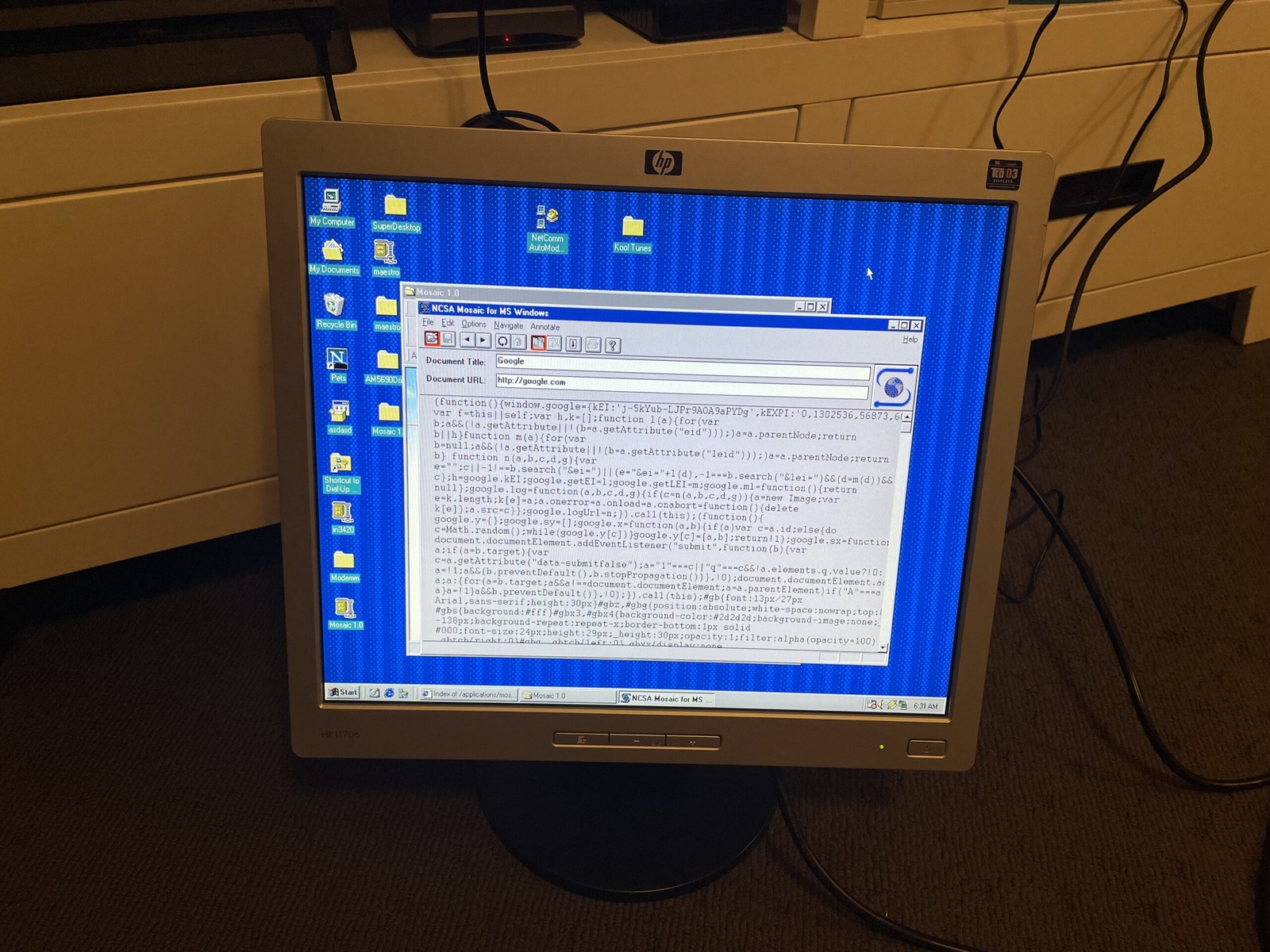
And it seems that retrojunkie.net, the files server and google.com were all giving the same errors. We’ll try another browser again, shall we?
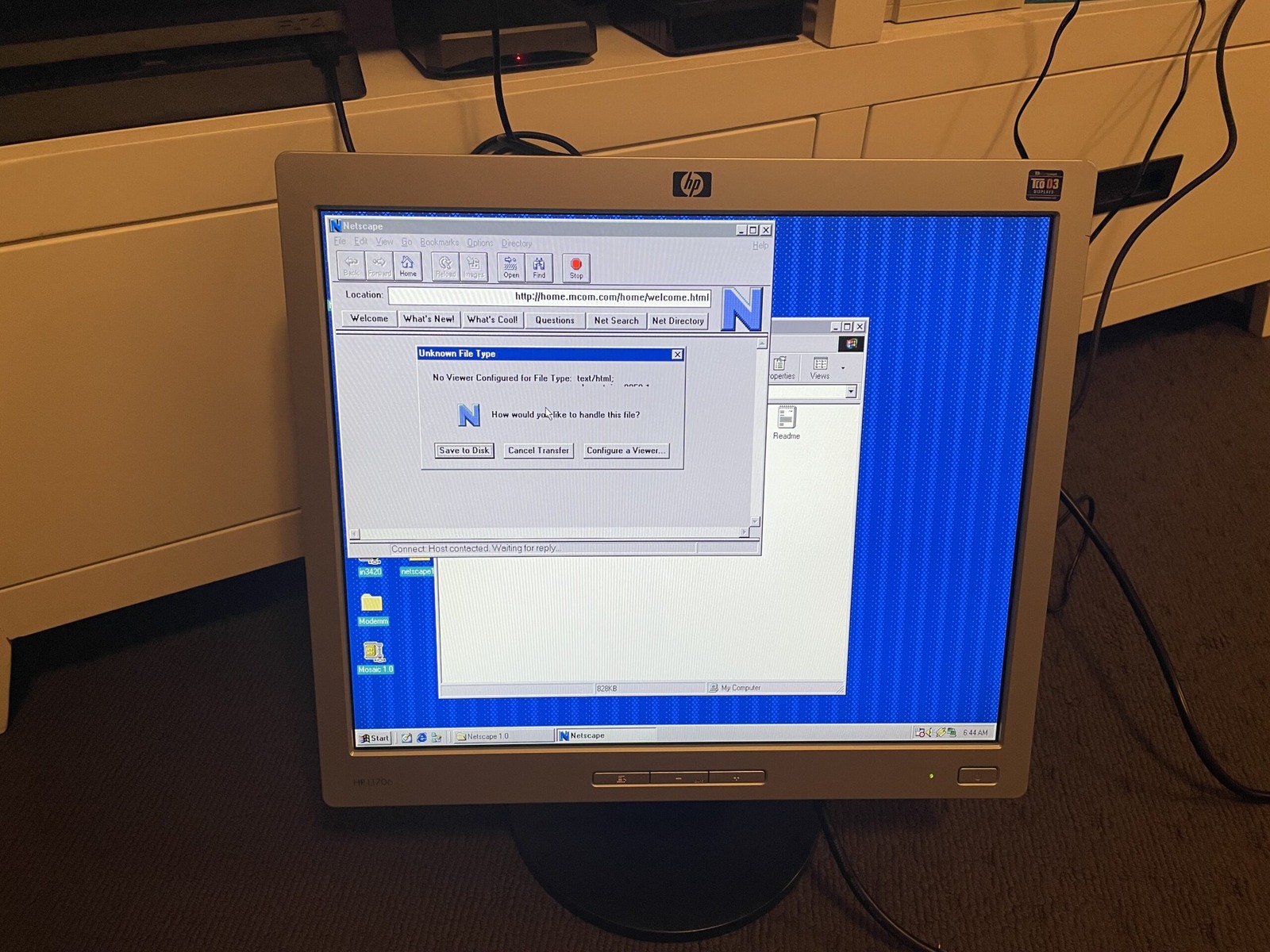
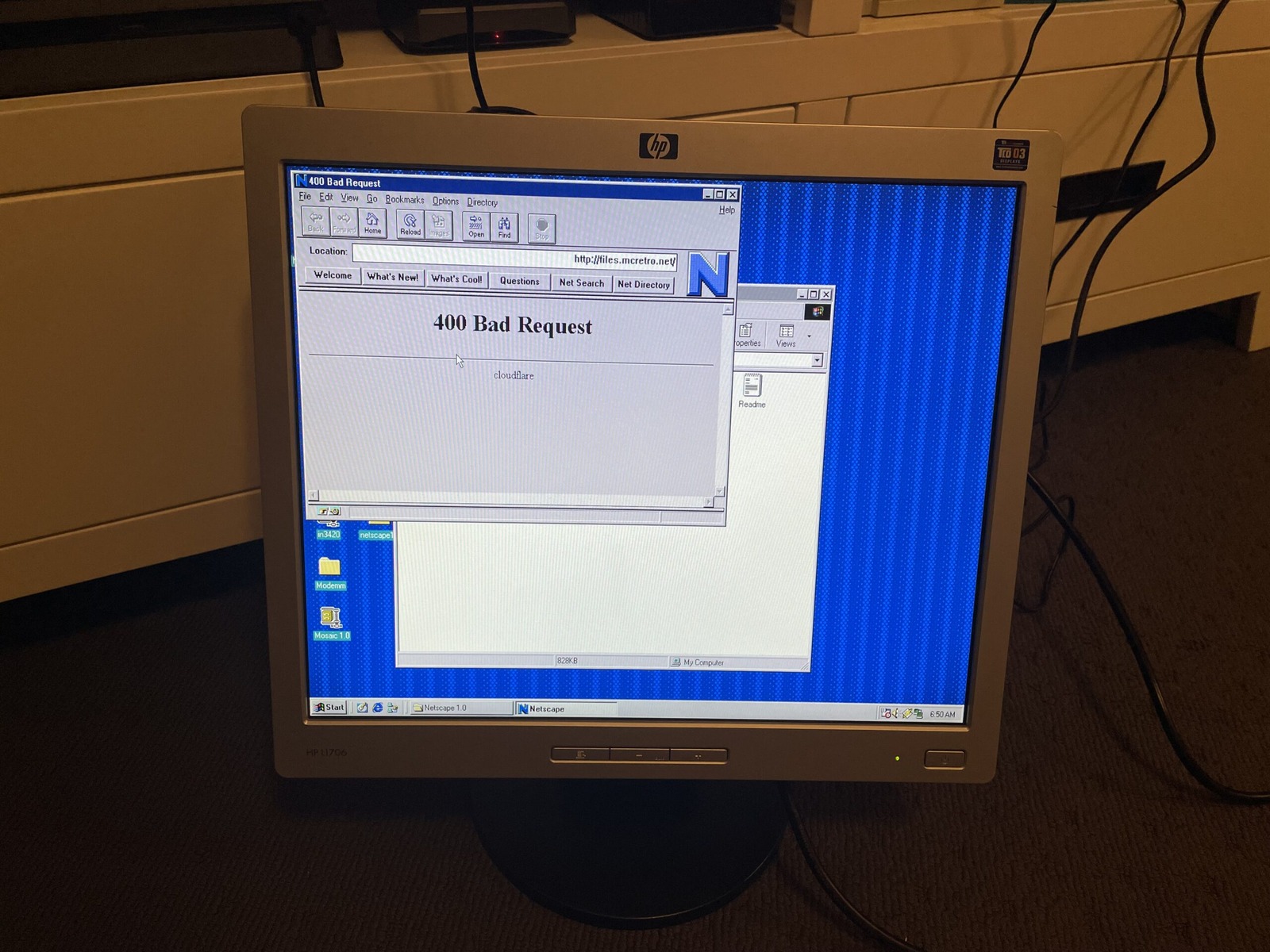
Netscape 1.0 doesn’t want to play nice either. At the time I put this down to the browsers only supporting HTTP/0.9. That conclusion did not survive testing. I revisited the same problem in 2023 and got MacWeb, Mosaic and Netscape talking to the server once I simplified the hosting path and gave the old clients a site they could actually resolve cleanly.
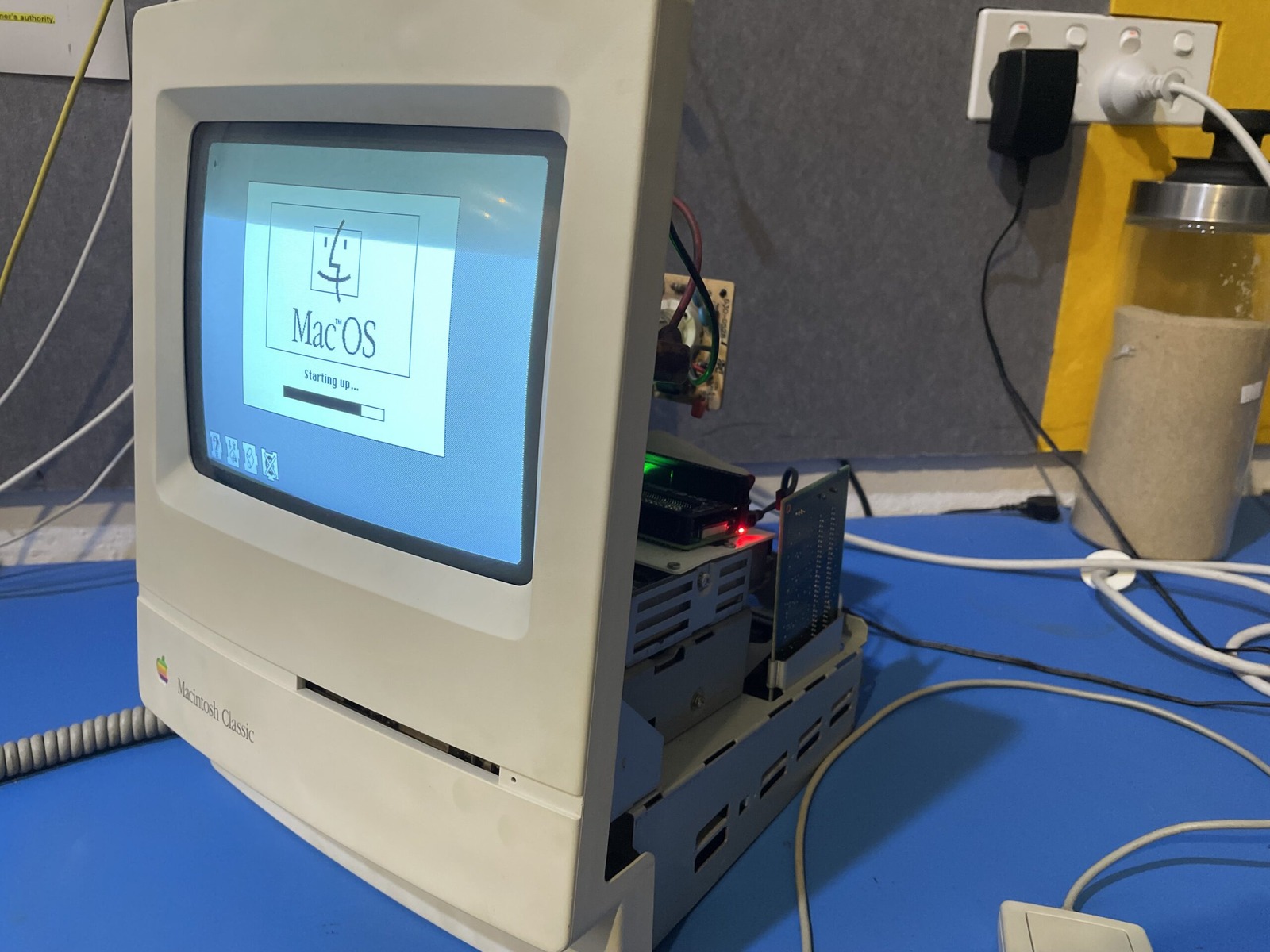
While it would be nice to be able to do things on a 68000 powered Mac, we’re just not ready for it yet. Stick with a faster classic Mac like the LC475 for a true internet experience. Leave the early 1990s for bulletin boards! :)
Sources
- RFC 1945 - Hypertext Transfer Protocol: HTTP/1.0, section 4.1 on HTTP/0.9 simple requests
- RFC 7230 - HTTP/1.1 Message Syntax and Routing
- Raspberry Pi Documentation - Power supply warnings
- Chris Adams - Web browsers for antique Macs, MacWeb notes
- Evolt browser archive - MacWeb
- Evolt browser archive - MacWeb 1.1.1E
- Evolt browser archive - MacWeb 2.0
- Evolt browser archive - MacWeb 0.98a
- 68K Mac Revival - Downloads (archived 4 August 2019)
- Matti Haveri - 68000 Macintosh software notes (archived 6 April 2001)
- Jag’s House - Classic Mac Internet Links (archived 3 August 2004)
- Gamba - Where to Download 680x0 Browsers