 Nix McRetro
After the A-Bus capacitor replacement failed to improve Sophia’s condition, I moved on to the mainboard. I’ve now replaced most of the electrolytic capacitors there, and the results are considerably more promising. The Hakko 808 works wonders on these old boards, although I’d been operating on very little sleep when I decided to tackle this one. Always an excellent start to an evening of soldering!
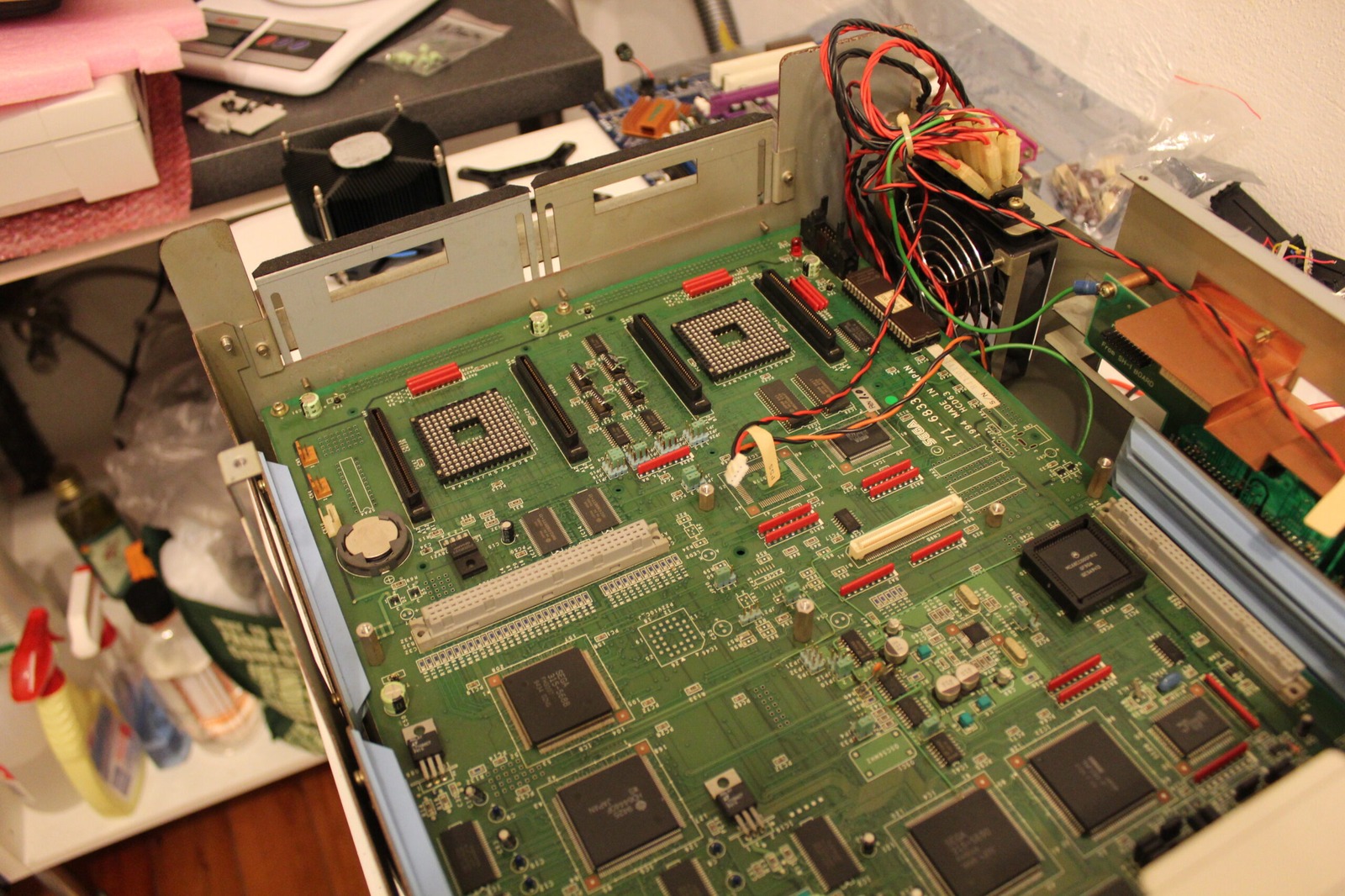
I hadn’t finished replacing every capacitor. There were still some 47 uF, 16 V components, a 330 uF, 6.3 V capacitor, and a couple of 220 uF, 10 V parts waiting for replacements. I also hadn’t tackled the other electrolytics on the SH-1 board and another assembly.
Still, with most of the mainboard capacitors replaced, I wanted to give Sophia a preliminary test. The CD drive wasn’t even installed at this point; I was mainly interested in whether the work had improved the video output.
At first there was no signal, just as before. Then the television started detecting something from Sophia, which was already more than I’d been getting previously. I tried some different DIP-switch settings and carefully reassembled enough of the hardware to test it again.
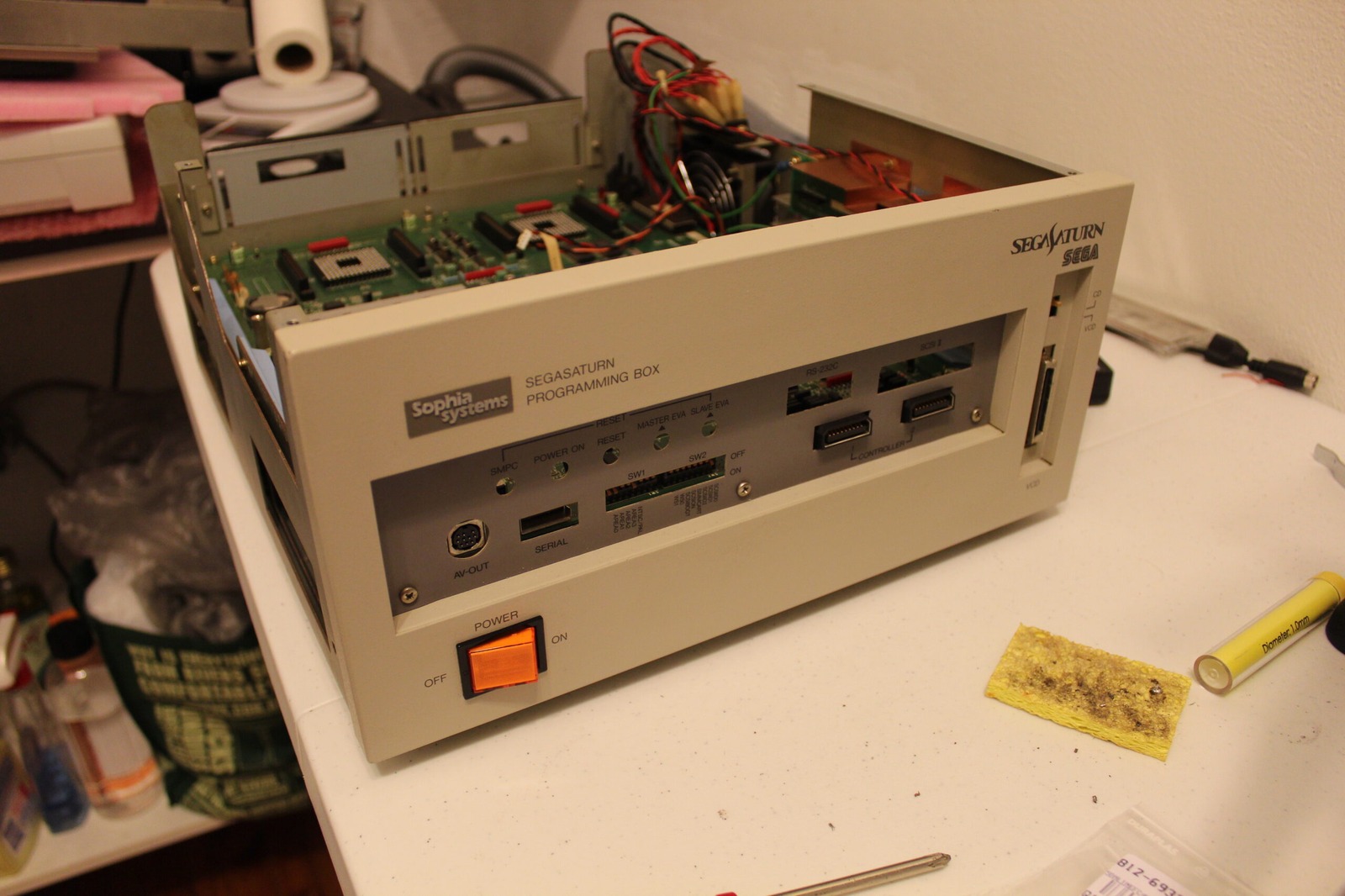
And then, would you believe it, Sophia actually came to life and asked me to set the clock! After all this time, there was finally something recognisable on the screen. Absolutely wonderful!
The improvement suggested that at least some of the trouble had been on the mainboard. I still had several capacitors on backorder, but replacing the majority of them had made a substantial difference.
It was also encouraging to see the machine running with the SH-2 CPU cards and replacement RAM I’d been experimenting with. The CPU boards were marked 171-6692B, and the replacement Samsung RAM was rated at 70 ns. They weren’t necessarily the exact components Sophia originally shipped with, but they were working well enough to get me to the clock-setting screen.
Unfortunately, the CD mechanism remained another problem. Sophia recognised changes in the drive’s state, and the laser assembly was moving, but the system continued reporting that the drive was empty. I’d already encountered trouble with that mechanism while testing it in a retail VA0 Saturn, so it looks like there’s still a separate repair to tackle.
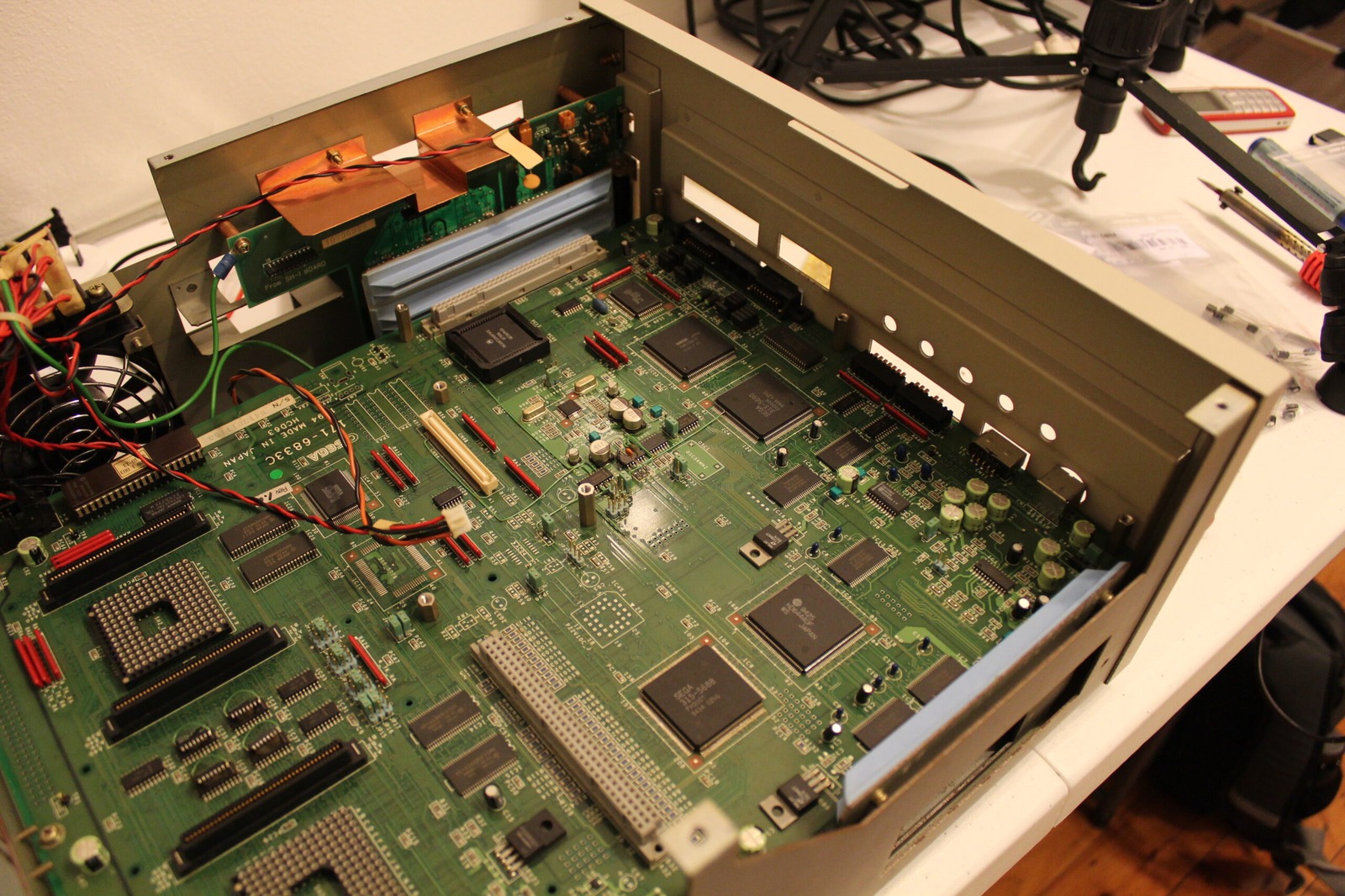
I should probably inspect the power-supply boards while I’m this deep into the machine too. Apparently there’s no such thing as replacing just one capacitor on Sophia! At least she’s finally showing signs of life again, and I’ve got a much better starting point for the remaining repairs.
Related Posts