 Nix McRetro
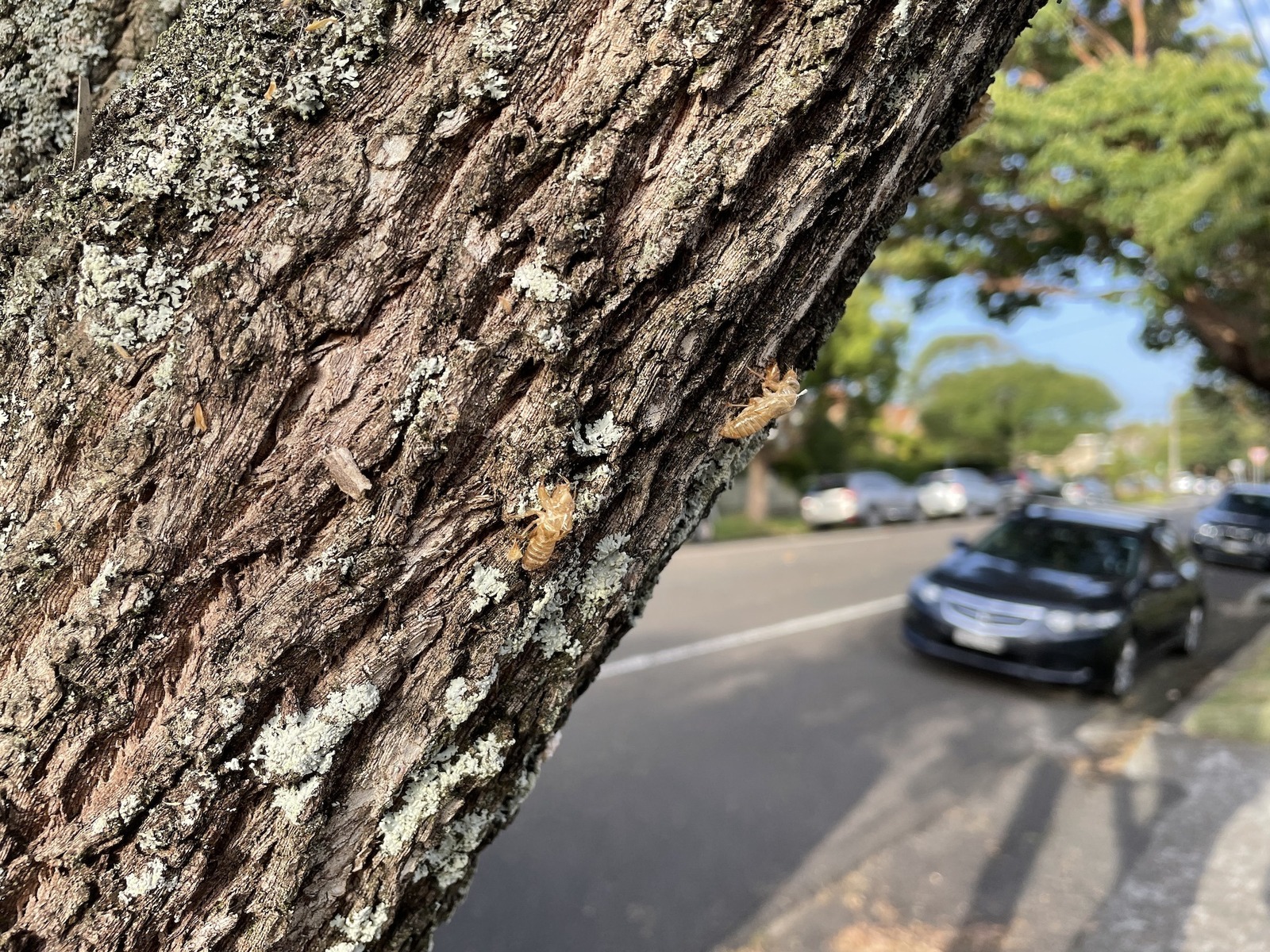
A few tiny cicada shells on a street tree. Their species is still an educated guess.
I love cicada season! Giant bugs. Everyone loves giant bugs! I think these shells are from the ever so tiny Silver Princess (Yoyetta celis), although the shells alone don’t confirm the species. I always find these ones trapped in spiderwebs, they’ve got a knack for it.
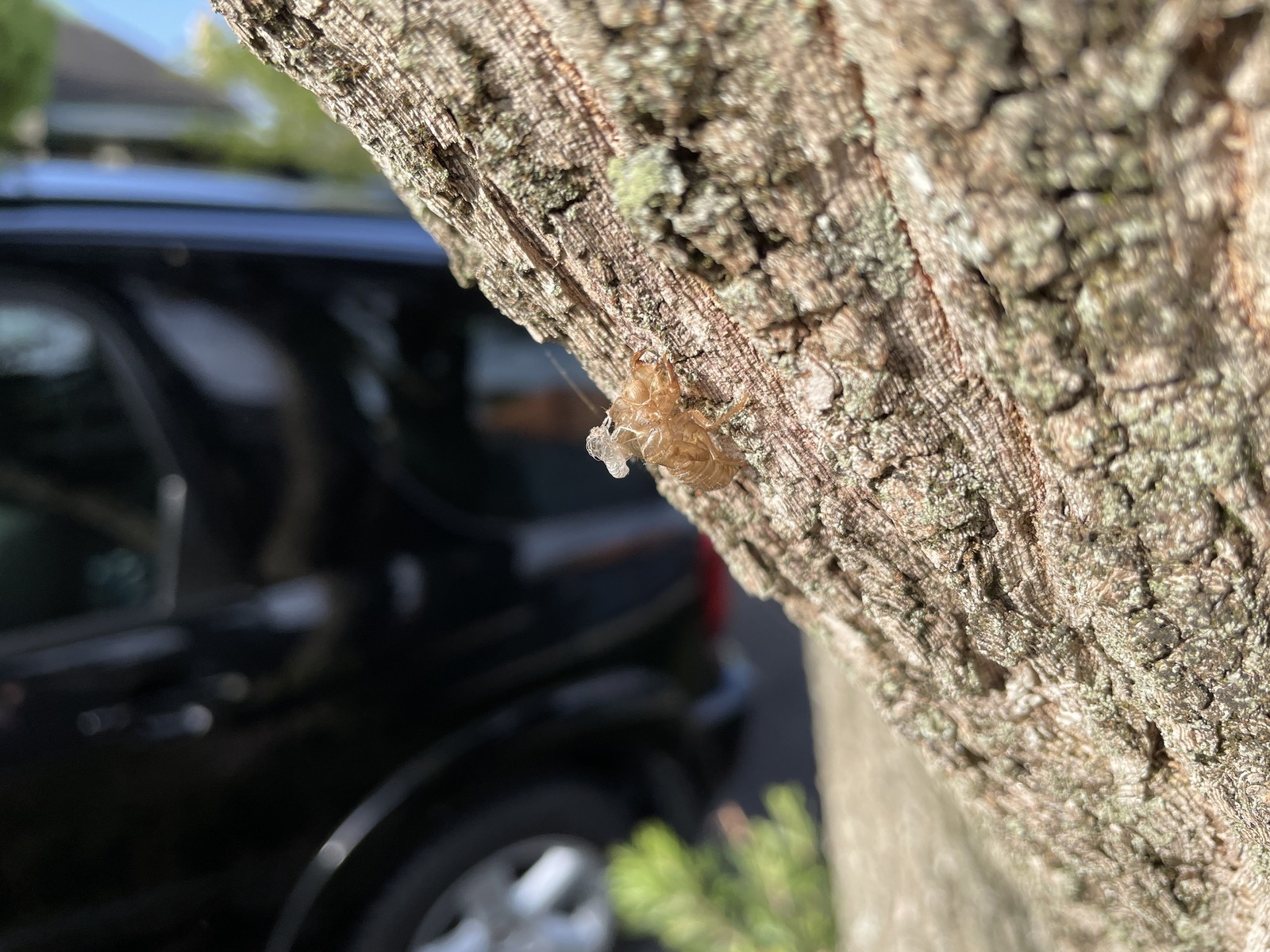
One little shell, and then an even littler mystery passenger.
These shells would be around 1-1.5 cm long. Hang on, what’s this guy got on his head? Enhance!
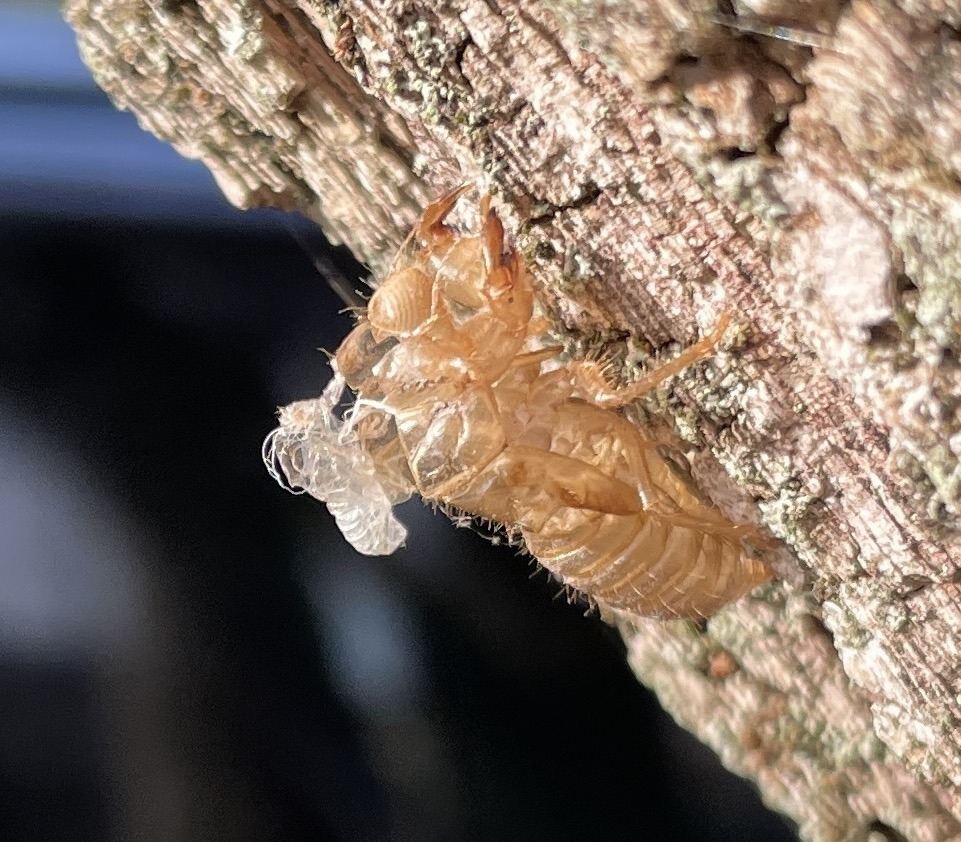
Enhance! That little shell may belong to a leafhopper, although the photograph can’t settle it.
It’s a smaller version of itself? I had to do a bit of digging on this one as I’ve never seen a smaller shell of the smallest cicada shell I know of on top of itself.
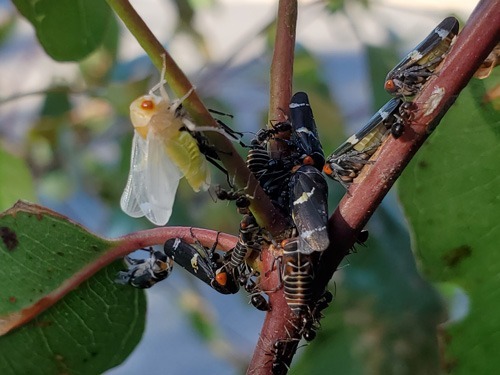
The museum’s reference photo provides a promising lead for the tiny hitchhiker on my cicada shell.
Turns out it was likely a leafhopper shell, like the insects in this photograph supplied by Veronica Cuskelly to the Museum of Tropical Queensland. I can’t confirm the little passenger from my shell photo alone, but the museum’s Q&A helped make sense of it. The nymphs lack fully developed wings, the pale winged insect has just emerged as an adult, and the dark-winged ones are adults whose colouring has developed. The ants collect the leafhoppers’ sugary honeydew and provide protection in return. Mutualism. Neat! 📸
Both cicadas and leafhoppers belong to the suborder Auchenorrhyncha. I won’t even try to pronounce that. Thanks to the Museum of Tropical Queensland for having a Q&A on these little guys.